Ann Arbor’s population of 123,000 expands by roughly 50,000 when University of Michigan students return, but the city’s scale is not best measured by that seasonal surge. Within a compact Midwestern setting, visitors can move from a stadium holding more than 107,000 people to a free art museum, an intimate folk venue, a river trail and a market with nearly 130 vendors. The university supplies much of the energy, yet neighborhoods, independent institutions and the Huron River keep the destination from feeling like an oversized campus. Its appeal is compression: major cultural experiences, serious food and accessible nature remain close enough to combine in a single day.
A Small City With Several Names
Founded in 1824 along the Huron River in southeastern Michigan, Ann Arbor is often shortened to A2. “Tree Town” refers to the greenery threaded through its streets, parks and river corridor. The most powerful nickname, however, may be the simplest command: “Go Blue.” University of Michigan sports colors surface across town whenever the Wolverines play, making campus identity part of the city’s public language.
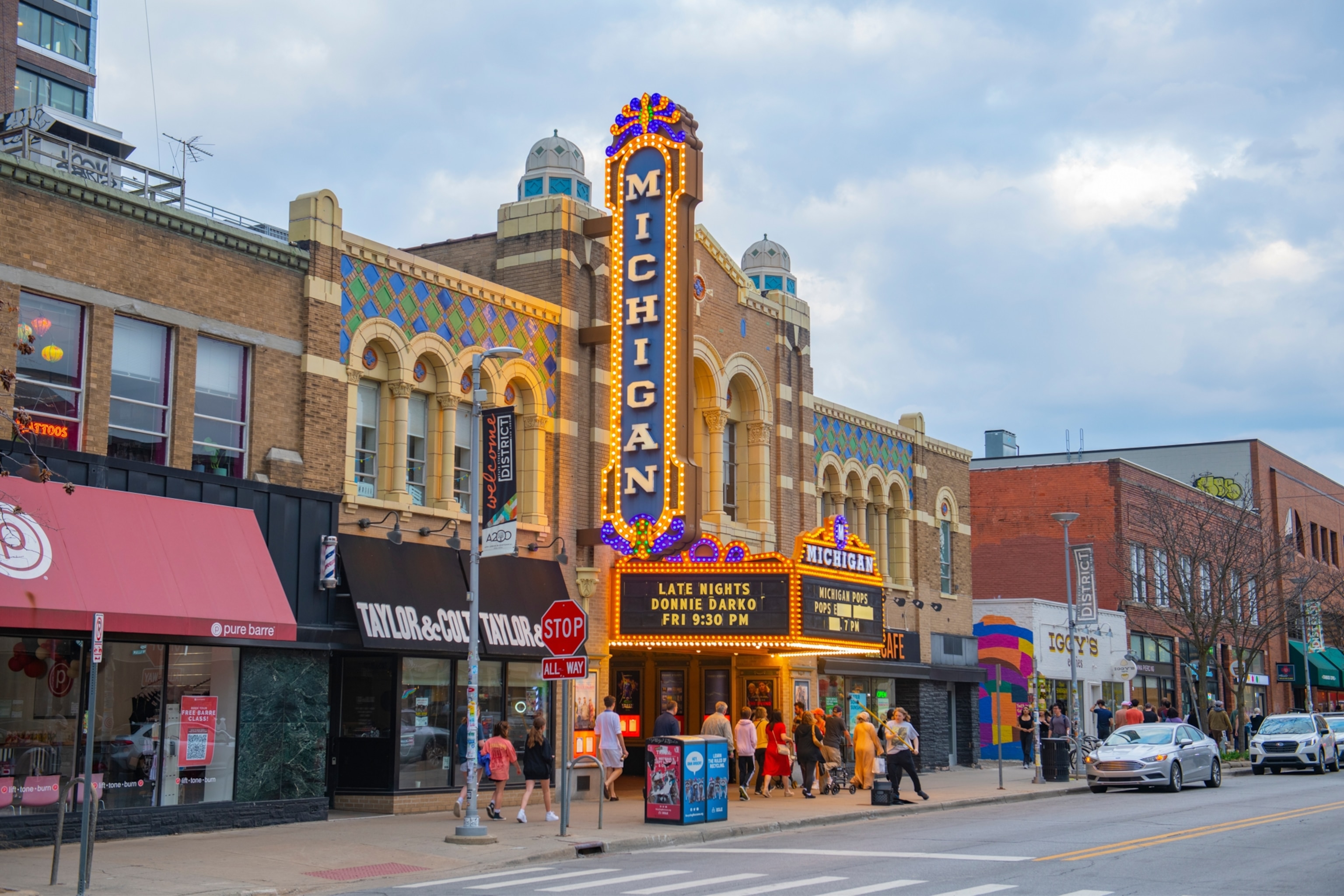
The downtown core retains brick facades from the 19th and early 20th centuries, now occupied by restaurants, coffee shops and boutiques. Tiny fairy doors hidden near some buildings introduce a playful detail at sidewalk height. Such discoveries matter in a place whose cultural range can otherwise feel disproportionately large. Ann Arbor rewards attention to both the institution and the oddity beside it.
Campus Culture Without a Gate
Michigan Stadium, known as the Big House, can hold more than 107,000 fans. On game days, that crowd becomes a temporary city inside the city; in summer, the venue shifts to concerts, movie nights and large yoga sessions. The University of Michigan Museum of Art offers a quieter encounter. Jaume Plensa’s 25-foot sculpture Behind the Walls greets visitors before a free collection that ranges from Asian objects and African masks to work by Warhol, Picasso and Sally Mann.
Performing arts extend beyond campus buildings. From September through May, the University Musical Society brings major touring musicians and dance companies to several venues. Downtown, The Ark maintains an intimate setting for folk and acoustic music throughout the year. The university acts as a magnet, but the audience circulates through the wider town rather than remaining sealed inside an academic district.
The Huron River Changes the Pace
Water provides an alternative route through Ann Arbor. Canoes and kayaks can be rented from liveries at Argo and Gallup parks, and guided birding outings look for herons, kingfishers and ducks. The local stretch of the Border-to-Border Trail runs 5.6 miles along the river, giving hikers and cyclists a continuous path through an otherwise urban visit.
Nichols Arboretum occupies 123 acres of gardens, meadows and woodland. Its collection of more than 10,000 peonies blooms in late May and early June, briefly turning botanical abundance into a seasonal event. Summer adds the Ann Arbor Art Fair, spread across 30 blocks over three July days. Fall belongs to football and foliage; winter pushes activity into museums, theaters and bookstores.
A Market, a Deli and a Wood Fire
Kerrytown’s Ann Arbor Farmers Market has operated since 1919 and gathers nearly 130 vendors, including fifth-generation sellers. The selection reaches from local garlic scapes to prepared Yemeni food, illustrating how agricultural continuity and immigration share the same market roof. Nearby, Zingerman’s Delicatessen has made abundance into an institution with 40 sandwich varieties, house-made bread, local sauerkraut, specialty products and classes.
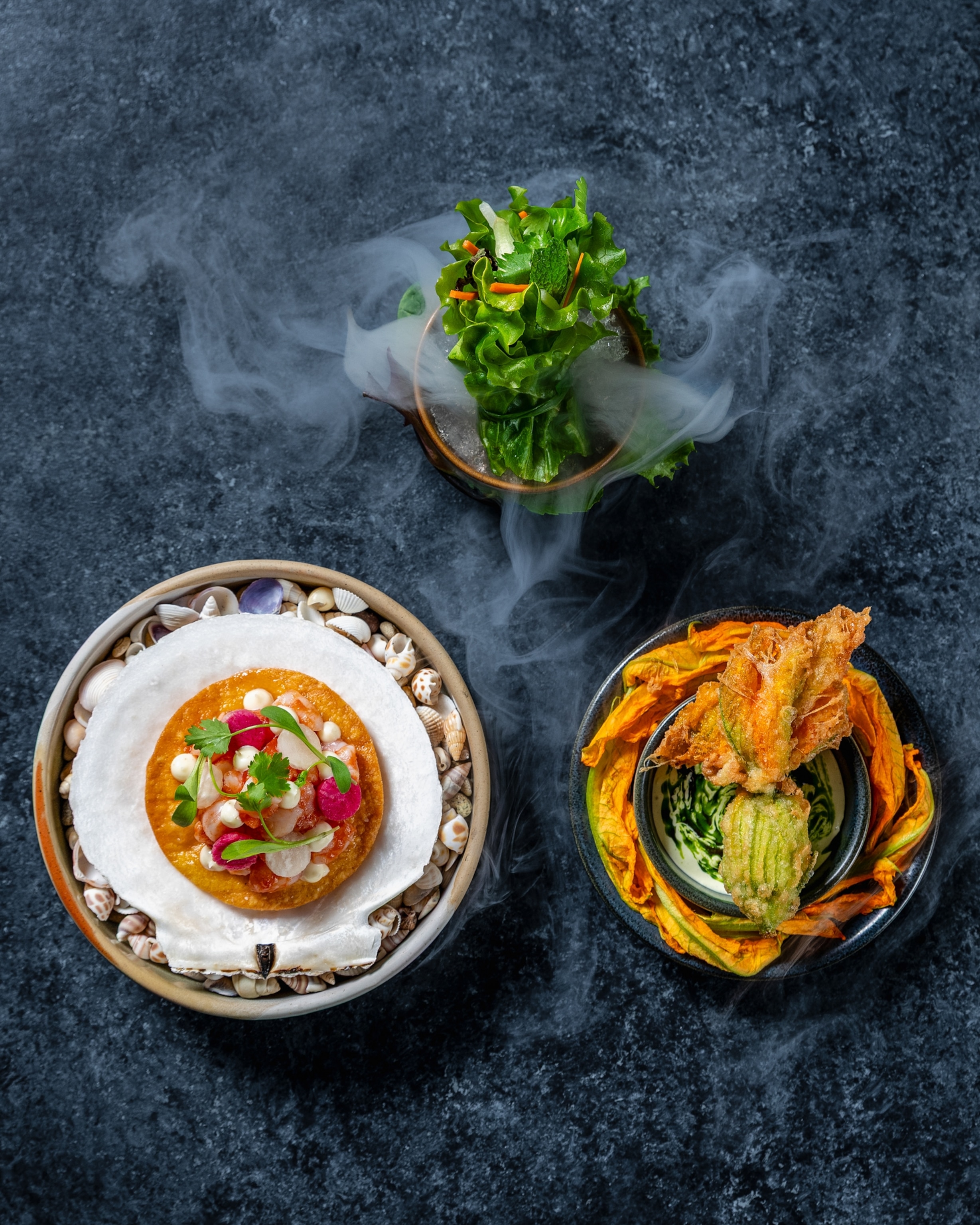
Frita Batidos approaches the city through Cuban-inspired street food, serving burgers pressed into soft buns with shoestring fries and fruit shakes available with or without rum. Echelon Kitchen & Bar, opened in 2025, takes a more formal route with vegetable-forward seasonal cooking over a wood-fired grill. Its chef’s counter and tasting menu make the preparation part of the evening.
Accommodation follows the same range. Graduate by Hilton leans into collegiate decoration near campus; family-owned Weber’s, operating since 1937, offers a glass-covered pool and live jazz; Vanguard Ann Arbor uses a polished neutral palette punctuated by the city’s blue. Each property translates a different local identity into a stay rather than defaulting to anonymous business travel.
The calendar changes how the compact geography behaves. On an autumn football weekend, the campus, hotels and restaurants absorb a crowd many times larger than an ordinary downtown evening. In late spring, the peony collection becomes the center of attention. July’s art fair stretches across 30 blocks, and deep winter concentrates people in performance halls, galleries and Literati, the independent bookstore where visitors can leave messages on a typewriter. The city does not need new infrastructure for each season; familiar spaces take on different roles.
The city’s history is present in names as well as buildings. A cocktail lounge at Graduate honors founders John Allen and Elisha Walker Rumsey, while alumni stories connect Ann Arbor to President Gerald Ford, Google co-founder Larry Page and Madonna’s two years of study. Arthur Miller arrived as a student in 1934 and later wrote about immediately falling for the place. Such associations could become civic self-importance; in practice, they sit beside fairy doors, farmers’ stalls and cold river water.
The choices reinforce Ann Arbor’s central trick. It delivers the variety associated with a larger city, then lets visitors walk, paddle or cycle between the pieces.