In Halland County, a family farm has evolved into a retreat where the landscape does not merely surround the stay; it determines its pace. Ästad Vingård pairs oak-clad villas and private saunas with a vineyard of solaris grapes, two highly distinct restaurants and a spa that moves guests between steam, forest paths and cold water. The most memorable room, however, sits below the surface of a lake, allowing bathers to watch fish pass through the windows while heat gathers inside. What began with organic milk in the 1940s now reads as a layered portrait of rural Swedish hospitality—one shaped by three generations, regional produce and the productive tension between cultivated land and untamed nature.
A Farm That Learned to Host
The approach through Halland County is an exercise in deceleration. Between Gothenburg and Malmö, narrow roads run past beech woods, meadows and red farmhouses, with occasional flashes of lake water appearing through the trees. Ästad Vingård belongs to this agricultural setting rather than standing apart from it. The Carlsson family has owned the former farm since the 1940s, and its transformation came through additions made over successive generations instead of a single dramatic reinvention.
The first chapter centered on organic milk. A later generation added a small cafe and guest rooms. The third planted solaris grapes on the surrounding slopes and developed the property into a spa hotel with its own wine. That sequence gives the estate its particular coherence: accommodation, food, agriculture and wellness grew from the same piece of land. Guests encounter a working family story, not a resort concept imported into the countryside.
Seven Villas on a Natural Pool
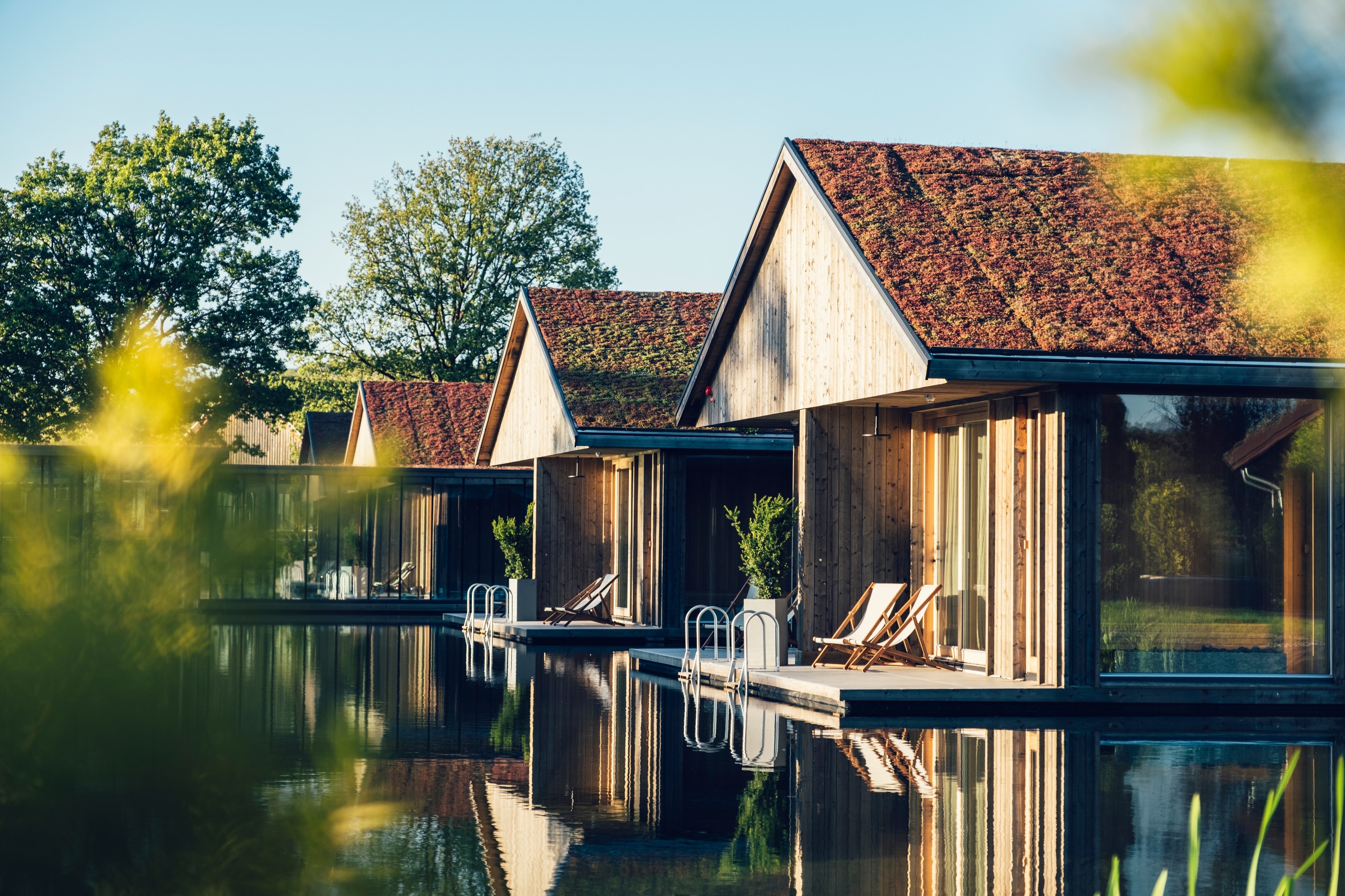
From the vineyard at the entrance, paths edged with wildflowers spread through the property like lanes in a small village. Their focal point is Sjöparken, a group of seven oak-clad villas positioned over a natural pool. Each villa contains guestrooms with private saunas, bringing the Swedish bathing tradition inside the most intimate part of the stay. Pale timber, stone details and oatmeal-colored textiles keep the rooms visually quiet, while broad glass doors turn the water into the dominant feature.
Morning begins at water level. A guest can leave the bedroom and step directly into the pool as dragonflies settle on lily pads and skylarks move overhead. The experience is luxurious, yet its appeal comes less from decoration than from proximity: the villa removes the usual distance between room and landscape. Wood, water and muted interiors establish a rhythm that is calm without feeling staged.
Two Kitchens, One Region
Food provides another reading of Halland. Logen serves generous traditional dishes reworked with a contemporary hand, while Michelin-starred Äng offers a Scandinavian tasting menu in a modern glasshouse facing meadows and lakes. The restaurants operate at different levels of formality, but both draw heavily on seasonal regional produce. One is grounded and familiar; the other concentrates ingredients into a more elaborate sequence.
The vineyard connects dinner to the slopes visible around the hotel. Solaris, a grape suited to cooler northern conditions, is used for Ästad Vingård’s sparkling white wine. Drinking it here collapses the distance between product and place: the vines are not a decorative backdrop, and the bottle is not simply an imported amenity. It is one more expression of how the estate has learned to work with its location.
Heat Beneath the Lake
Sinnenas Spa abandons the idea that wellness must happen in a single serene room. Its indoor areas use scent, sound, steam, pools and saunas to recall the nearby forest and coast. From there, a trail draws visitors outside. A cold plunge may be hidden among trees; another sauna occupies a wooden structure on the lake. Moving between environments matters as much as any one treatment, because temperature, texture and exposure keep changing.
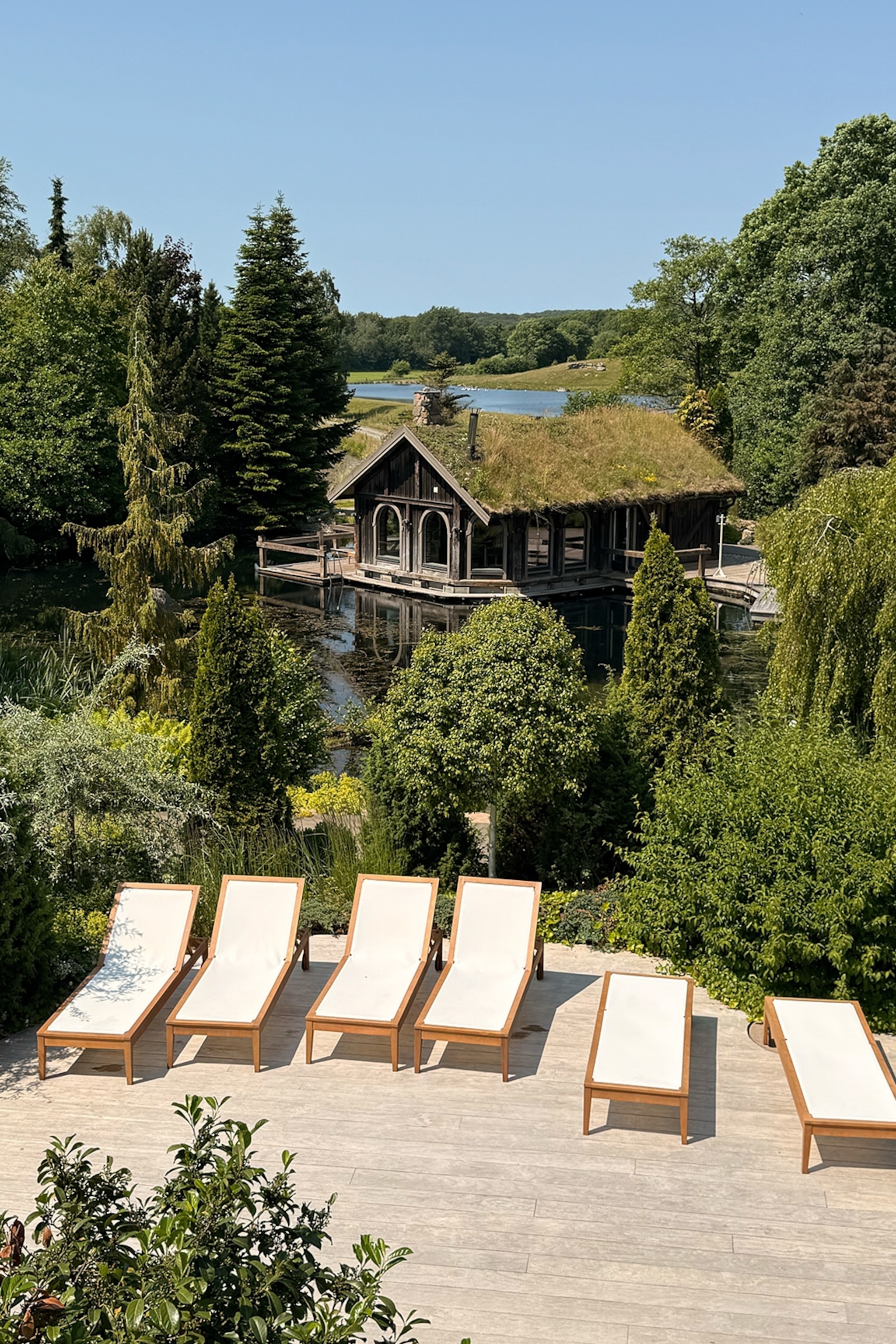
The underwater sauna is the property’s most improbable space. Behind its windows, fish drift through the lake while bathers sit in accumulating heat. The scene reverses the usual aquarium relationship: people become the enclosed observers, and the aquatic world continues outside. After steam, spray, immersion and cold water, day beds overlooking the fields offer a final pause. A glass of the estate’s sparkling wine completes the circuit from vineyard to spa.
The water also prevents the property from becoming a simple vineyard hotel. Wine supplies a product guests can taste and carry away; the pool, lake and spa determine how bodies move through the estate. One element is cultivated and bottled, the other experienced through temperature and immersion. Their coexistence explains why the stay feels specific to this farm rather than assembled from a checklist of Nordic luxuries. Even the private saunas in the villas prepare guests for the larger sequence outdoors.
Ästad Vingård works because its unusual elements are not treated as isolated attractions. The submerged sauna, solaris grapes, glasshouse restaurant and floating villas all return attention to the same rural terrain. Three generations have changed the farm substantially, but they have not erased its original logic. Guests leave remembering a lake, a crop and a family’s patient accumulation of ideas. No single feature carries the whole experience. The land remains the host.