It did not begin with a subconscious, inherent devotion to Hanoi. Architect Pham Vu Thuong Nhung approached the city through the lens of her profession: through observation, research, and rigorous inquiry. Drawing on her background in urban planning, urban design, architecture, and heritage conservation, she views “flavor” as an integral component of place where physical space, livelihoods, customs, people, and memories converge to shape urban identity. This analytical methodology laid the foundation for her collaboration with architect Tran Thi Thanh Thuy on Flavors of Hanoi’s old quarter – Sketches and essays, a volume comprising 30 essays and over 150 sketches.
Approaching Hanoi through a professional lens
Architect Pham Vu Thuong Nhung candidly admits that she is not a native Hanoian, nor did she approach the book out of predefined nostalgia. Her relationship with the city was forged primarily through professional observation and an imperative to comprehend its built environment.
With over two decades of experience across urban planning, urban design, and architecture, alongside years dedicated to heritage conservation, she naturally framed the city through spatial structures, urban morphology, architectural proportions, structural networks, and historical stratification.
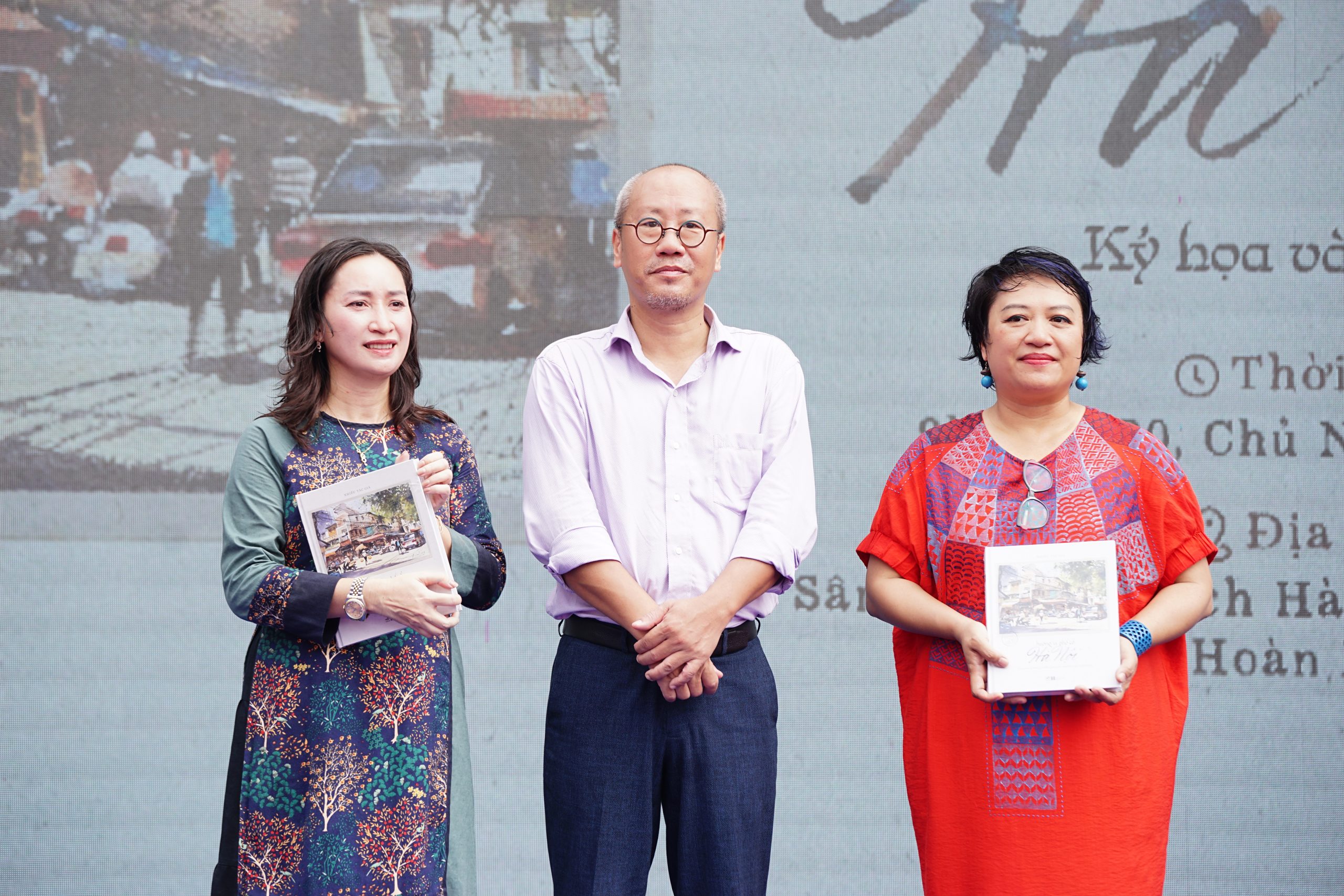
“I came to know and understand Hanoi through a professional lens before any emotional bond developed. I could interpret the city via maps, building facades, street grids, and chronological layers of development. To me at the time, Hanoi was a multi-layered, intellectually captivating organism,” she recalls.
While her specialized training provided a clear grasp of the city’s physical form, it prompted an essential question: is reading maps, structures, and street patterns sufficient to truly comprehend Hanoi?
A city, after all, is defined not merely by its constructed infrastructure, but by how its inhabitants occupy the space, adapt to it, sustain their livelihoods, and transmit intangible values across generations. Truly understanding an urban environment requires moving beyond spatial geometry and entering the lived experiences that form its soul.
Driven by this realization, she sought a cultural touchpoint intimate enough to penetrate the daily rhythm of Hanoi life. Culinary tradition – where land, human agency, and generational knowledge directly intersect – served as that gateway.
Culinary culture as a gateway to living heritage
For Architect Pham Vu Thuong Nhung, culinary culture extends far beyond gastronomy; it reflects how a community adapts to its natural conditions and social environment. Beneath every flavor lies the imprint of climate, seasonality, local sourcing, livelihoods, customs, and domestic culinary wisdom passed down through family kitchens. From a seemingly ordinary taste, one can trace the history of a neighborhood, the survival strategies of its residents, and memories preserved across generations.
Culinary traditions thus offer a distinctive analytical pathway. Ordinary dishes frequently lead to the history of a street segment, the economic life of its inhabitants, community networks, and collective memory.
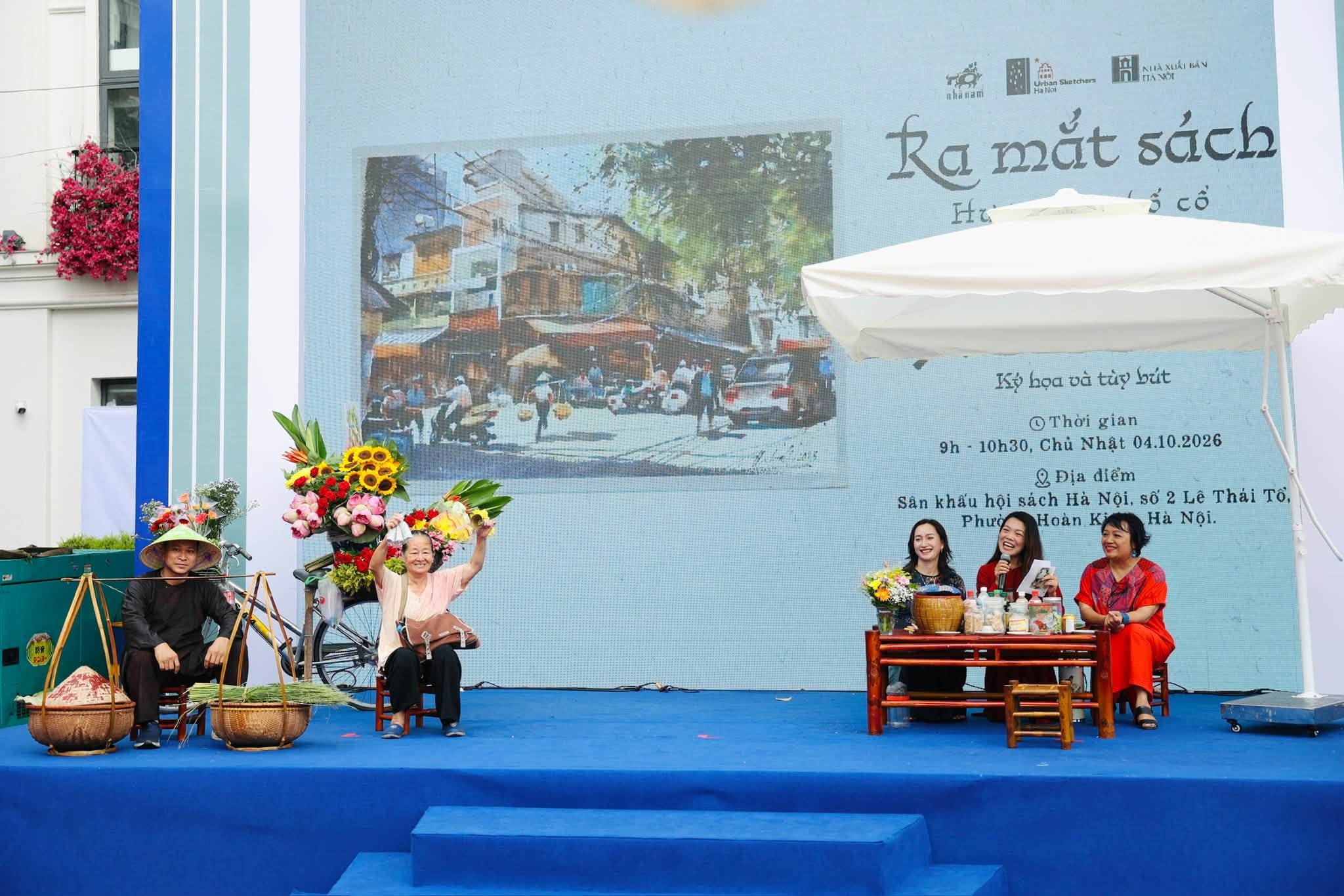
Elaborating on this approach, Nhung explains: “We chose food because it offers an accessible portal into living heritage. Cuisine provides a unique cross-section that connects physical space with human activity – incorporating indigenous knowledge, livelihoods, and social bonds. Behind a single dish lies more than just a recipe; there are seasonal cycles, ingredient origins, domestic hearths, master artisans, regular patrons, and the very street corner that sustained it over decades.”
Framed this way, food ceases to be merely a product for consumption. It becomes part of the urban fabric, safeguarding narratives of people and community. A modest eatery, a family kitchen, or a sidewalk street cart becomes a tactile entry point for grasping the city’s deeper character.
A lifetime behind every flavor
Throughout the creation of the book, what moved Nhung most was not merely the diversity of Hanoi’s food scene, but the individuals behind every dish. Some have spent decades preserving a specific cooking technique, a broth profile, or a family ingredient selector. Others quietly sustain legacy trades, preserving familiar flavors amid rapid urban transformation.
These encounters expanded the definition of “flavor” in the book’s title. It signifies not just taste, but an ensemble of sounds, aromas, spatial dynamics, and memories bound to a specific locale.
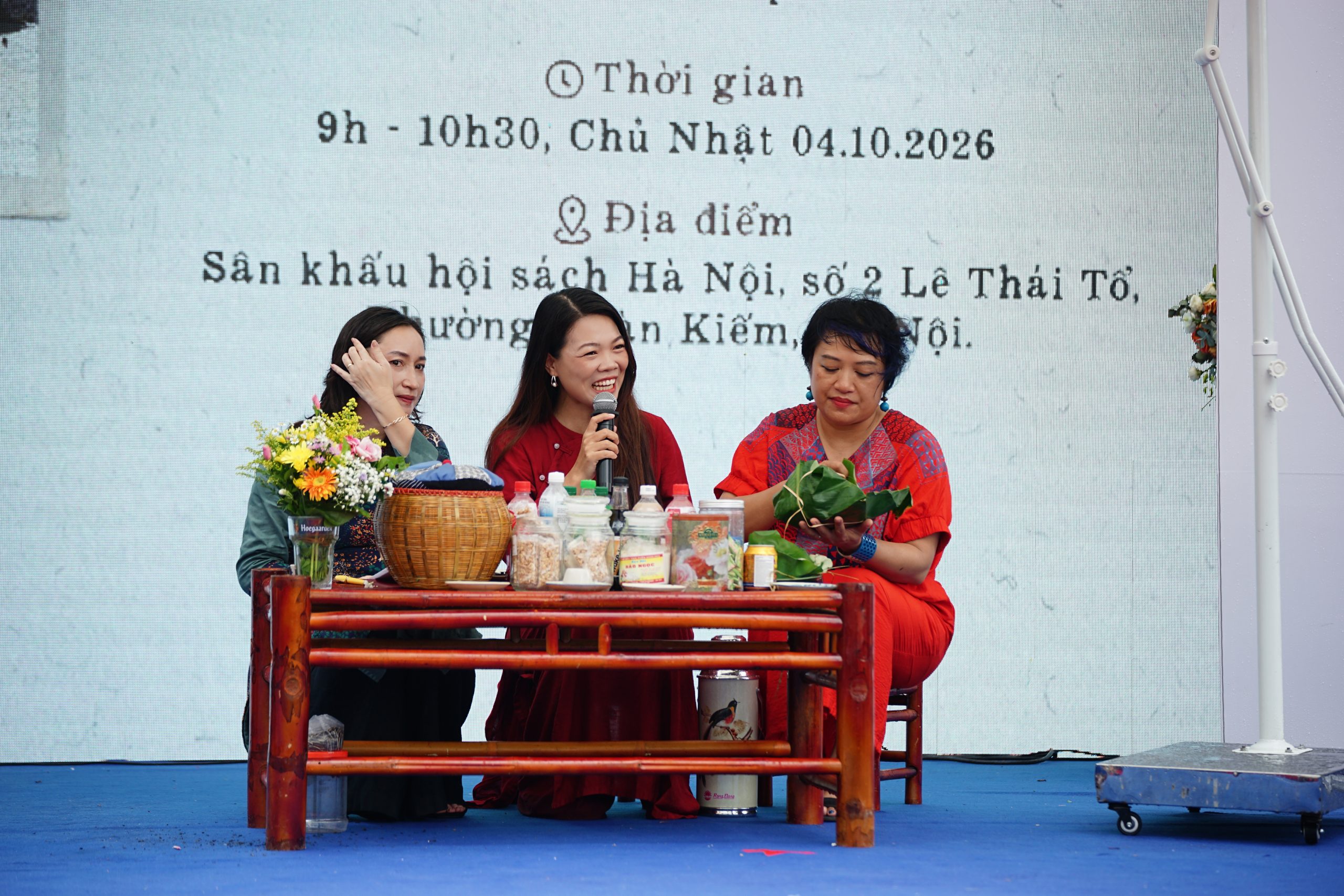
“The term ‘flavor’ in Flavors of Hanoi’s old quarter is not limited to taste,” she shares. “It is the synthesis of scents, sounds, spatial context, people, and memories accumulated over time. It is the flavor of a season, a street, a home kitchen; it is the quiet lives that infuse a dish and linger in the collective memory. There is the sweetness of what has been preserved, the bitterness of what has passed, and the subtle ache of longing felt by those far away.”
A city is defined not only by enduring monuments and streetscapes, but by the sounds, tastes, livelihoods, customs, and memories of those who inhabit it. Viewing urbanism through the combined lens of an architect, urban designer, and heritage researcher, Nhung treats “flavor” as an essential component of place – a layer of value that must be recognized to properly preserve urban identity. This perspective framed her editorial collaboration with architect Tran Thi Thanh Thuy on Flavors of Hanoi’s old quarter – Sketches and Essays, where dishes, people, memories, and over 150 sketches come together to offer an alternative reading of the historic quarter.
The fragments that form Hanoi’s distinct identity
The 30 essays were not curated as a simple culinary directory. The editorial team intentionally juxtaposed seasonal delicacies with daily street snacks, long-standing establishments with humble mobile carts, indoor dining spaces with sidewalk life, and vibrant traditions with fading practices. Through these individual narratives, the book illuminates the interplay among four elements: flavor, people, space, and memory.
Nhung explains: “In isolation, each story is modest. Yet assembled together, they form a vivid urban mosaic. Hanoi emerges not as a monolithic image, but through historical layering, diversity, and everyday human connections. Perhaps Hanoi’s essential character lies precisely here: it need not be defined by grand narratives, for a single dish, a figure standing by a cooking fire, or a familiar street corner can embody the cultural DNA of the entire city.”
Through these snapshots, Hanoi is revealed not as a static historical relic, but as an evolving metropolis that absorbs the new while maintaining the foundational traces of its identity.
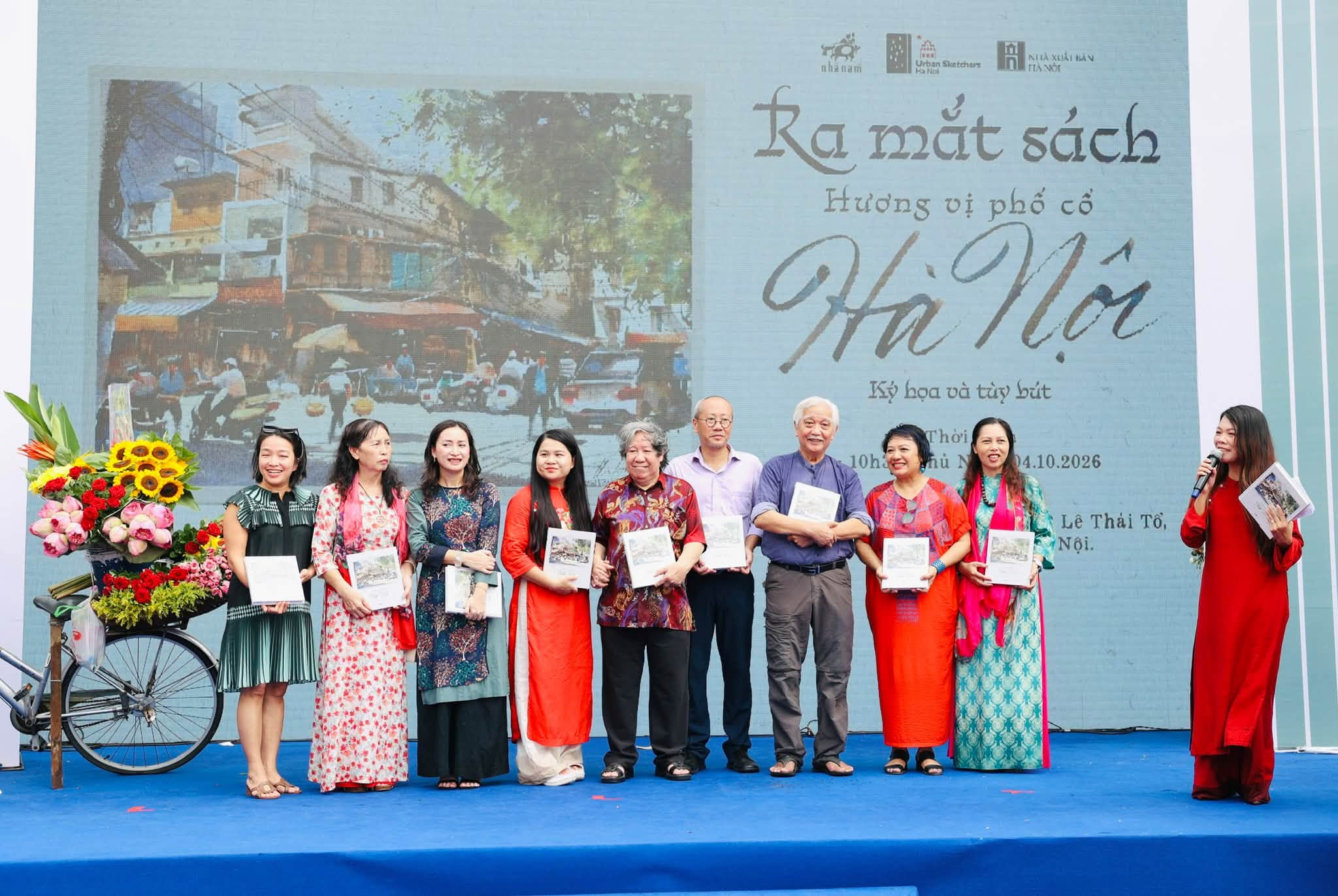
A methodical approach to love
To realize the project, Pham Vu Thuong Nhung partnered with Urban Sketchers Hanoi, a community that has spent a decade capturing the city’s street life through direct, real-time sketching.
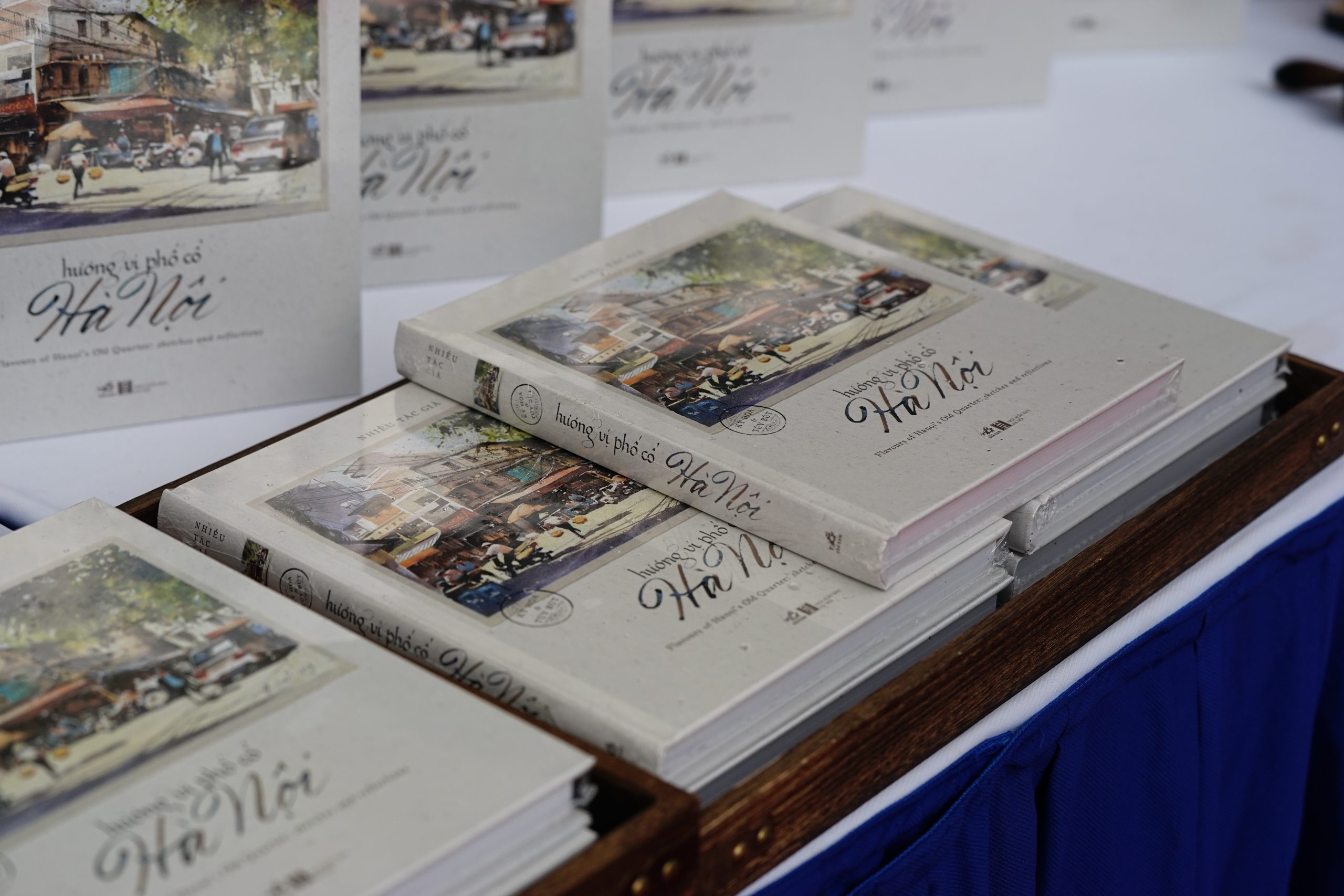
In the artists, she recognized an intuitive yet patient devotion. To sketch a street corner, one must sit still long enough; to capture a human figure, one must observe closely. Consequently, the sketches do more than document dishes – they capture cooks, diners, utensils, shop spaces, and the rhythmic cadence of street life.
Bringing her architectural habits to the table, Nhung chose a “methodical love”: researching, systematizing, and mapping the relationships between spatial, cultural, and culinary layers and the people who inhabit them – tracing the indigenous knowledge, memories, and personal histories behind each flavor.
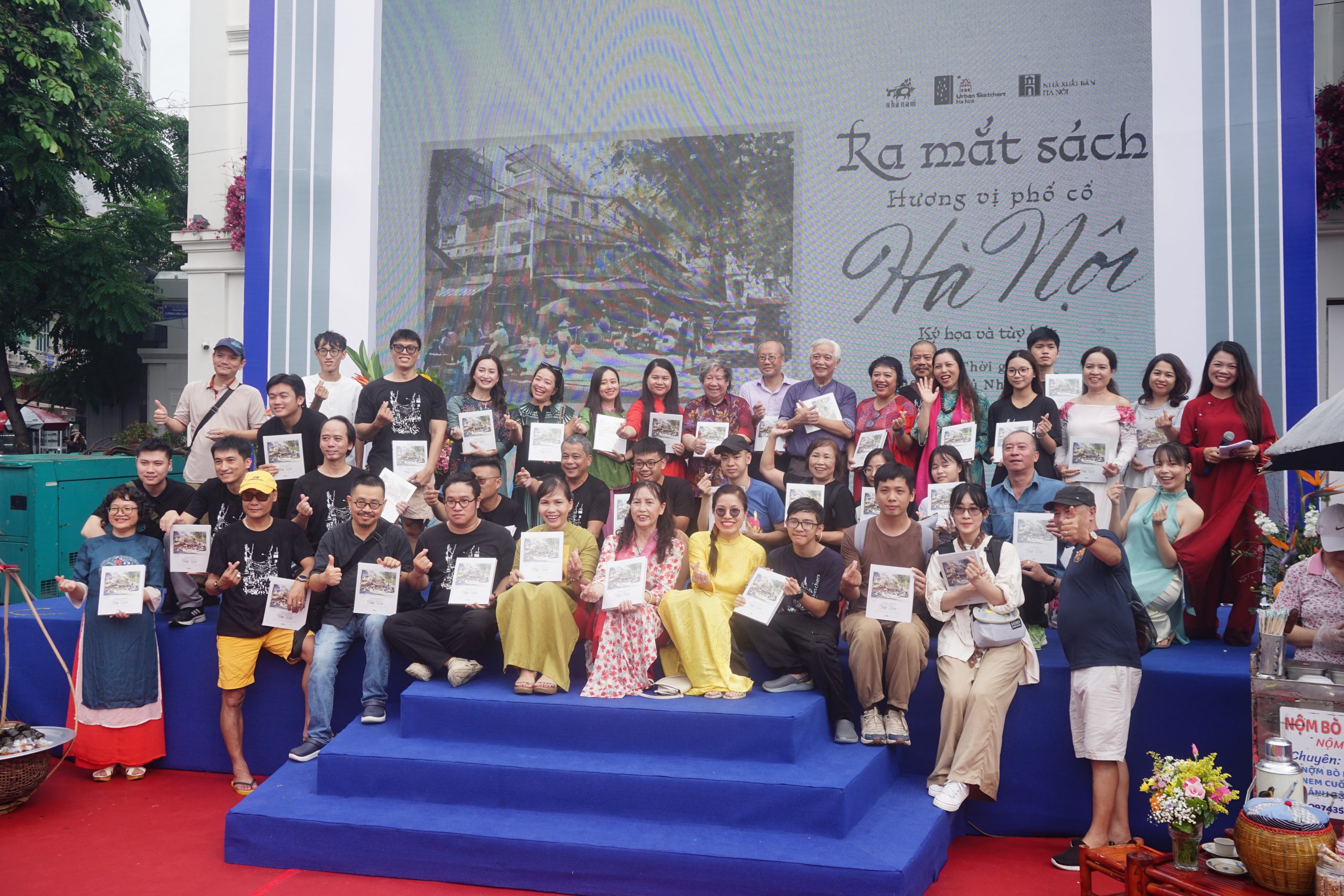
“The members of Urban Sketchers Hanoi love the city with pure spontaneity: they walk, sit, observe, and draw. My background led me to a more structured, analytical form of devotion. They helped me see Hanoi through a softer, more intimate lens, while I sought to weave their sketches, observations, and narratives into a coherent structural framework. It proved to be a synergistic partnership.”
This dual approach yields a work that retains the vibrancy of firsthand observation while benefiting from a structured narrative framework that highlights the cultural strata beneath each story.
From understanding to affection, from identification to preservation
Working on the book enriched Nhung’s reading of Hanoi. Where she once viewed the city primarily through structural grids, morphology, proportions, and spatial layers, her immersion in local eateries and legacy trades brought intangible elements – scents, flavors, livelihoods, customs, and memories – into focus as indispensable components of place.
She notes that this perspective suggests a broader approach to urban conservation. Preserving physical buildings while allowing the livelihoods, customs, people, and memories that animated those spaces to fade saves the shell of the street while losing its spirit. “Flavor,” in this sense, is not a peripheral detail, but a vital layer of value that must be documented, recognized, and given room to endure.
“My affection for Hanoi followed an inverted path: rather than seeking to understand because I loved it, I came to care deeply because I sought to understand,” she reflects. “Eventually, the city ceased to be merely an object of professional study or conservation; it became concrete human lives, entrusted memories, and a heritage I feel responsible for safeguarding. Before I realized it, I was deeply tied to Hanoi. Above all, I feel profound gratitude toward Ms. Thuy, Mr. Lam, and all the contributing writers, illustrators, and translators. And I am grateful to Hanoi for its generosity in letting us love it so deeply.”
From a single dish or street cart to a quick sketch, Flavors of Hanoi’s old quarter – Sketches and essays offers an alternative reading of the city: starting from the small details of daily life to reveal the larger cultural layers embedded in every street corner. When a city is experienced through all the senses and understood through its human stories, affection for it transforms from an abstract idea into an active desire to safeguard its collective memory.