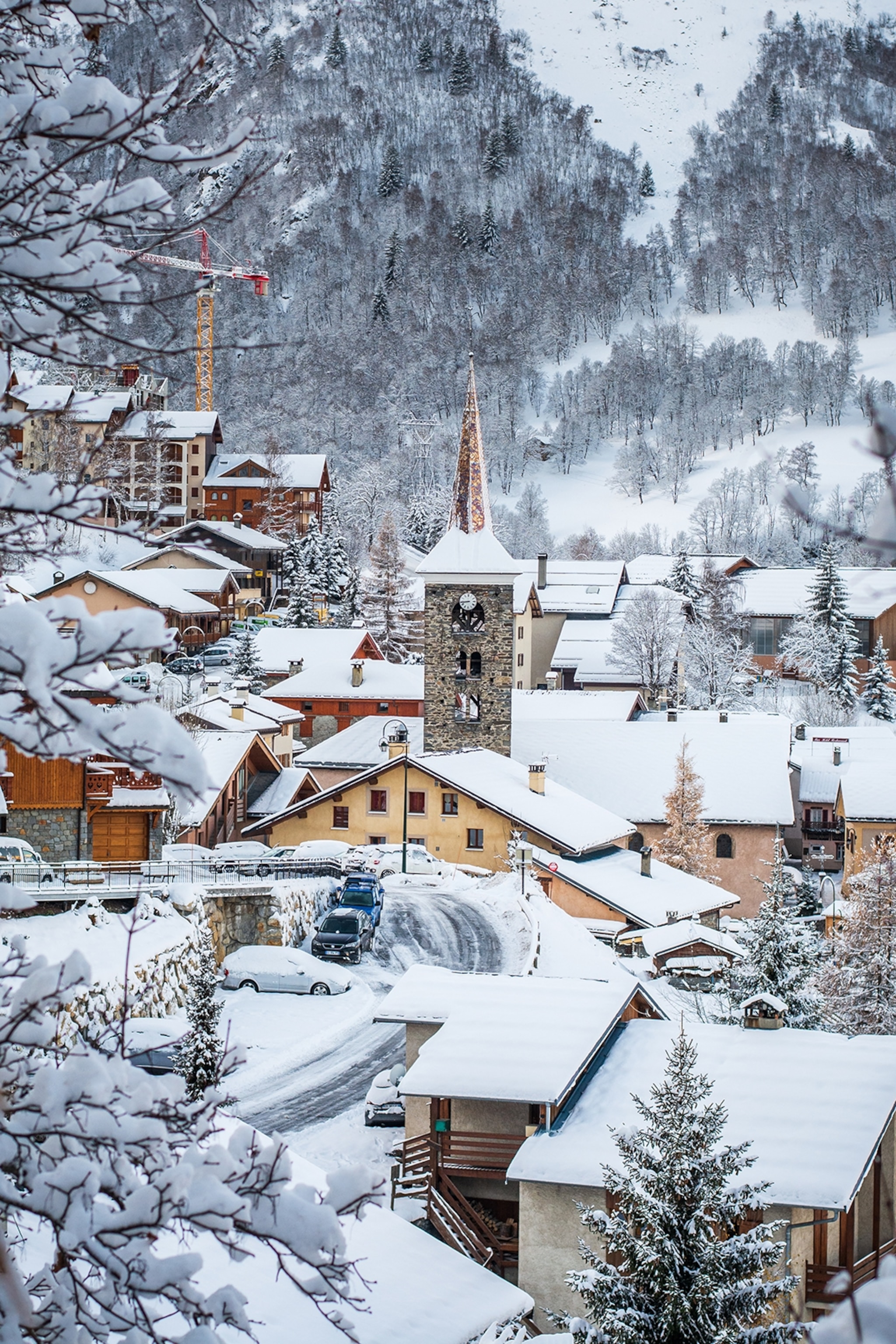
Saint-Martin-de-Belleville was never designed to become a major ski resort. In the 1960s, when France’s Plan Neige accelerated development higher in the Belleville Valley, parts of this farming village still lacked running water. Today a skier can leave the drag lift beside its town hall and baroque church and reach the center of Les Trois Vallées in under half an hour. That efficiency could have erased the settlement’s character. Instead, old farmhouses contain discreet chalets, a communal oven and washing trough remain on a heritage trail, and farmers still combine summer agriculture with winter teaching. Saint-Martin’s achievement is not rustic purity. It is the unlikely coexistence of village life, quiet luxury and immediate access to 600 kilometers of pistes.
A Low Village With High Reach
Saint-Martin-de-Belleville sits at 1,450 meters, well below several purpose-built neighbors. Its scale is compact: stone and timber buildings cluster around civic landmarks, and a drag lift rises from the space between the town hall and the baroque church. Geography, however, gives the village remarkable leverage. In less than 30 minutes, lifts can place a skier at 2,437 meters in the central web of Les Trois Vallées.
From that junction, routes extend toward Courchevel, Méribel and Val Thorens. The connection changes the meaning of staying low. Guests can sleep in an old settlement rather than a high-altitude complex without surrendering speed or range. A morning start from Saint-Martin can reach popular terrain before crowds gather elsewhere.
The Resort That Wasn’t Planned
Development began farther up the valley in 1964, when work on Les Menuires formed part of President Georges Pompidou’s Plan Neige. The national program aimed to expand winter tourism and economic activity through new mountain resorts. Saint-Martin was expected to serve as a modest satellite, providing inexpensive apartments for skiers traveling uphill.
Visitors responded differently. They valued the farming village itself, and investment gradually turned former agricultural buildings into chalets and apartments. Luxury followed, but its visual language remained restrained behind thick stone walls and timber facades. The village distinguishes itself from the overt display associated with Courchevel through privacy and reuse rather than spectacle.
Evidence of a Working Community
A self-guided heritage route passes a historical washing trough and the communal clay oven where families once baked bread. A museum inside a converted farmhouse documents local change. Along the Doron de Belleville river, Moulin du Burdin survives from a group of nine flour mills that once served the valley.
Roughly a dozen farming families remain. Some residents teach skiing in winter and return to the land in summer, allowing work to follow the mountain’s seasonal economy. Tractors on dirt roads and neighbors pausing to exchange news resist the impression that every building exists for visitors. The community is not frozen in an earlier era; it retains activities that predate the lifts.
Six Hundred Kilometers, One Return Run
Les Trois Vallées contains 600 kilometers of groomed slopes, more than any skier can meaningfully cover in a short stay. Combe de la Saulire, a three-kilometer red, combines a technical upper section with a wide descent. In mid-April, late-season timing can transform runs known for bottlenecks into open space.
Toward Val Thorens, Cime Caron rises to 3,200 meters. Red pistes such as Bouchet offer broad turns, while the black Combe Rosaël adds steep moguls and rapidly changing spring snow. The variety allows a day to move between high exposed terrain and gentler valley routes. Biolley ultimately returns directly to Saint-Martin, turning the final descent into arrival at the village center.
Lunch Holds the Valley Together
Le Corbeleys occupies an old chalet d’alpage near the top of the St Martin 1 lift. Such buildings traditionally served seasonal mountain agriculture. Siblings Martine and Bruno Suchet inherited the chalet from their grandparents and have fed skiers there for 40 years. Their grandmother’s quiche de Mémé Nini and a Picon bière connect the ski day to family continuity.
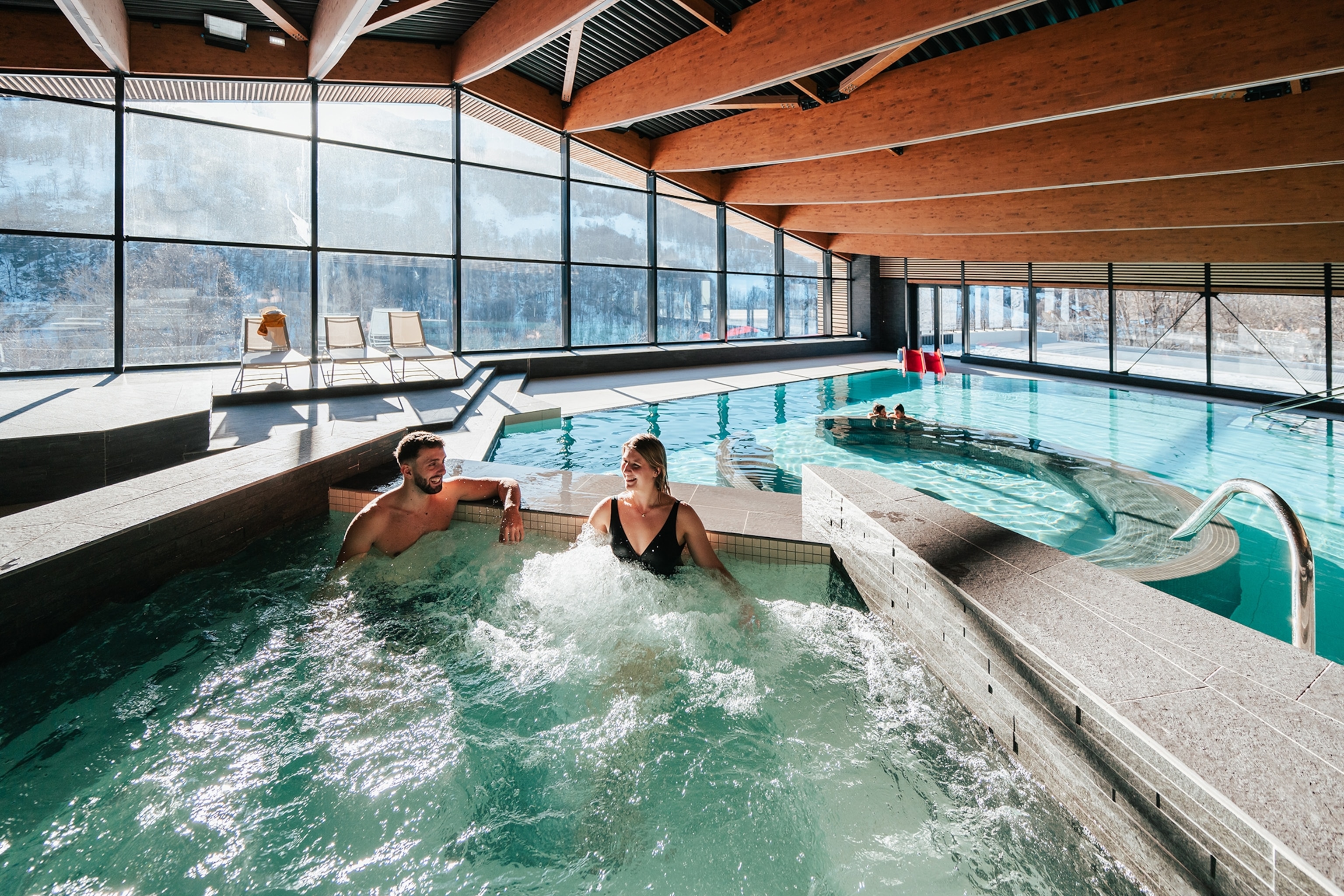
La Belle Vie wellness center represents the newer face of the village, with mountain views framed through a glass facade. Its presence does not cancel the mill, oven or farmhouse museum; it adds another layer to a place already transformed several times.
Spring exposes the relationship particularly well. High pistes can retain excellent snow after lower gardens begin to wake, and late-season quiet reduces the bottlenecks found on famous descents. Mountain restaurants may already be shuttered and après-ski stages empty, making surviving family businesses such as Le Corbeleys more significant. The experience is less theatrical but more legible: lifts, farms, slopes and village streets can be understood as one valley system.
Conditions still demand judgment. Fresh snow can collect high on Bouchet while steep moguls on Combe Rosaël soften rapidly into slush. A skier moving across several valleys encounters different aspects, temperatures and surfaces in one day. Saint-Martin’s fast links are useful because they provide options, not because they make the mountain uniform.
Saint-Martin succeeds because access and atmosphere solve different needs. The lift network provides scale. The village supplies memory, proportion and a recognizable return point at the end of an enormous ski day. Neither quality would be as powerful without the other.