Chiang Mai’s food is inseparable from the history of northern Thailand. The city, once a center of the Lanna Kingdom, developed a cuisine influenced by neighboring Myanmar and Laos, with savory, sweet, tangy and herbal flavors often appearing in the same dish. Today that heritage is visible across an unusually wide dining spectrum: old markets, plastic-stool noodle shops, family restaurants, coffee houses and contemporary kitchens. The most rewarding way to eat here is not to chase a single famous dish but to understand how neighborhoods, temples, rivers and markets connect. A day spent moving through the city on foot can become a culinary map of the north, with each stop adding another layer of history and daily life.
Begin Where the City Still Shops
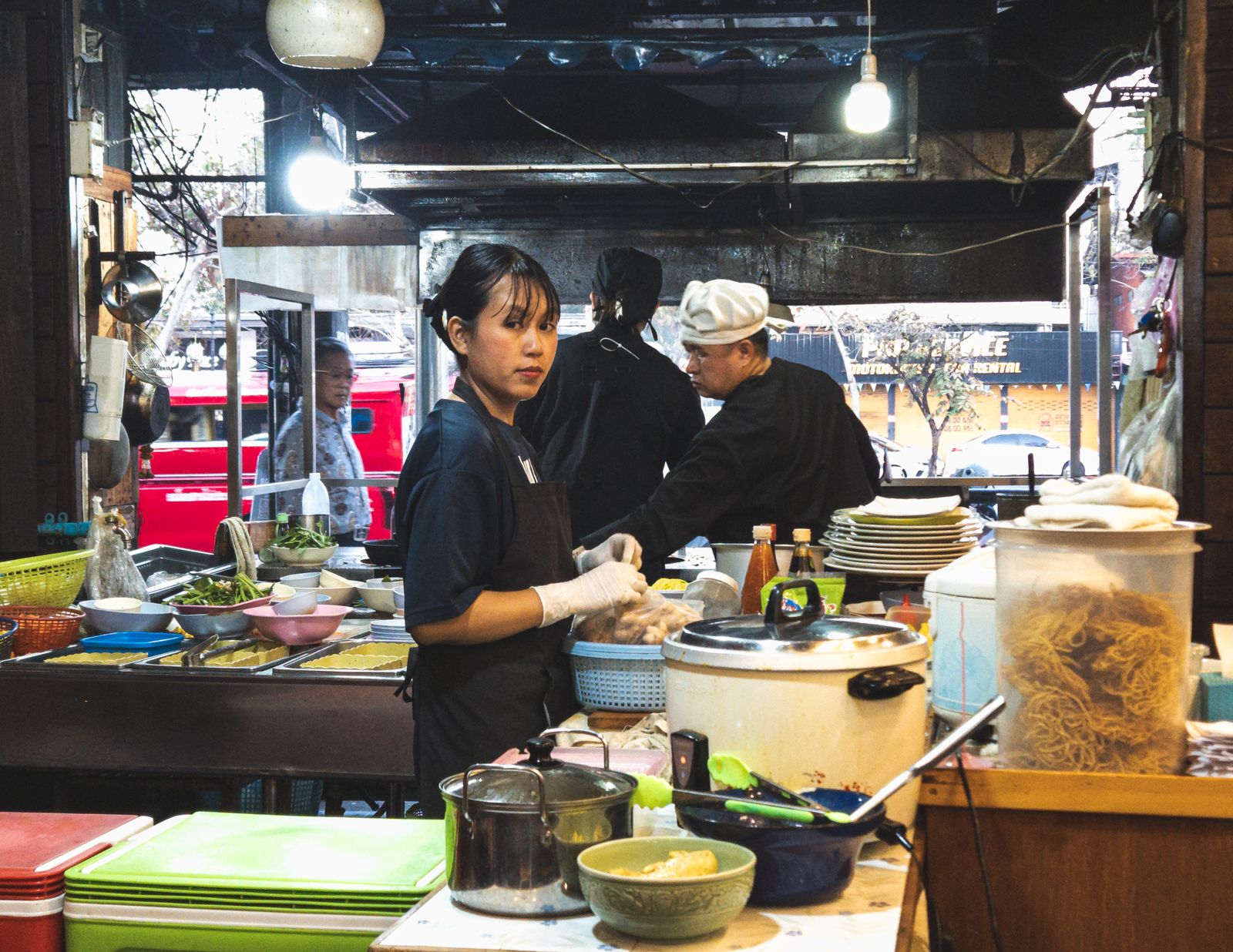
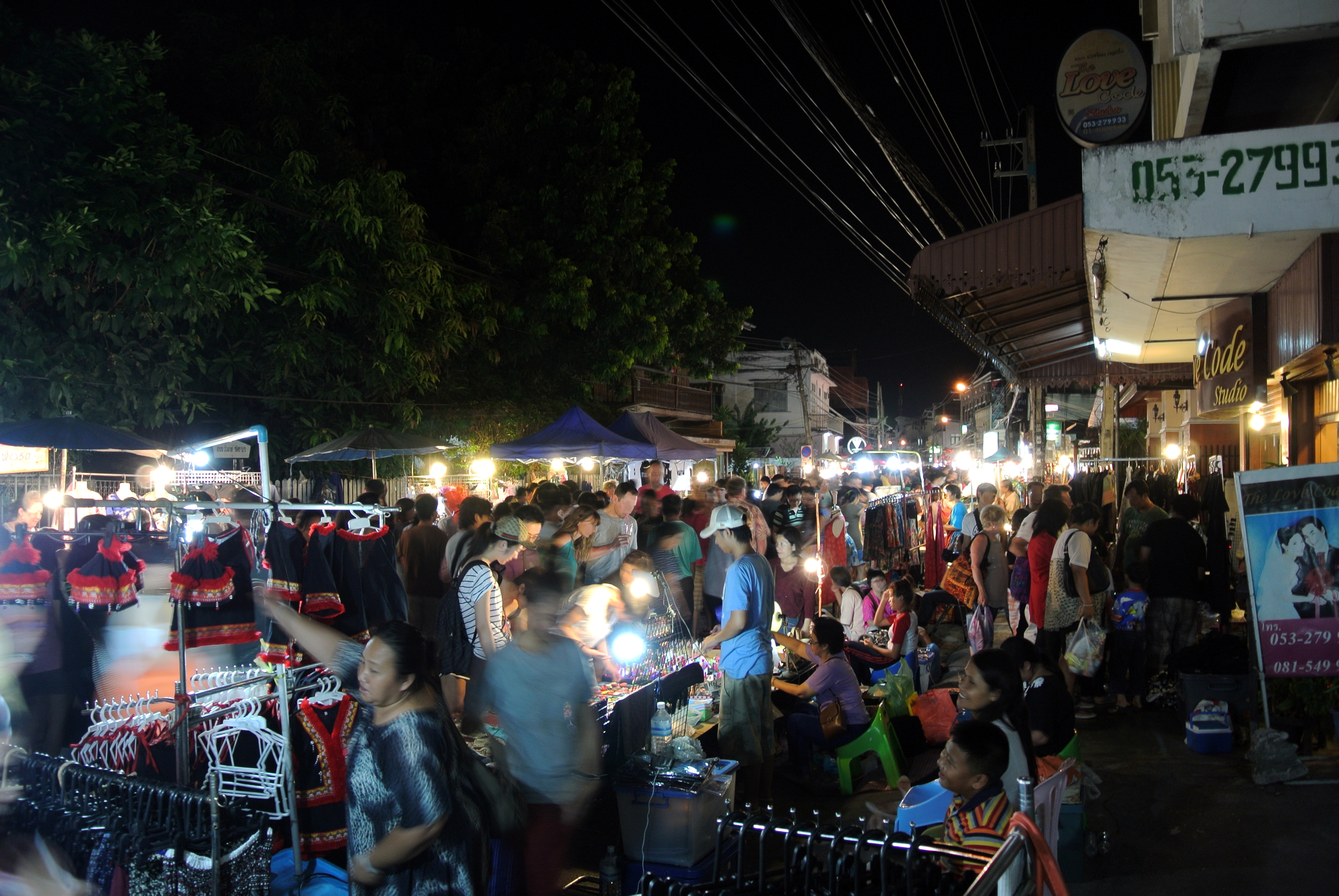
Chiang Mai’s markets are essential because they reveal food before it is edited into a restaurant experience. Warorot Market, the city’s oldest major market, sells household goods alongside prepared dishes, snacks and ingredients used by local cooks. Nearby stalls and simple restaurants allow visitors to encounter northern flavors in the context in which residents actually eat them. One notable stop serves a peppery rice-noodle soup loaded with roasted pork, sausage and liver—a bowl whose richness makes more sense in a market environment than in a polished dining room. Markets also teach the visual vocabulary of the cuisine: herbs, fermented products, chilies, pork, rice, fruit and sweets. Spending time here makes later restaurant meals easier to read because ingredients stop feeling anonymous.
The Ping River Offers a Slower Route
The east side of Chiang Mai, around the Ping River and Wat Ket, provides a gentler counterpoint to the busier Old City. Morning walks pass flower stalls and neighborhood temples before leading to small restaurants that specialize in dishes rarely encountered outside northern Thailand. Khao kriap pak mo, for example, combines delicate pork-and-peanut parcels with coconut milk, producing a balance of savory filling and soft sweetness. Eating a dish like this close to where it is prepared and delivered around the neighborhood offers a more grounded experience than simply checking off a famous menu item. The river route also demonstrates why Chiang Mai is pleasant for culinary travel: the city’s scale allows meals to be separated by walks rather than taxi rides, giving appetite and geography time to reset.
Lanna Cuisine Is Built From Borderland History
Northern Thai food developed under the Lanna Kingdom and through centuries of exchange with communities in what are now Myanmar, Laos and southern China. That history helps explain why the flavors and textures can differ from the coconut-heavy curries many visitors associate with central or southern Thailand. Herbs, grilled meats, sticky rice, fermented ingredients and noodles appear in combinations shaped by climate and trade routes. The result is a cuisine that feels distinctly regional even within a country famous for regional diversity. Travelers who approach Chiang Mai expecting a smaller Bangkok risk missing the point. The city’s food is not a provincial version of the capital’s cuisine; it is a separate culinary tradition whose confidence comes from having developed on its own terms.
Coffee Has Become Part of the Northern Story
Chiang Mai’s contemporary food identity also includes one of Southeast Asia’s most dynamic coffee cultures. Northern Thailand has coffee-growing regions within reach of the city, and a generation of roasters and café owners has connected local beans with global specialty-coffee techniques. That makes the coffee house more than a trendy pause between temple visits. It is part of a changing agricultural and creative economy. Many cafés occupy converted houses, garden spaces or design-conscious storefronts, and the best use local sourcing as part of the experience rather than as a slogan. Coffee gives travelers another way to understand how Chiang Mai balances heritage and modernity: the city can preserve market food and centuries-old dishes while also becoming a place where young entrepreneurs reinterpret local ingredients through contemporary formats.
Eat in Layers, Not Rankings
The temptation in a popular food city is to build a list of “best” places and spend the trip racing between them. Chiang Mai rewards a different method. Start with a market, stop at a neighborhood specialty, drink coffee, then choose one contemporary restaurant that shows how younger chefs are working with northern ingredients. That sequence creates context. It also reduces the risk of treating local cuisine as a series of isolated viral dishes. The city’s roughly 300 temples, quiet backstreets and mountain setting give meals a physical setting that matters. Food here is most memorable when it becomes part of how the day unfolds. Chiang Mai’s culinary strength is not that every bite is spectacular; it is that the city makes it easy to understand why the food belongs exactly where you are eating it.
A Few Practical Rules for Eating Well
The best culinary days in Chiang Mai are paced. Northern dishes can be rich, markets are hot, and trying to eat at every famous stop quickly becomes uncomfortable. Sharing plates makes it easier to taste more without turning meals into a challenge. Travelers should also follow normal food-safety judgment: choose busy stalls with high turnover, drink clean water and be cautious if a dish has been sitting unrefrigerated in heat. Language barriers are usually manageable with patience, photographs and simple phrases, and small cash remains useful in markets. Most importantly, avoid assuming that the most modest restaurant is automatically the most authentic or that every modern space is designed only for tourists. Chiang Mai’s food culture is alive because people keep adapting it. The goal is to taste that continuity across different settings, not to freeze the city into a romantic image of street food alone.