Capitol Reef National Park offers something increasingly rare in the American West: a famous red-rock landscape that can still feel quiet. Highway 24 crosses the park without an entrance fee, allowing travelers to glimpse cliffs, arches, canyons and the green corridor of the Fremont River even on a short visit. But the real reward comes from staying longer. The park combines desert geology with orchards planted by nineteenth-century settlers, remote Cathedral Valley formations and trails where solitude is still plausible. Spring brings comfortable hiking and blossoms; summer adds orchard fruit and monsoon risk; autumn cools the canyons; winter strips the landscape back to color and silence. Capitol Reef’s appeal is not spectacle alone but space.
The Waterpocket Fold Is the Park’s Backbone
Capitol Reef is built around the Waterpocket Fold, a long wrinkle in the Earth’s crust that creates a dramatic sequence of tilted rock layers, cliffs, domes and canyons. The geology gives the park a linear character different from the more concentrated formations of nearby Arches or Bryce Canyon. Travelers encounter red and white sandstone walls, narrow washes, natural bridges and high viewpoints within the same protected landscape. Because Highway 24 cuts across the center, even visitors with limited time can see major formations without committing to a long backcountry drive. Yet the road is only an introduction. The farther you move from it, the more the park reveals why nineteenth-century residents described this country as difficult and isolating. The landscape is beautiful precisely because it remains demanding.
Fruita Adds Human History to the Desert
The Fremont River creates a ribbon of green through the park, and the historic Fruita district uses that water to support orchards first planted by Mormon settlers. Today visitors can see flowering trees in spring and, when conditions allow, pick or buy fruit in summer and fall. The orchards make Capitol Reef feel unusually inhabited compared with a pure wilderness park. Nearby historic buildings, petroglyphs and traces of earlier Indigenous presence expand that human timeline much further back. This layered history matters because it prevents the landscape from being presented as empty before modern tourism arrived. People have moved through, farmed and understood this region for centuries. The park’s appeal is richer when geology and human adaptation are considered together rather than separated into scenic and cultural attractions.
Solitude Is Still a Real Feature
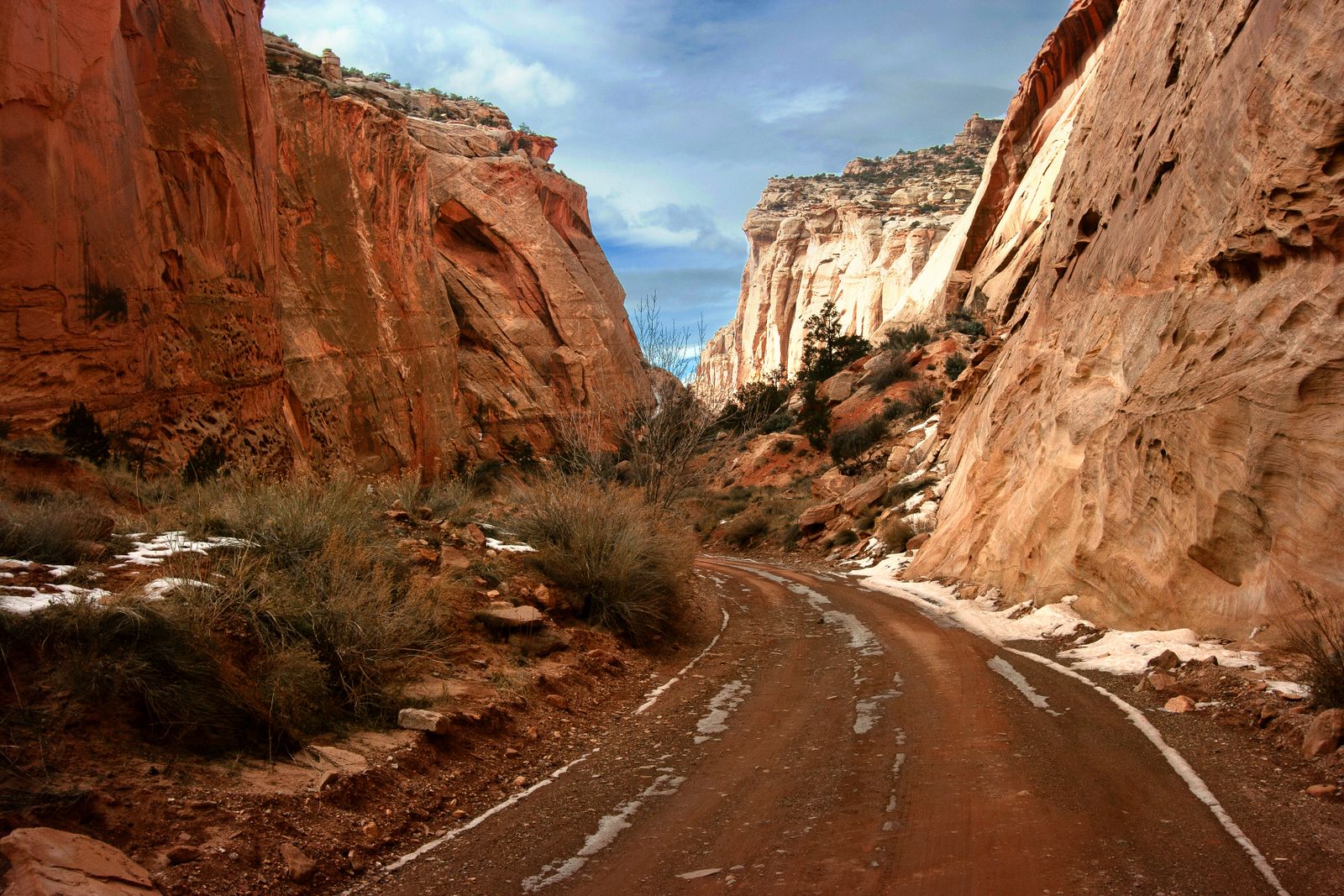
Capitol Reef is often described as Utah’s underrated national park, partly because it receives less attention than Zion, Bryce Canyon and Arches. That relative quiet changes the experience. On less popular trails, travelers may spend long stretches without meeting another group, and viewpoints can feel genuinely spacious rather than managed through crowd flow. The benefit is emotional as much as practical. Red-rock scenery takes on a different character when there is enough silence to notice wind, ravens and the scale of the cliffs. Solitude also increases responsibility. Visitors need more water, better route awareness and realistic expectations about cell service and weather. The park gives travelers room, but that room is valuable precisely because it has not been converted into constant convenience.
Seasonal Planning Is a Safety Skill
Every season changes how Capitol Reef should be approached. Spring offers mild temperatures and blooming orchards but attracts increasing visitation. Summer can be extremely hot, so early starts are essential, and monsoon storms create flash-flood danger in slot canyons and washes. Autumn brings cooler hiking weather and orchard harvests, while winter can produce snow and icy conditions that make high or remote routes more difficult. Travelers should treat weather forecasts as part of the itinerary rather than a final check. Desert storms can develop quickly, and a canyon that looks harmless in dry conditions can become dangerous far from the rainfall that caused the flood. The park rewards flexibility: if heat or storms make one trail unsuitable, scenic drives, historic areas and shorter walks offer alternatives.
Stay Long Enough to Let the Park Become Quiet
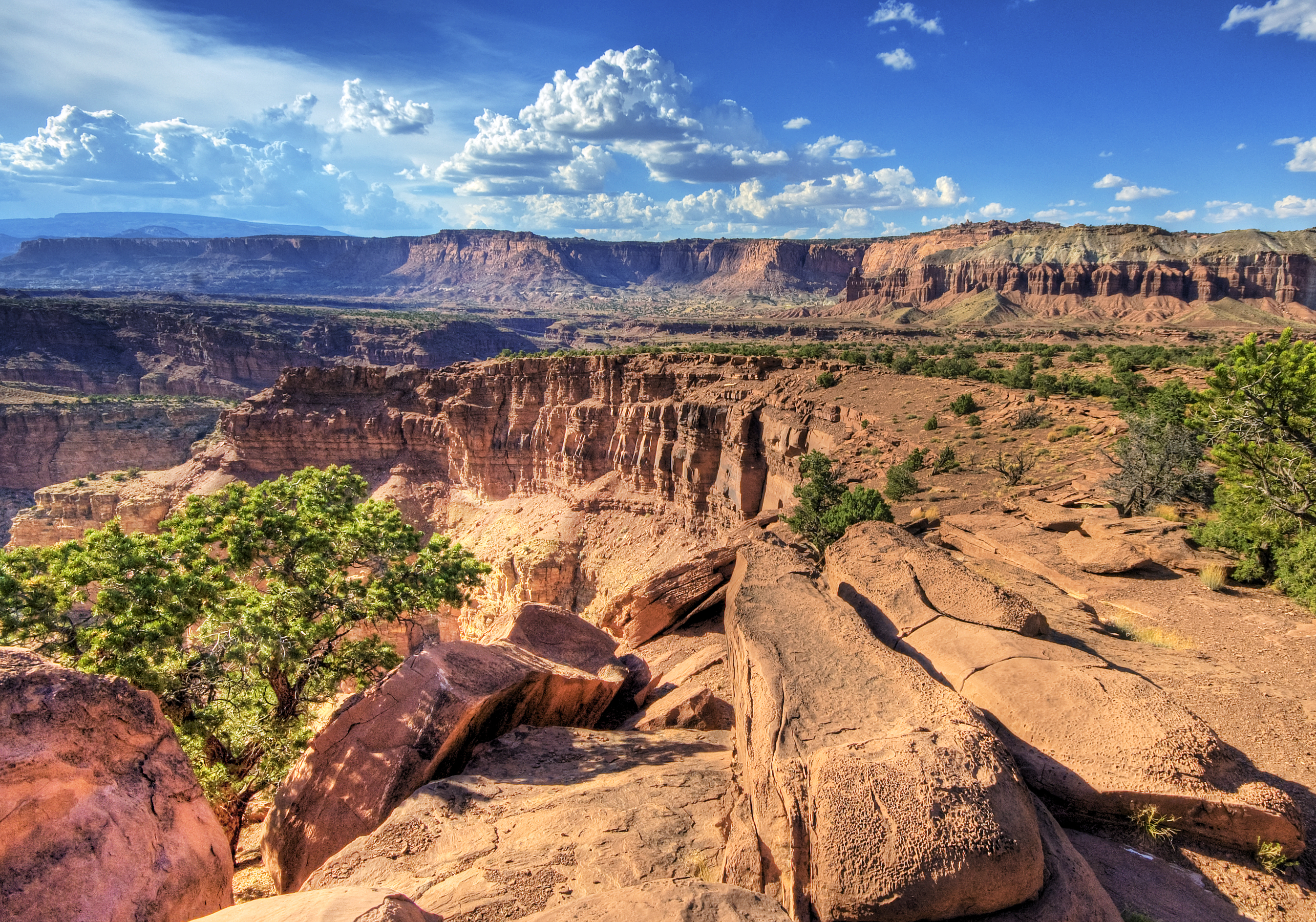
Because Highway 24 makes Capitol Reef easy to sample, many visitors pass through on the way between other Utah destinations. That accessibility is an advantage, but it can also encourage superficial travel. Spending at least two nights allows the park’s personality to emerge: morning light on sandstone, an orchard walk, a longer trail and perhaps a drive toward Cathedral Valley or another less-visited district. The goal is not to collect every viewpoint. It is to experience the contrast between monumental geology and the unusual calm that still survives around it. In a national-park system increasingly shaped by timed entries and crowded overlooks, Capitol Reef’s most precious resource may be the sense that the landscape is not rushing you. The best way to respect that gift is not to rush through it.
Respecting the Quiet Is Part of Visiting
Capitol Reef’s relative solitude is fragile. As more travelers search for alternatives to crowded Utah parks, the same attention that benefits local tourism can place pressure on trails, roads and backcountry areas. Visitors can help by staying on durable surfaces, packing out waste, avoiding cryptobiotic soil and respecting closures around sensitive resources. In the orchards and historic district, the rules are different but the principle is the same: participate without treating the landscape as disposable. Drivers on remote roads should also carry water, a spare tire and enough fuel for conditions that may not offer quick assistance. The park’s quiet feels effortless, but preserving it requires behavior. Capitol Reef is valuable because visitors can still encounter moments that feel unscripted and spacious. Traveling carefully is the price of keeping those moments available to the next person.