The 2026 VMAs carpet offers two contrasting ways to make an entrance. Dark, sheer, and feathered looks create atmosphere through shadow and texture, while neutral gowns with crystals use reflected light to command attention. Ella Bright and Teyana Taylor occupy one side of that visual conversation; Slayyyter, Sienna Spiro, and Raye bring other versions of polished shine. The distinction is more useful than a single best-dressed ranking because it reveals how different styling choices solve the same public problem. A performer or actor must become recognizable within a crowded field of photographs, often before speaking or appearing onstage. Hair, makeup, fabric, and silhouette work together to give that brief encounter a clear identity.
Black Has Several Surfaces
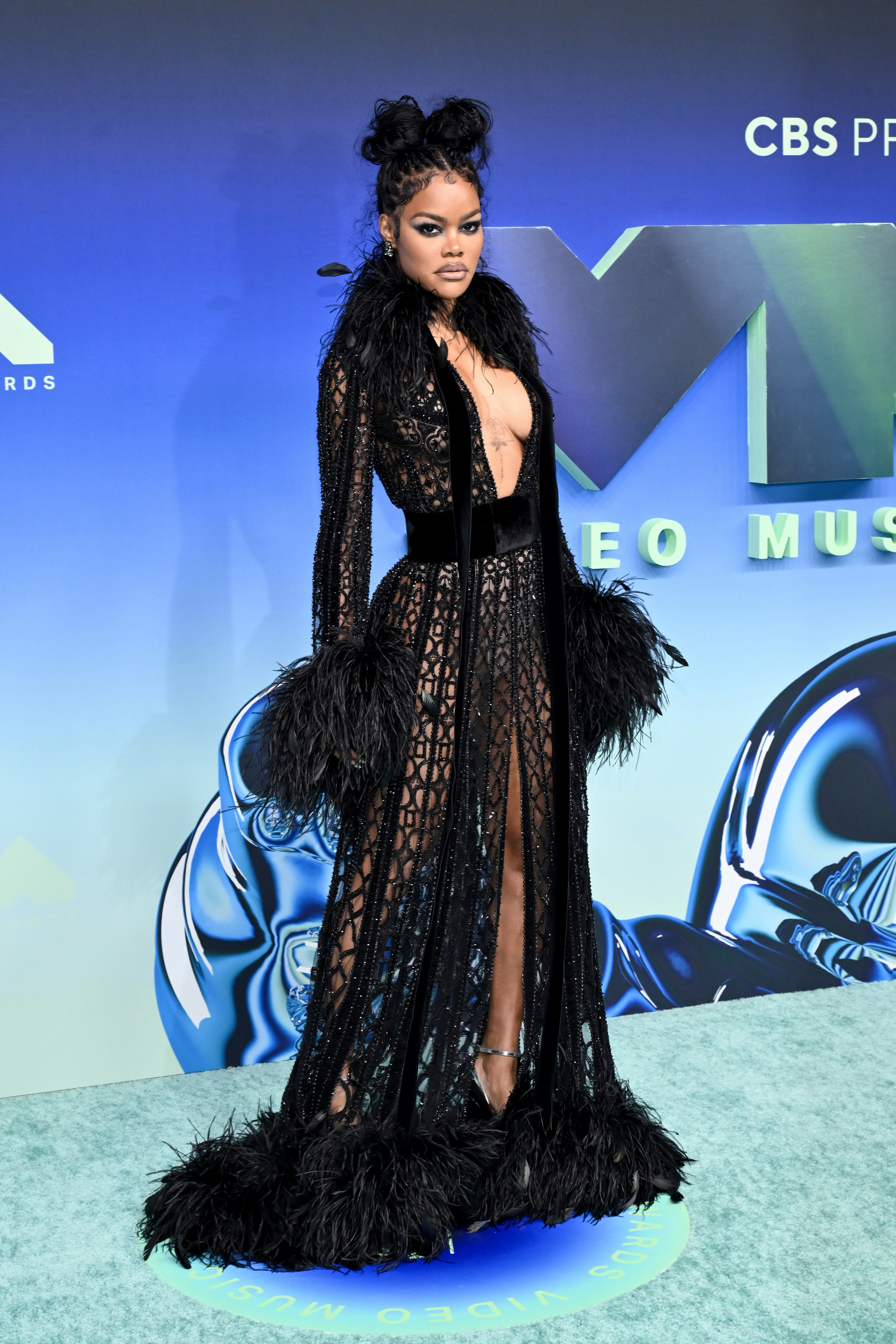
Teyana Taylor’s sheer, feather-trimmed black dress shows why a dark outfit need not read as a single uninterrupted shape. Transparency reveals layers; feathers create an irregular edge; skin and fabric absorb or reflect light differently. The combination gives the camera several textures to register within one color family. The look’s drama comes from those distinctions, not simply from the fact that the dress is black. Its surface carries movement and contrast without requiring a brighter palette.
Twin space buns and a nude lip complete the styling without copying the dress’s texture. Hair introduces a compact, symmetrical form above a garment whose edges are more animated. Makeup leaves the face readable without adding another heavily contrasted element. The composition demonstrates that an outfit’s identity is distributed across the whole appearance. A dress can supply the main material event while hair and makeup establish boundaries that prevent the image from becoming visually crowded.
Ella Bright Uses the Corset as an Anchor
Ella Bright’s corseted gown gives the upper body a controlled structure. A corset makes shape visible through its construction, creating a defined center before the rest of the garment enters the picture. On a red carpet, that center can help an outfit remain legible through changing camera angles. The viewer has an immediate point of recognition, even when the lower silhouette or surrounding details become harder to distinguish in a tightly framed photograph.
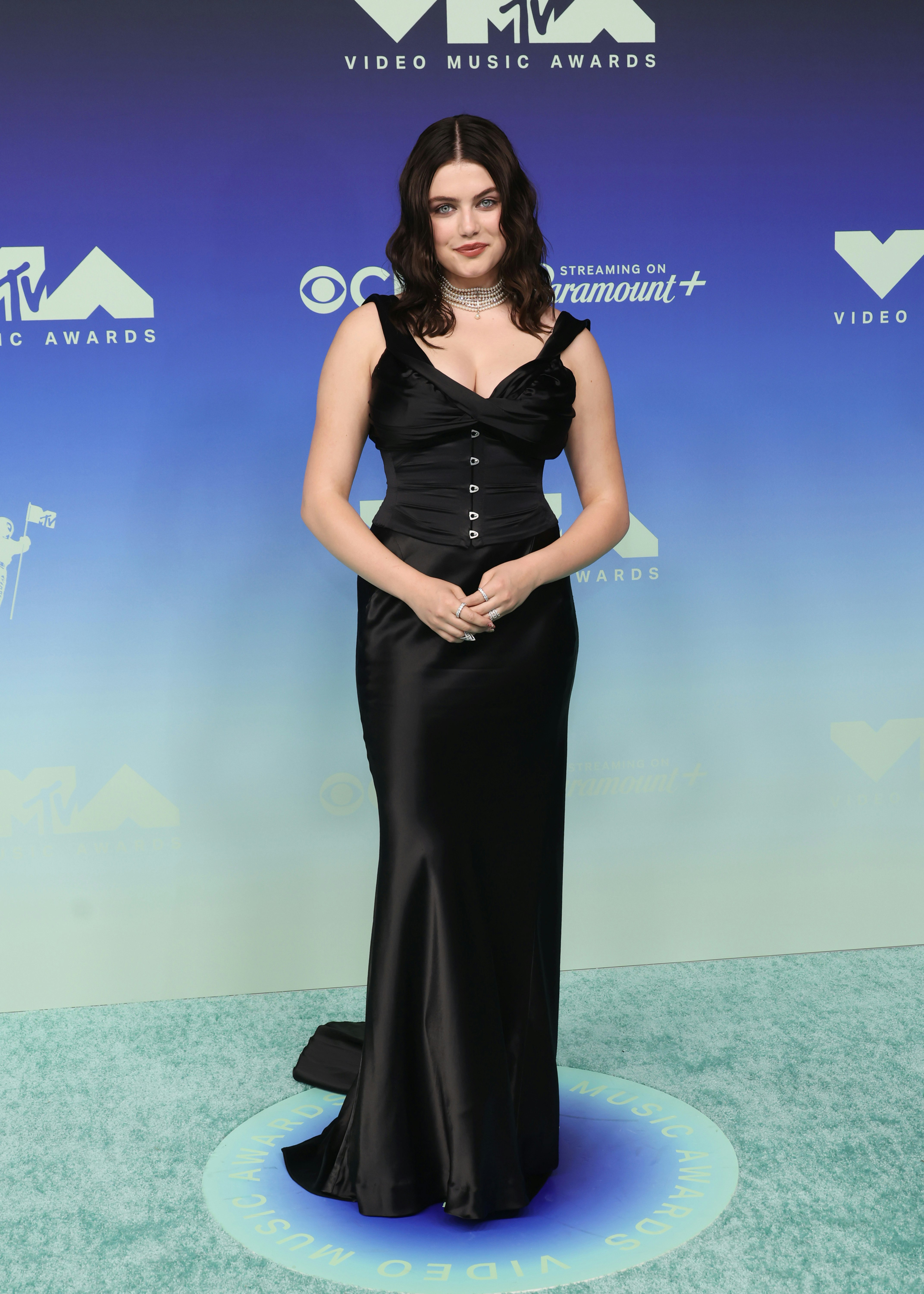
Her wavy bob and moody eye makeup support the gown’s darker atmosphere through a different set of materials. The hair’s movement softens the more fixed construction, while the eye makeup concentrates intensity close to the face. These are related choices without being literal repetitions. The hard structure of the bodice and the bob’s softer movement give the image separate points of focus. The corset organizes the body, the bob gives the head a distinct outline, and the makeup adds a point of emphasis where the camera is likely to move closest.
Neutral Gowns Make Light the Accent
Slayyyter, Spiro, and Raye appear in neutral, crystal-embellished gowns. A camera flash activates the crystals against their pale ground, producing the look’s principal contrast. The embellishment changes as flashes and surrounding light strike the surface, making the same garment appear differently from one image to another. Neutral fabric can provide a relatively quiet ground for that activity. The eye follows the sparkle while the underlying silhouette keeps the dress coherent.
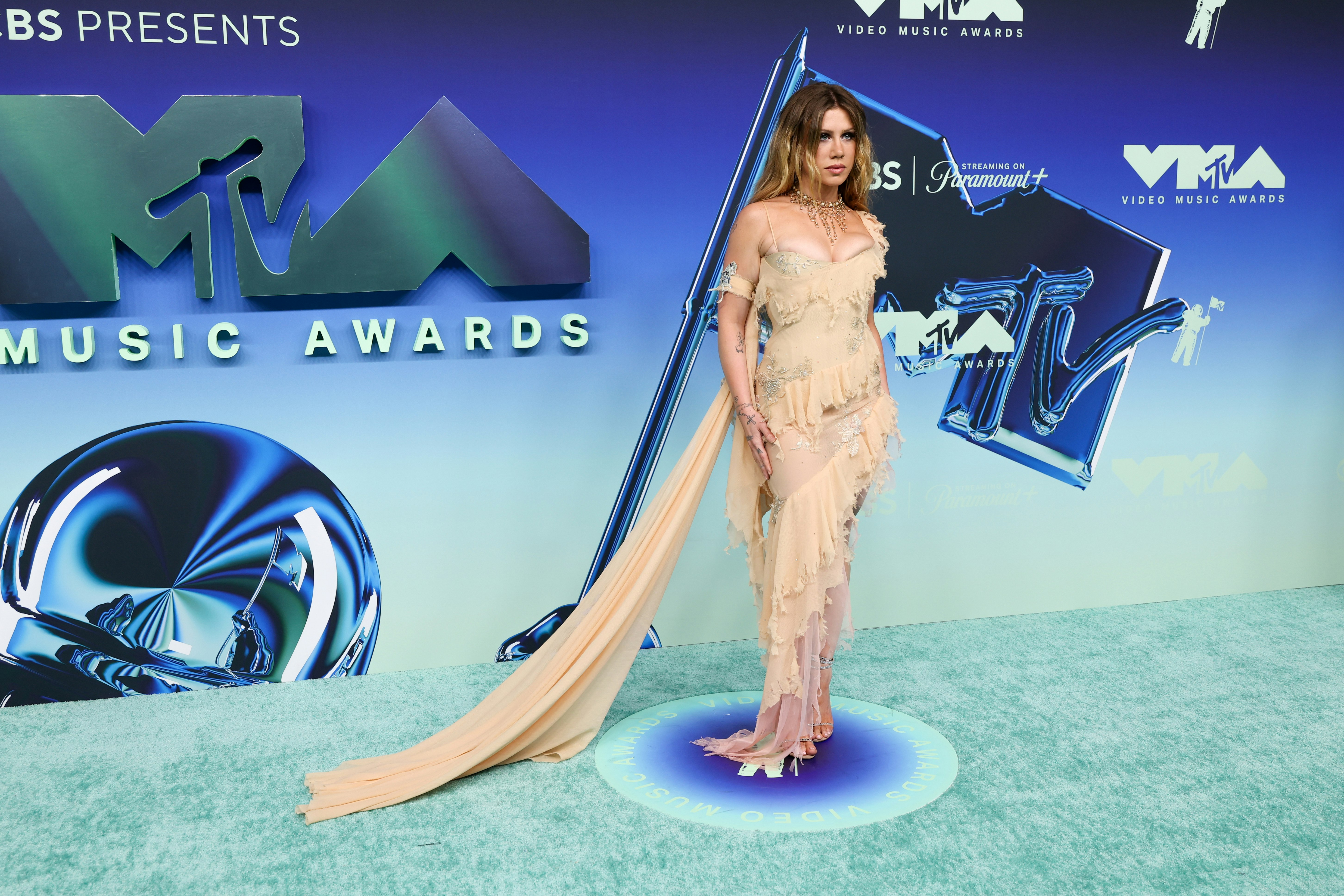
A crystal gown also has two scales of encounter. From a distance, the surface may read as an overall brightness. Close photographs reveal individual details and the intervals between them. The design needs to work in both views because red-carpet images circulate as full-length pictures and cropped portraits. A restrained palette can help those scales remain connected, allowing the decoration to become more detailed as the frame moves closer without changing the outfit’s basic visual identity.
This approach differs from the dark sheer looks, but the two are not opposed as statements about personality. A neutral gown can be theatrical, and a black dress can be delicate. Color does not establish a wearer’s character. The comparison is strongest when it stays with what the clothes actually do: one arrangement creates depth through transparency and uneven edges, while another turns external light into an active part of the surface.
The Carpet Is a Place of Repeated Poses
An arrival photograph can look spontaneous even when the wearer is moving through a highly organized process. Multiple cameras, a designated backdrop, and the need to pause for full-length views give the carpet a particular choreography. Clothes must respond to that choreography. A hem, train, or feathered detail may change as the person turns. A turn can alter the feathered edge; a pause lets the camera register the full length of a train.
This practical setting helps explain why silhouette matters so much. Details can disappear against a busy background or be lost in a cropped frame, but a clear outline remains easier to recognize. Hair and accessories extend that outline, while the dress provides its largest structure. The best comparisons therefore include more than the garment itself. A look that works in a full-length photograph may rely on small decisions near the face to keep the closer images equally specific.
Stage Clothes and Arrival Clothes Have Different Jobs
The VMAs combine a carpet with performances and awards, giving celebrities several kinds of appearance within one evening. An arrival look must endure the camera’s scrutiny at a relatively slow pace. A stage look has to respond to choreography, lighting changes, and the requirements of singing or moving through a production. The two may share a visual identity, but they do not solve the same problem. At the carpet’s slower pace, a pose gives the camera time to register how texture meets the body.
For viewers, the carpet also offers a first encounter before the musical program has supplied its own images. Ella Bright’s defined corset, Taylor’s dark textures, and the neutral crystal gowns establish several possible moods for the evening. The variety prevents glamour from becoming one fixed silhouette. The event can accommodate theatrical shadow and polished brightness without needing either to represent the only correct way to dress for music television.
The flash catches a crystal. A feather shifts as its wearer turns. A bob settles above a structured neckline. Those small physical events give the 2026 arrivals their individuality, and they remain more revealing than assigning every appearance a position on the same list.