A pintxos crawl turns San Sebastián into a sequence of short, vivid decisions. Begin with the gilda at the bar where anchovy, olive and guindilla pepper were first threaded together; cross toward the Old Town for contemporary chicken, smoked salmon or delicate crab; continue over the Urumea River for a mushroom-and-prawn skewer; finish with burnt cheesecake. The portions may be small, but the route is expansive, passing a cathedral, market, beach promenade and museum between counters. Fine-dining prestige has helped make the city famous, yet standing shoulder to shoulder with local diners reveals a more democratic culinary form. Pintxos belong to movement, conversation and the pleasure of leaving before one room becomes the whole night.
The First Bite Has a Name
Casa Valles occupies the 19th-century center of San Sebastián and claims a defining place in Basque food history. The gilda was created here by combining a Cantabrian anchovy, a green olive and a pickled guindilla pepper on a cocktail stick. Salty, fatty, sharp and hot, it compresses several appetites into one mouthful.
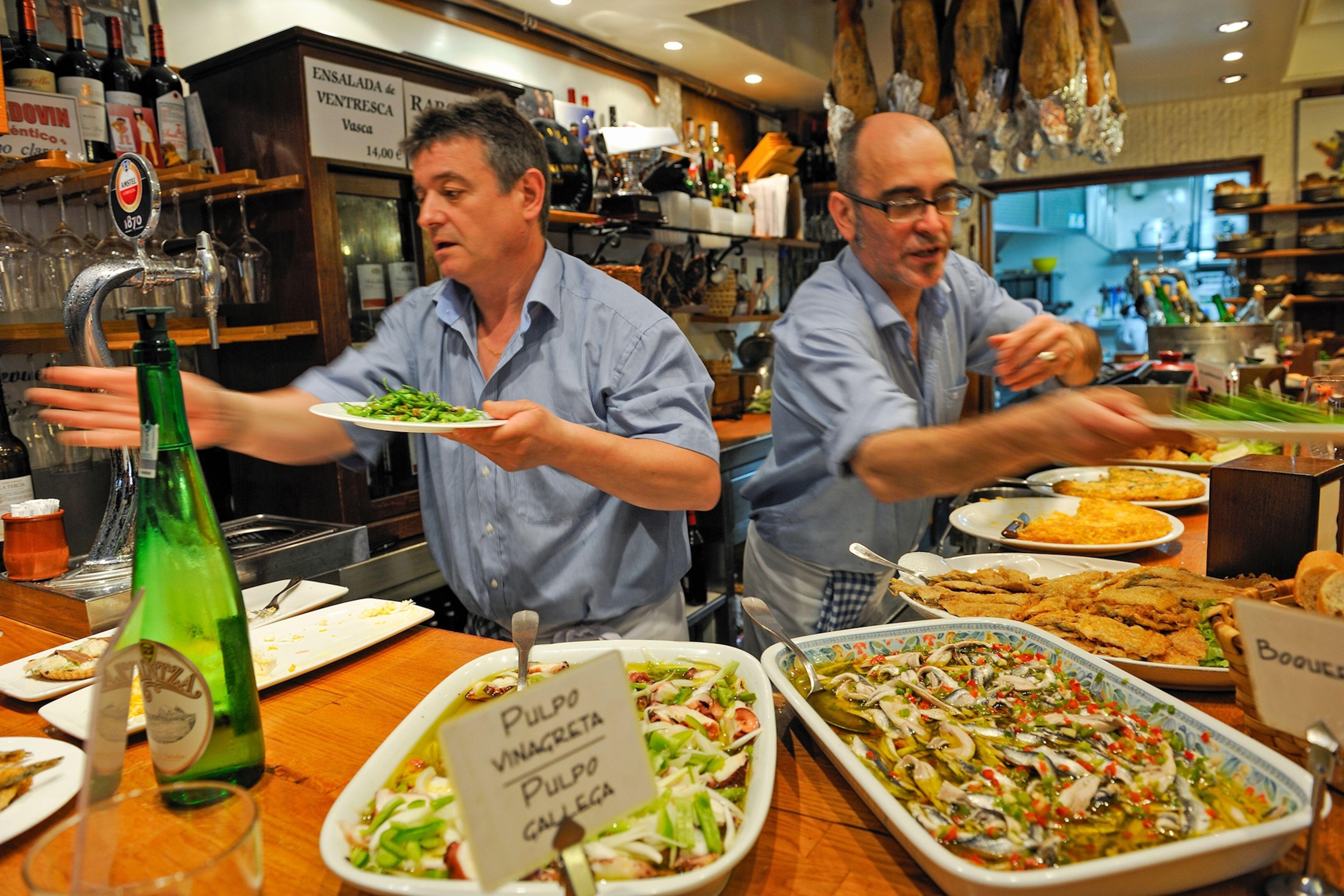
Its name and form made the skewer famous, but the correct setting remains important: hanging hams, wood-paneled walls, crowded conversation and a glass of cider or txakoli. The crisp local white wine cleans the palate without turning the stop into a formal pairing exercise. One bite, one drink and onward is a complete beginning.
A City Between Counters
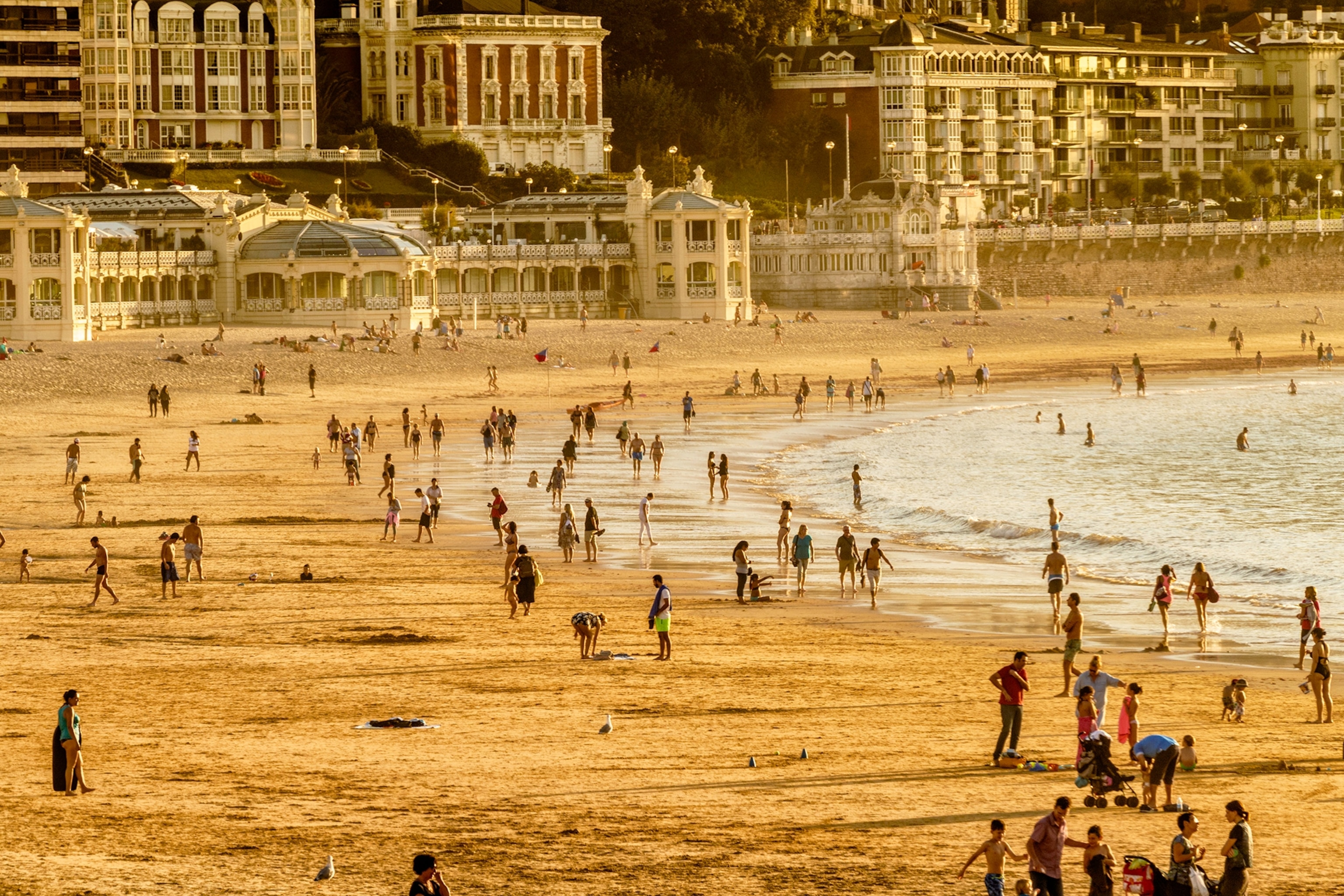
The route toward the Old Town passes Buen Pastor Cathedral and San Martin Market, where produce, meat and fish stalls supply a daily foundation beneath the city’s culinary reputation. La Concha Beach then opens the view to the Atlantic. Joggers, families and musicians share the palm-lined promenade before the 16th-century gate marks the entrance to Parte Vieja.
Walking is not dead time between restaurants. San Sebastián’s elegance—sandstone facades, colonnaded squares, broad boulevards and the curve of the bay—prevents the crawl from becoming an enclosed tasting session. Appetite resets in the sea air, and each neighborhood gives the next bar a different frame.
Tradition Makes Room for New Ideas
Muxumartin uses a stripped-back interior of brick and minimal decoration for modern pintxos. Its prize-winning chicken with ginger and mayonnaise moves beyond the older bread-and-skewer vocabulary while retaining the concentrated scale. Nearby, Txepetxa, open since 1925, specializes in anchovies. Its montadito lays anchovy and smoked salmon over a small piece of toasted baguette.
Ganbara attracts long lines for miniature crab tartlets filled with delicate, mousse-like meat. Gilt-framed paintings and a small family-run room give the experience a density that large restaurants cannot reproduce. The queue is part of the reality, but it should not dictate the entire route. A pintxos evening depends on alternatives and the willingness to leave a packed street.
Across the River, Another Chapter
Gros sits beyond the Urumea River and offers relief from the Old Town’s heaviest crowds. Bar Bergara played an important role in developing modern pintxos during the 1980s. Its champi con gamba brasa combines a grilled mushroom and prawn on a metal skewer, finished with a sauce of garlic and white wine. The dish demonstrates how a tiny format can still build depth through smoke, sweetness and richness.
Crossing the river also corrects the idea that the pintxos scene belongs to a single historic quarter. Culinary culture spreads with residents, rents and new businesses. Gros expands the map while keeping the fundamental behavior intact: enter, order, eat, talk and continue.
Cheesecake as a Final Stop
San Telmo Museum offers art, photography and archaeology before the evening’s last plate. At La Viña, Basque burnt cheesecake provides a conclusion unlike the skewers and tartlets that preceded it. The top is deeply browned, while the center remains custard-soft. It is cut generously and served without elaborate decoration.
The dessert has traveled far beyond the city, but here it belongs to a physical sequence. Its richness makes sense after several short savory encounters and a long walk. Ending with cheesecake also confirms that a crawl does not need a tasting-menu narrative imposed from above.
The method has its own etiquette. Ordering a small number of items keeps movement possible and leaves room for other diners at busy counters. Standing is not a lesser version of service; it places guests inside the bar’s rhythm, close to displays and staff. A crawl works best when the group can decide quickly, pay attention to the house specialty and resist asking every stop to provide a complete meal.
The city’s Michelin-starred restaurants demonstrate another tradition, but they do not make pintxos valuable by association. The small-bar form has independent standards: excellent seafood from the nearby coast, careful frying, balanced sauces and an ability to concentrate flavor. Modern competition encourages invention, while century-old addresses preserve techniques and combinations that need no redesign.
San Sebastián’s great contribution is not only the invention of individual dishes. It has made circulation into a culinary practice. The city supplies enough variation that no counter needs to perform every function. One bar preserves an icon, another experiments, a third specializes and the streets hold them together. A meal becomes a shared route, and the route keeps the city present between bites, drinks and conversations.