Rail-and-bike travel offers a different model of American adventure: use the train for the long distance, then begin riding close to the station. Amtrak stops near routes as varied as the Great Allegheny Passage, the C&O Canal Towpath, Colorado River trails and mountain-bike terrain in the West. The appeal is environmental and practical. Cyclists can avoid one-way car logistics, link point-to-point routes and turn the journey itself into part of the trip. The complication is that bicycle policies vary by train, route and station, so advance planning matters. The strongest itineraries treat the rail ticket and the trail map as one system, checking reservations, loading procedures and station access before the first pedal stroke.
Cumberland Is the Classic Rail-to-Trail Gateway
Cumberland, Maryland, is one of the clearest examples of how rail and cycling can work together. Amtrak service places riders near two major long-distance routes: the 150-mile Great Allegheny Passage and the 184.5-mile C&O Canal Towpath. From the station, cyclists can choose a journey toward Pittsburgh or Washington, D.C., using largely traffic-free corridors shaped by former rail and canal infrastructure. The town itself provides useful pre-ride services, including food, gear and accommodation, which reduces the stress of beginning a multi-day trip. The C&O route adds historic interest through aqueducts, canal structures and the long Paw Paw Tunnel, while restored lockhouses offer distinctive overnight options. This is what makes a good rail-bike destination: the station is not merely nearby; it is integrated into the riding experience.
Train Access Solves the One-Way Problem
Point-to-point bike trips are attractive because the landscape changes continuously, but they create a logistical question: how do you return to the starting car? Rail can remove that problem entirely. Riders can travel to one city, cycle for several days and board a train elsewhere, turning a linear trail into a practical vacation. This works especially well in regions where routes connect historic towns and established lodging. The model also lowers the barrier for travelers who do not own large vehicles or bike racks. A bicycle becomes part of the luggage system rather than something requiring a dedicated road trip. In a country where recreational travel is heavily car-dependent, that shift can make cycling feel more accessible and more adventurous at the same time.
Bike Policies Require Real Preparation
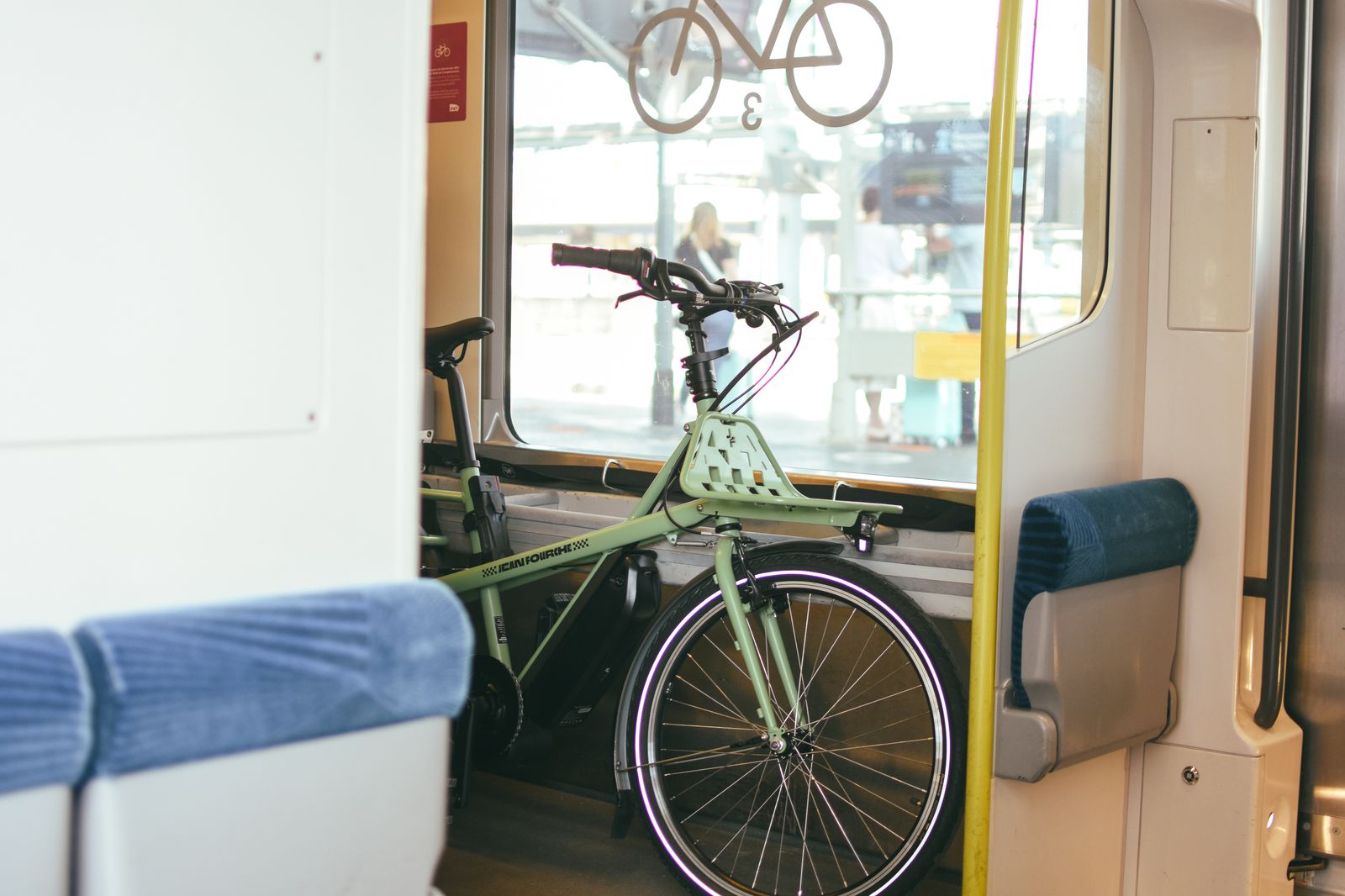
The romantic image of rolling a bicycle directly from train to trail is not always the operational reality. Amtrak rules differ by route, and some trains require reservations, boxed bikes or specific loading procedures. Certain stations allow walk-on bicycle service while others do not. Advocacy groups such as the League of American Bicyclists have pushed for clearer, safer and more consistent systems. Travelers should therefore confirm the exact policy for every segment rather than relying on a general statement that bikes are permitted. It is also wise to know platform access, train dwell time and how loaded panniers should be handled. A successful rail-bike trip is forgiving once the riding begins; the station transition is the moment that deserves precision.
The West Adds Scale and Terrain
Train-accessible cycling is not limited to eastern greenways. Amtrak’s western routes place riders near desert, river and mountain landscapes that would otherwise require long drives. Grand Junction, Colorado, for example, connects the California Zephyr with a paved riverfront network and more demanding mountain-bike trails in nearby recreation areas. Elsewhere, rail can place cyclists within reach of national parks and high-country towns. These trips require a different level of planning because elevation, heat and distance between services can be serious. Yet the combination is compelling. Watching a landscape unfold from a train window before riding through part of it creates a sense of geographic continuity that air travel cannot provide.

A More Sustainable Adventure Only Works If It Is Easy
Rail-and-bike travel is often promoted as a lower-carbon alternative to driving or flying, but environmental virtue alone will not make it mainstream. The experience has to be reliable. Clear bike reservations, station ramps, predictable storage and trail connections determine whether ordinary travelers will choose the option again. The good news is that many routes already demonstrate how enjoyable the model can be. A train delivers you to a historic town, the bicycle takes over, and the next several days unfold at human speed. The arrangement reduces car dependence while increasing the sense of journey. In a country with thousands of miles of trails and an underused passenger-rail network, that combination may be one of the most promising forms of domestic adventure travel available.
Plan the Journey as One Continuous Route
The most elegant rail-bike itineraries avoid thinking of the train and bicycle as separate segments. Begin by mapping the entire movement from home to station, from station to trailhead, from overnight stop to resupply point and finally from the end of the ride back onto the rail network. This exposes weak links early: a station with stairs, a train that requires boxed bikes or a trail section without food for many miles. It also creates opportunities to travel lighter because towns along rail corridors often provide lodging and services. Riders new to the model should start with a one- or two-night route before attempting a long crossing. The aim is not to prove self-sufficiency but to use public transport and cycling in complementary ways. When the logistics work, the result feels unusually seamless: the country passes outside the train window, then slows to bicycle speed, without a private car becoming the organizing center of the trip.