At 3,812 meters, Lake Titicaca makes every climb feel deliberate. On the Peruvian islands of Amantaní and Taquile, stone paths pass terraced fields, sandy coves and houses where wool is spun, knitted and woven as part of daily life. Textiles communicate skill, family teaching and social belonging; on Taquile, the tradition is protected by UNESCO Intangible Cultural Heritage status. A homestay brings visitors closer to that system than a market purchase alone. Meals come from cooperative fields, village squares host celebrations and men knit chullo hats learned from their grandfathers. The landscape is spectacular, but the strongest impression comes from seeing craft remain embedded in agriculture, courtship, work and the household.
Altitude Sets the Tempo
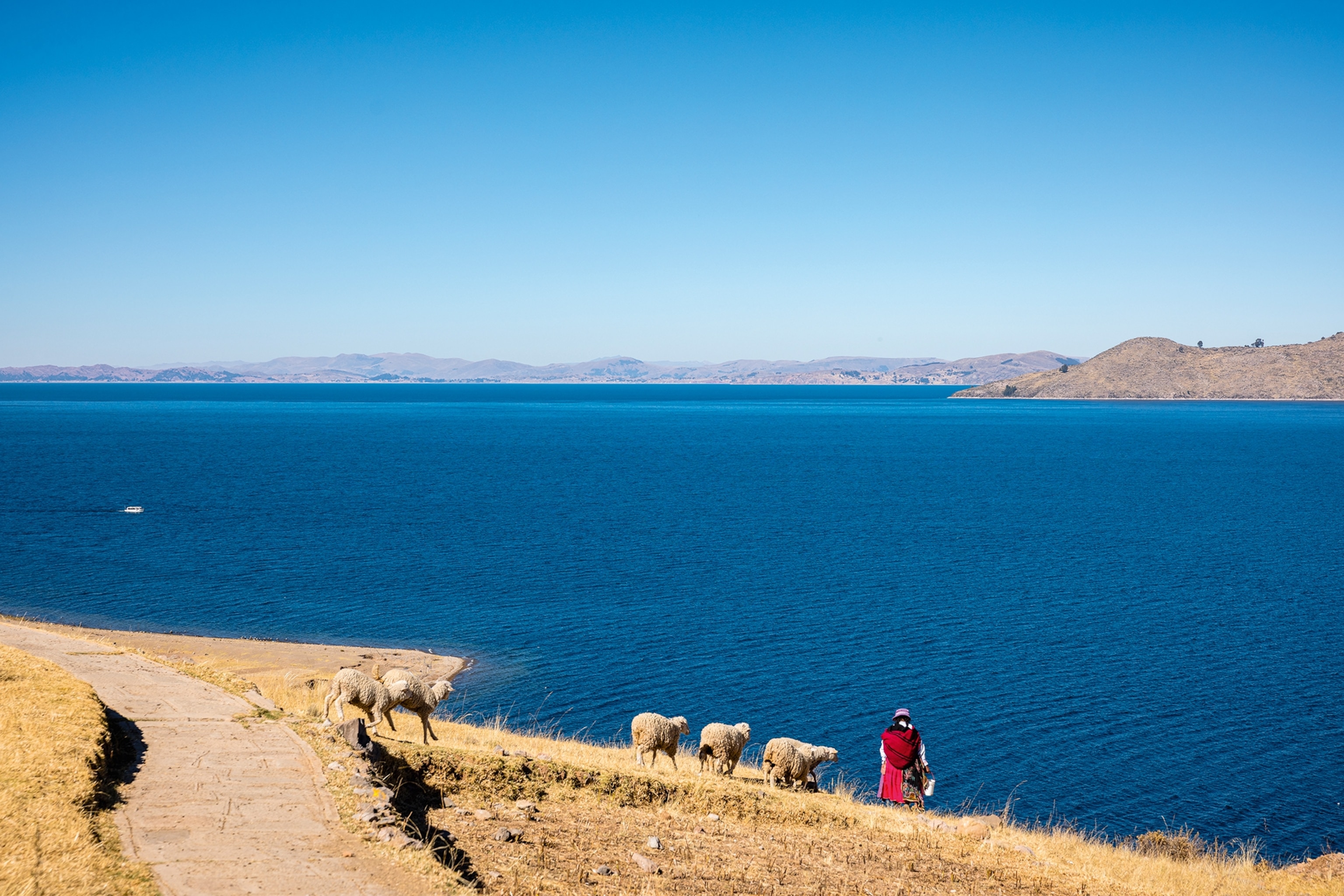
Lake Titicaca stretches across the Peru–Bolivia border at 3,812 meters above sea level, making it the world’s highest navigable lake. Thin air slows movement on Amantaní and Taquile, where paths rise through terraced slopes rather than following flat roads. The limitation can become a form of attention: stone arches, woven clothing and changes in the color of the water register more clearly when the body refuses to hurry.
Amantaní is home to about 4,000 residents divided among ten communities. The Ruta de Circunvalación circles the island, and stone arches mark the entrance to different villages. Terraces shaped by centuries of cultivation hold native plants, including red cantuta, Peru’s national flower. Snow-covered Bolivian Andes remain visible beyond the lake on clear days.
The Homestay as Workshop
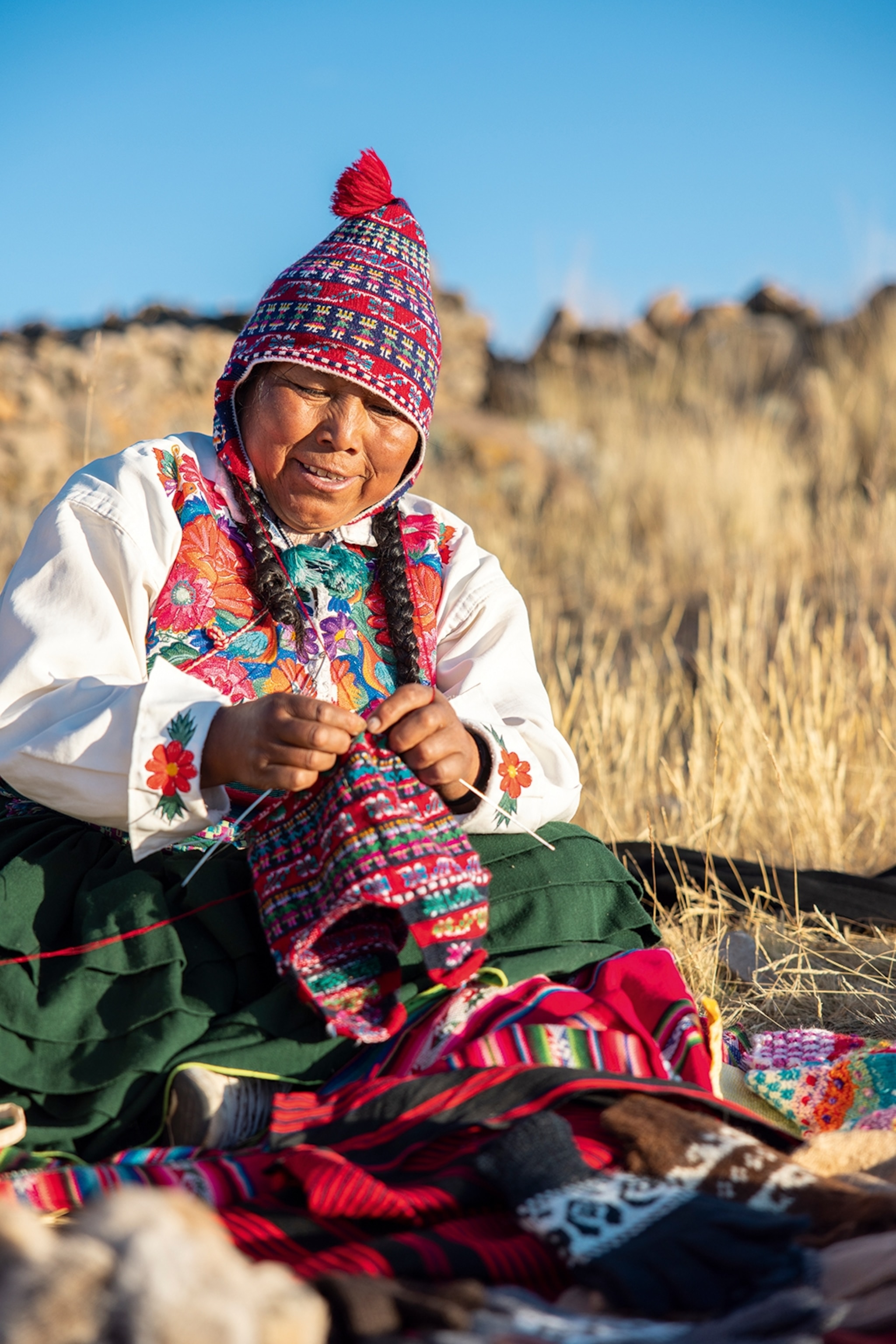
Pilar Rosmery Yucra Quispe, a weaver from Amantaní’s Pueblo community, produces traditional textiles while operating the Tikawasi homestay with her husband, Jose Luis. Her embroidered clothing carries floral detail related to the island’s landscape. Hosting allows visitors to encounter finished work beside the domestic routines and tools that produce it.
That context changes the transaction. A textile is not detached from the person who made it or reduced to a souvenir selected at the end of a day trip. Guests see time invested in spinning, arranging color and building pattern. They also contribute directly to a household that is maintaining the practice.
Taquile’s Cooperative Thread
On neighboring Taquile, textile arts hold UNESCO Intangible Cultural Heritage recognition. Residents spin wool and knit at home, then take finished goods to a cooperative in the main square. Shared selling gives the community a collective center for work that is often performed individually or within families.
The square is also used for festivals, weddings and dance performances. Craft therefore circulates through several layers of public life: garments are worn, skills are demonstrated, goods are sold and celebrations make patterns visible in motion. UNESCO status protects a living system only if the knowledge continues to pass between generations.
A Hat That Must Hold Water
Men on Taquile learn to knit chullo pintay hats with earflaps from a young age. Mario Huatta Yucra learned under his grandfather’s guidance. Tradition evaluates a prospective husband’s workmanship by pouring water into the finished hat and observing how long it holds without leaking. Dense, skillful knitting becomes evidence of patience and competence.
The test gives technique a social meaning that cannot be read from pattern alone. A visitor may admire color and geometry, but residents understand additional information about the maker, stage of life and community role. Textile literacy belongs to the culture that produced the object.
Fields, Kitchens and the Same Cooperative Logic
Agriculture follows a rotation of potatoes, corn and grains before land rests in a fallow period. Crops are cooked in clay ovens and served with Lake Titicaca fish or fried cheese from the Puno region. The arrangement mirrors textile production: households work specific plots and tasks while community systems coordinate the larger cycle.
Mario and Juliana Huatta Yucra live near paths leading to beaches, pre-Inca ruins and wide lake views. Their surroundings resist the idea that the islands can be summarized by weaving, even though cloth offers a powerful entry point. Farming, cooking, ritual and hospitality support the same continuity.
Homestays make those relationships observable across a full day. Morning light reveals the terraces as an agricultural system; time indoors shows the repetition required by fine knitting; an evening meal returns attention to potatoes, grains, lake fish and regional cheese. Staying overnight also reduces the temptation to treat high-altitude communities as a brief performance arranged around a boat schedule.
Visitors should let the elevation determine their pace. Stone paths can feel demanding at 3,812 meters, and the islands reward shorter stages with long pauses at viewpoints. That physical adjustment creates time to see details: cantuta blossoms repeated in embroidery, hats hanging from a rail, wool drawn through a doorway and footpaths connecting homes to the cooperative square.
The cooperative model matters economically. Goods sold in a central location can be understood as community production rather than anonymous craft stock. Buying directly does not resolve every pressure created by tourism, but it keeps the maker, technique and island connected in the exchange.
Photography naturally gravitates toward hands, yarn and intense color against the blue lake. A slower visit reveals the relationships outside the frame: who taught the stitch, where the wool is prepared, how goods reach the cooperative and which field supplied dinner. Lake Titicaca’s textiles endure because they remain useful to life, not because they have been isolated from it.