Sloths became ideal social-media animals because their fixed facial structure resembles a smile and their slow movement reads as calm. Both impressions are dangerously misleading. Handling, transport, noise and repeated human contact can produce severe stress, while a raised arm interpreted as a wave may be a defensive attempt to appear larger. Demand for close photographs has helped normalize attractions that remove animals from forests and fuel illegal trade. Responsible observation asks travelers to accept a less marketable proposition: hire a qualified local guide, keep distance, use binoculars and understand that the animal may never appear. Uncertainty is not a failure of the experience. It is evidence that the forest has not been arranged for the camera.
A Smile That Isn’t an Expression
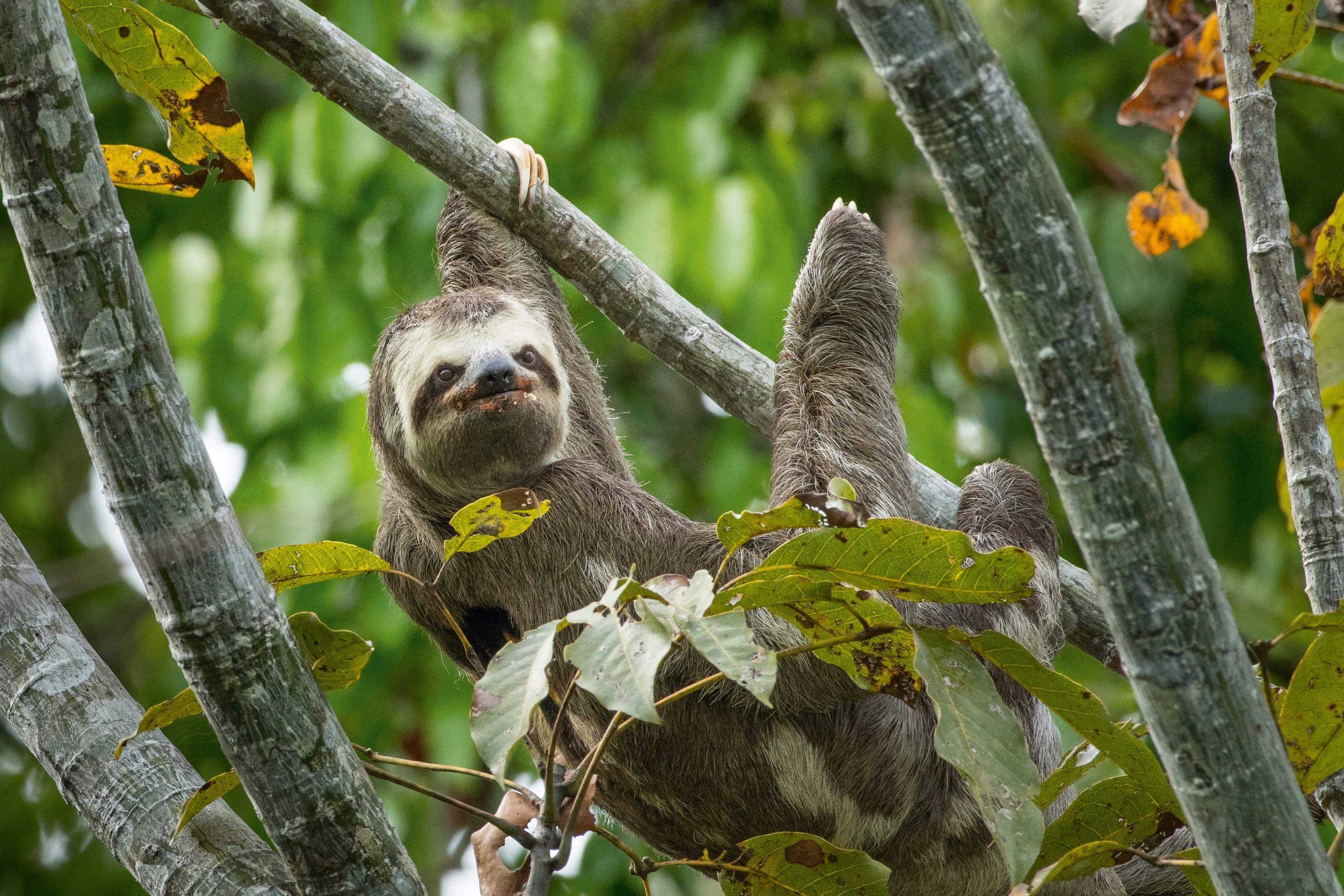
High in a tropical canopy, a three-toed sloth can disappear into leaves despite its size. The curve of a claw or a patch of shaggy fur may be the only clue. In tourist photographs, by contrast, the animal appears easy to approach and emotionally readable. Its face seems content, its movement unhurried and its lifted limb almost friendly.
Anatomy tells another story. Sloths lack the facial muscles humans use to produce comparable expressions, so the familiar “smile” does not indicate pleasure. Slow movement can conceal distress, and the apparent wave is often defensive behavior. The animal is trying to make itself look larger to a possible threat, not greeting a visitor.
The Selfie Has a Supply Chain
Wildlife organizations warn that demand for contact photographs contributes to illegal trade across Central and South America. Conservationists believe thousands of sloths are taken from forests in countries including Brazil, Peru and Colombia, although reliable totals are unavailable. Some enter the exotic-pet market; others appear at roadside venues or facilities using the language of rescue while allowing visitors to hold and feed animals.
Removal can be violent. Mothers may be killed so babies can be sold, and many young animals die before reaching display. Three-toed sloths are especially poorly suited to captivity because they eat a narrow range of leaves and normally spend much of life alone. A visitor cannot evaluate welfare by the animal’s quiet appearance.
Guarantees should also raise questions. Properties sometimes relocate sloths from roads or fragmented habitat onto private land, presenting the move as protection while improving the likelihood of sightings. An animal seen in vegetation is not necessarily living where it chose or where its long-term needs can be met.
Watching Is an Active Skill
Certified naturalist guides know which habitats sloths use and how to scan Cecropia trees without disturbing them. Ethical operators visit areas where sightings are possible or reserves committed to non-intervention. They do not promise contact, feeding or a particular pose. The tools are simple: distance, patience, binoculars and a spotting scope.
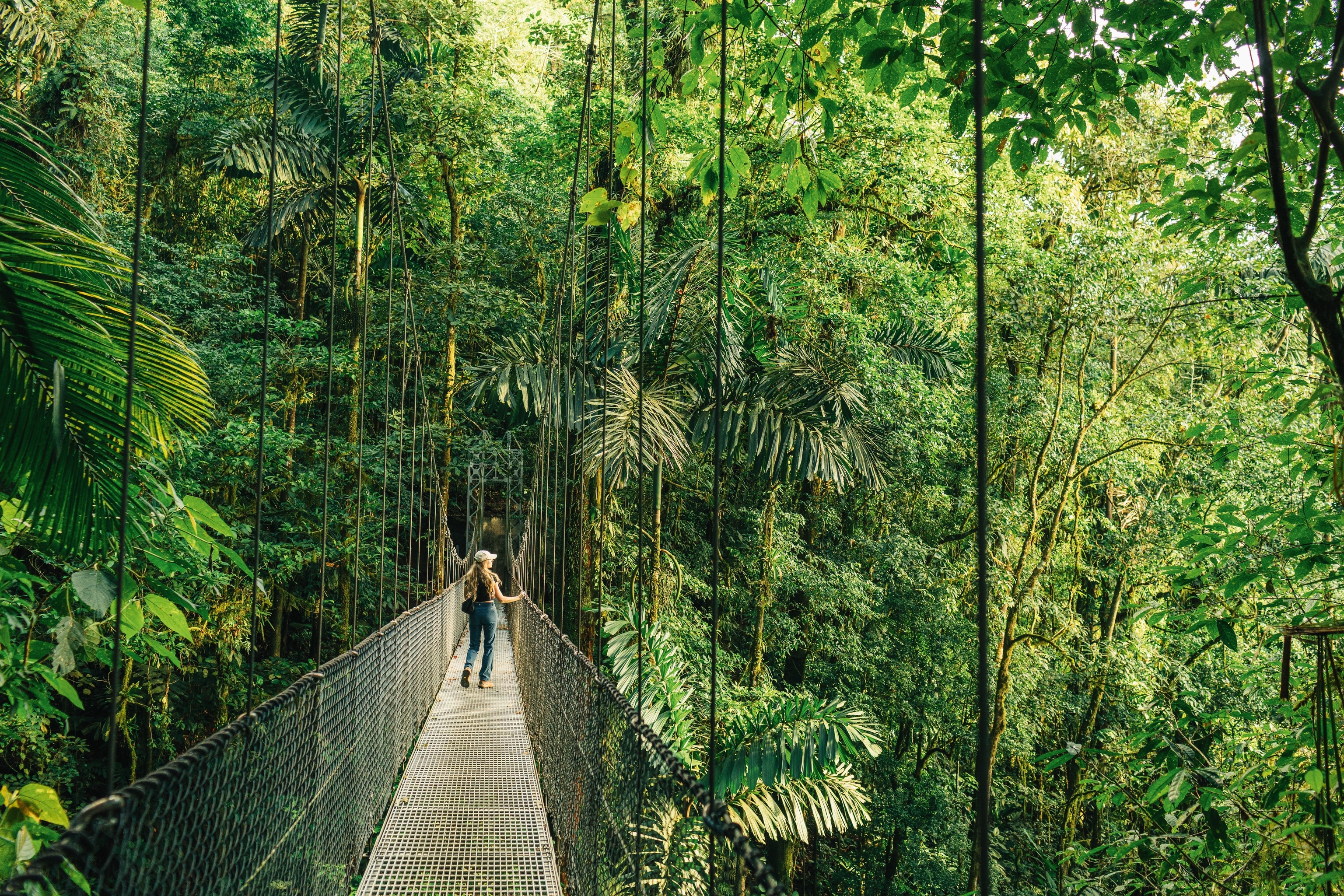
Watching from afar allows behavior to continue. A sloth may sleep, climb upright, descend slowly or remain almost indistinguishable from a branch. Its fur supports algae and moths; it comes down from the canopy roughly once a week to relieve itself; despite an arboreal life, it can swim. Those details become more interesting when the animal is treated as part of an ecosystem instead of a prop.
Let the Forest Refuse
Responsible wildlife trips frame uncertainty honestly. Operators in the Amazon, Costa Rica and Brazil emphasize habitats and natural history rather than a guaranteed checklist. If a sloth remains hidden, birds, plants, insects and the structure of the forest still carry the day. The approach asks guests to replace entitlement with attention.
Longer observation also changes the value of a photograph. A distant image showing an animal choosing its own posture may lack the instant intimacy of a selfie, but it records a genuine encounter. The absence of touch is not an emotional deficit. It is the condition that allows the animal to remain wild.
Ethical Encounters Beyond Sloths
The same standard applies elsewhere. On the Peru–Colombia border, the Musmuki Tourism Association runs low-impact walks to see an endemic night monkey sacred to the Tikuna people; former monkey traders have shifted toward guiding and conservation. Near San José, Rescate Wildlife Rescue Center rehabilitates and releases about 3,000 animals a year while caring permanently for roughly 700 that cannot return to the wild.
Belize’s Rio Bravo Conservation and Management Area protects 254,000 acres of hills, forest, savanna, plains and wetlands. Baird’s tapirs and Yucatán black howler monkeys live within the reserve, where two lodges support longer stays. None of these places should be judged by how closely an animal approaches.
Sloth biology makes this freedom especially important. Their specialized diets, solitary habits and energy-conserving pace evolved for life in the canopy, not repeated encounters at ground level. The same camouflage that frustrates a traveler protects the animal. A guide who refuses to shake branches, call it closer or manipulate its position is preserving the very behavior the visitor came to witness.
The essential test is behavioral freedom. If a tour requires capture, handling or relocation to deliver its promise, the promise is the problem. A sloth hidden high in a Cecropia tree owes the visitor nothing. Seeing it on those terms is precisely what makes the moment worth remembering.