Zagreb is often introduced through its Austro-Hungarian facades, café culture and orderly central squares, but its street art reveals a parallel city built from conflict, humor, memory and creative rivalry. Artists such as Krešimir Golubić, known as Leon GSK, helped shape the scene after returning from Berlin in the early 1990s, when Croatia was at war and walls became a form of communication as well as expression. Today stickers, stencils, murals and tiny visual interventions sit beside formal architecture throughout the center. A street-art walk changes how visitors read Zagreb because it turns apparently incidental surfaces—lamp posts, shutters, corners and crossings—into evidence of communities talking to one another in public.
The Scene Grew From a Difficult Decade
Golubić’s memories of the early 1990s capture how different the city felt when contemporary street culture was emerging. Croatia was experiencing war, public space was politically charged, and graffiti could function as identity, provocation or connection. After time in Berlin, he returned to Zagreb and began using walls as a place to ask questions and find other artists. That origin matters because it prevents the scene from being reduced to decorative murals created for tourists. Street art often grows in moments when formal cultural institutions feel distant from younger communities. The wall becomes immediate, inexpensive and open to response. Zagreb’s current scene is more organized and internationally connected, but the early improvisational spirit still shapes how local artists understand public space.
The City Center Becomes a Visual Conversation
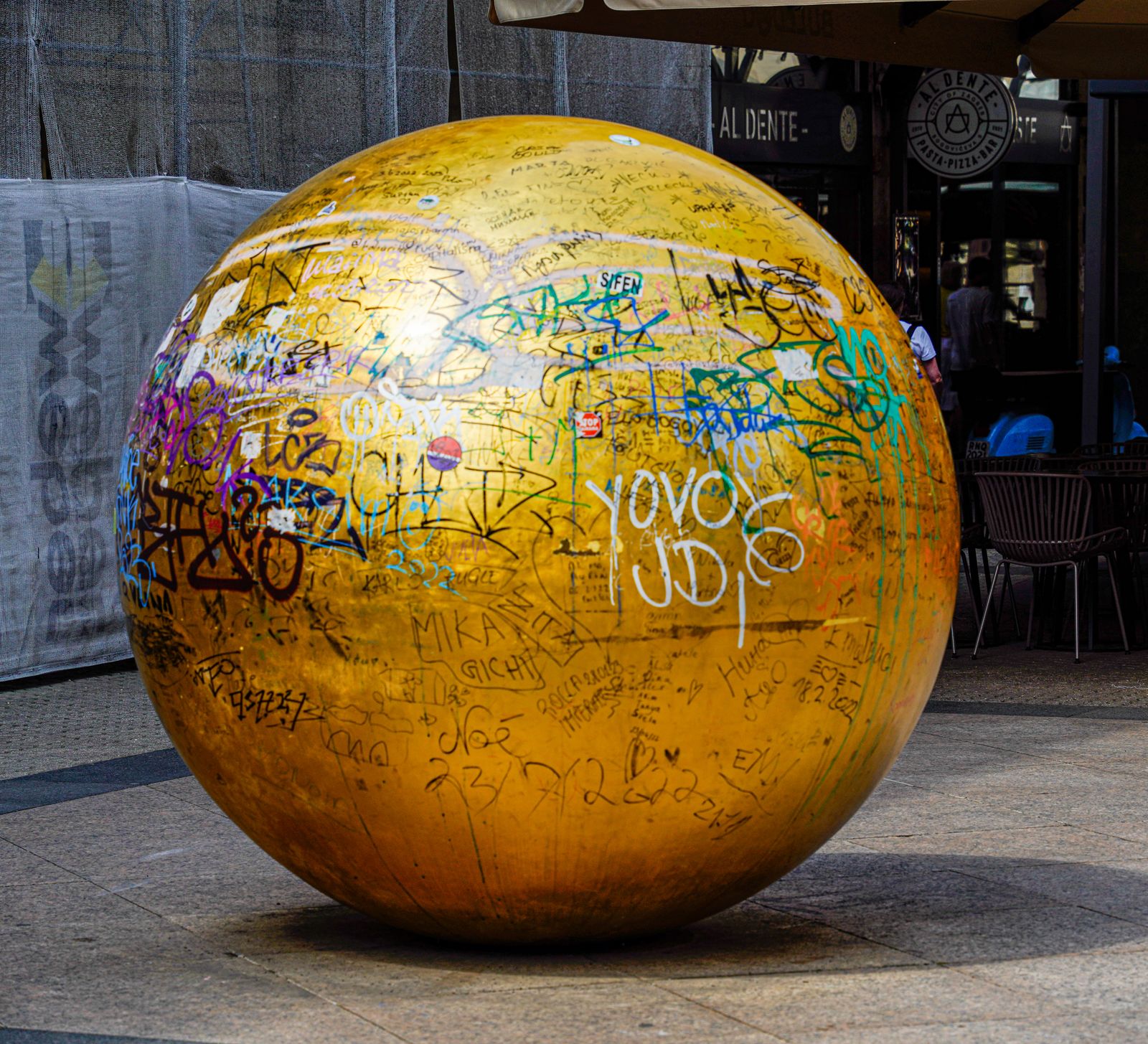
A conventional walk through central Zagreb might focus on Ban Jelačić Square, historic churches and nineteenth-century architecture. A street-art tour redirects the eye toward smaller surfaces. Paste-ups, stickers and stencils can appear on a side street only meters from major landmarks. One artist’s red fish becomes a recognizable signature; another uses a stencil or altered traffic element to create an inside joke. Lamp posts accumulate layers of stickers until they become informal archives of subcultures passing through the city. The pleasure comes from learning to distinguish deliberate interventions from ordinary visual noise. Once travelers understand that artists are responding to one another, the streets stop looking like static scenery and start behaving like a conversation with multiple authors.
Murals Are Only the Most Visible Layer
Large murals are easy to photograph and often become landmarks, but focusing only on them misses the intimacy of street art. Small-scale works can be more revealing because they depend on discovery rather than spectacle. A sticker placed at eye level, a painted crossing or a tiny stencil may be designed primarily for residents who pass the spot repeatedly. These pieces can disappear quickly through weather, cleaning or new layers, which gives the medium a temporary quality unlike museum art. That impermanence is part of the attraction. Travelers encounter a version of Zagreb that may not exist in exactly the same form a year later. The city is continuously editing itself.
A Local Guide Changes the Meaning
Street art is unusually dependent on context. Without a guide or prior knowledge, visitors may recognize technical skill but miss the references that make a piece significant. Artists know which works respond to political events, which names belong to international visitors and which visual jokes have circulated for years. Walking with someone from the scene transforms the experience from scavenger hunt into social history. It also introduces the ethical complexity of street art tourism. Not every artist wants work turned into a branded attraction, and unauthorized art remains connected to questions of property and public space. The best tours respect that tension rather than sanitizing it. They explain why the work matters without pretending that all of it was created for an audience of visitors.

Zagreb Is More Interesting When Both Cities Are Visible
The formal and informal Zagrebs do not cancel each other out. The city’s elegant architecture provides the backdrop against which street interventions gain their energy, while graffiti and murals prevent the historic center from becoming a preserved stage set. Seeing both layers creates a more accurate sense of the capital: orderly but irreverent, proud of heritage yet willing to write over it. This is why street art can be such a useful travel lens. It directs attention away from monuments long enough to notice who is using the city now. Zagreb’s walls record humor, conflict, ambition and memory in a language that is constantly changing. Travelers who learn to read even a little of that language leave with a city that feels less finished—and therefore more alive.
Street Art Tourism Should Leave Room for Change
The moment street art becomes a travel product, there is a risk that cities begin protecting the very impermanence that made the medium interesting. Zagreb’s scene benefits from festivals and tours, but it should still be allowed to evolve, disappear and argue with itself. Visitors can support that culture by booking guides connected to local artists, respecting private property and resisting the urge to treat every wall as a permanent photo backdrop. Purchasing work from local creators or visiting independent galleries can also direct money back toward the community that produces the public art. The best street-art travel does not demand preservation of every piece. It values the creative ecosystem that keeps producing new ones. Zagreb is compelling because its walls are active, not because they have been curated into an outdoor museum. Protecting that vitality means accepting that the artwork seen today may be gone on the next visit.