The United States lacks Europe’s thousand-year cathedrals, but its sacred architecture tells a different kind of story: rapid settlement, migration, denominational diversity and the repeated reinvention of religious space. From the adobe San Miguel Mission in Santa Fe to Gothic monuments in Washington and modern woodland chapels, American churches reflect hundreds of traditions rather than one dominant architectural lineage. More than 350,000 churches serve a Christian population of extraordinary ethnic and denominational variety. For travelers, the most compelling buildings are not simply beautiful interiors. They are documents of communities deciding what permanence, sanctuary and public faith should look like in landscapes as different as California, the Ozarks and the desert Southwest.
The Story Starts With Adobe, Not Gothic Stone
San Miguel Mission in Santa Fe is often identified as the oldest church in the continental United States, and its adobe walls immediately challenge the idea that American sacred architecture must imitate Europe. Built within the cultural and colonial history of the Southwest, it belongs to a construction tradition shaped by local materials, Indigenous labor and Spanish Catholic influence. That regional specificity is the key to reading churches across the country. The United States was settled, expanded and urbanized in uneven waves, so religious buildings absorbed the styles and resources available in each place. A New England meetinghouse, a Southwestern mission and a late-nineteenth-century urban cathedral may share a Christian purpose while expressing completely different relationships to climate, community and power.
Cathedrals Became Statements of Urban Confidence
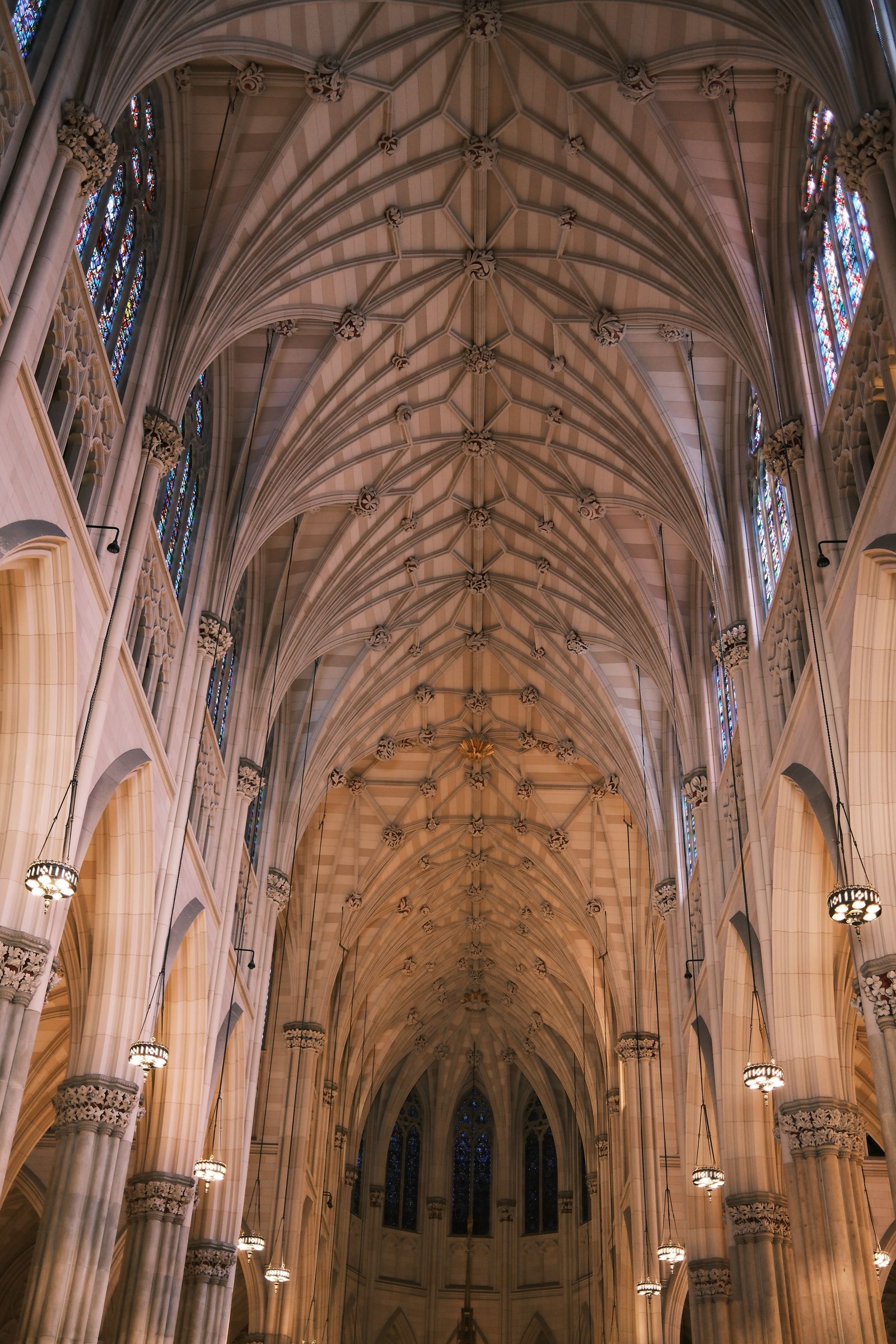
As American cities grew, major churches often became symbols of civic ambition as much as faith. The Cathedral of the Blessed Sacrament in Sacramento was once the largest cathedral west of the Mississippi River, built during a period when California’s rapid growth demanded institutions that could signal permanence. Its scale, decorative program and heavy suspended crucifix create a space meant to impress as well as serve worshippers. Similar ambitions appear in Washington National Cathedral and the Cathedral of St. John the Divine in New York, where Gothic language was adopted long after medieval Europe had developed it. These buildings demonstrate that architectural revival is not simply imitation. Imported styles were used to give young American institutions a sense of historical depth, public authority and connection to older religious traditions.
Diversity Produces Unexpected Sacred Forms
American Christianity includes hundreds of denominations and communities shaped by migration from around the world, so sacred architecture often resists a single canon. Philadelphia’s Mother Bethel AME Church carries the history of Black religious independence, while modern chapels such as Thorncrown in Arkansas use timber, glass and landscape to create a spiritual atmosphere without traditional monumentality. Elsewhere, immigrant congregations have built churches that draw on Eastern Orthodox, Latin American, African, Asian and European forms. The result is a national mosaic in which architectural difference reflects social history. For travelers, that diversity is more meaningful than a ranking of beauty. Each building answers a local question: what materials are available, who is gathering here, and what visual language makes this community feel connected to something larger than itself?
Visiting Requires More Than Looking
Churches are not museums first, even when they are architecturally famous. They remain active places of worship, mourning, celebration and community support. Travelers should therefore approach them with the etiquette appropriate to living religious spaces. Service times may limit access, photography can be restricted and quiet behavior matters even when no ceremony is under way. Some cathedrals offer tours after services, including multilingual options, which can be the best way to understand architecture without disrupting worship. The most memorable visits often include a period of stillness rather than constant documentation. Sacred buildings were designed to shape attention through light, acoustics, proportion and ritual movement. Experiencing those qualities requires more than standing in the aisle long enough to take a photograph.
Why These Buildings Matter to Travelers
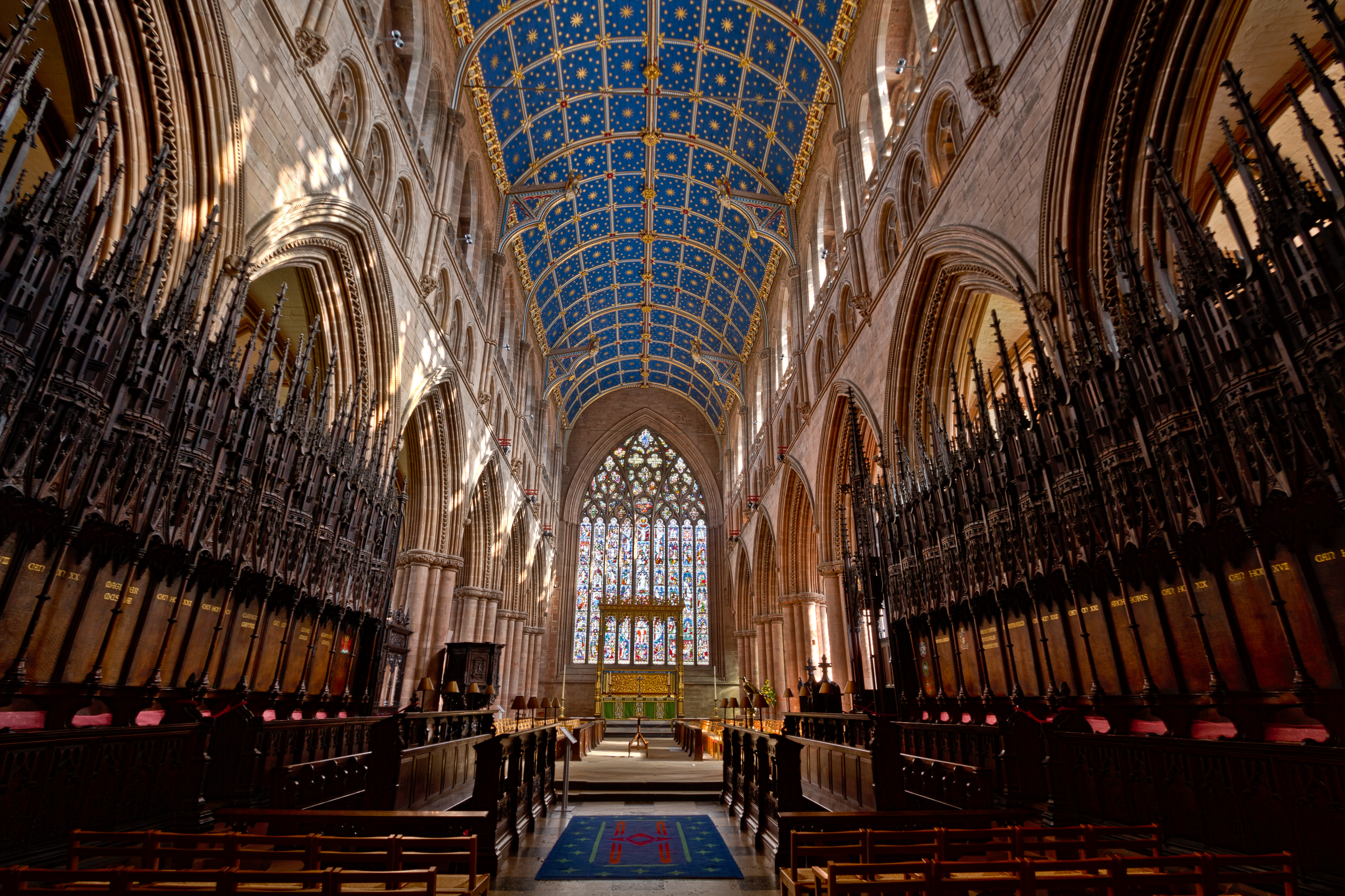
Travel often encourages movement, but churches offer the opposite: a reason to stop. Their interiors compress local history into material—stone, wood, stained glass, murals, pews and memorials—and allow visitors to encounter a community’s values in physical form. Because American sacred architecture is comparatively young, it also reveals how quickly a society can create traditions and then reinterpret them. A mission church, a Black historic congregation and a modern glass chapel may seem unrelated until viewed as answers to the same human need for gathering and meaning. That is what makes the country’s churches worth seeking out even for travelers without religious motivation. They are among the clearest places where architecture becomes social memory, and where the history of the United States can be read at the scale of a room.
Architecture Is Best Read With Context
Before visiting a famous church, a few minutes of background research can change what you notice. Knowing who built the structure, which community funded it and what historical moment it responded to makes decorative choices more meaningful. A grand cathedral erected during a city’s boom years communicates differently from a small mission shaped by frontier conditions or a modern chapel designed around landscape. Visitors should also look for the less monumental spaces inside: side chapels, memorial plaques, community rooms and evidence of how the building is used now. Sacred architecture survives when congregations continue to inhabit it, not when it becomes a frozen artifact. That living quality is what distinguishes church travel from ordinary architectural tourism. The building is simultaneously history, art and active social space. Reading all three layers produces a deeper visit than simply identifying a style and moving on.