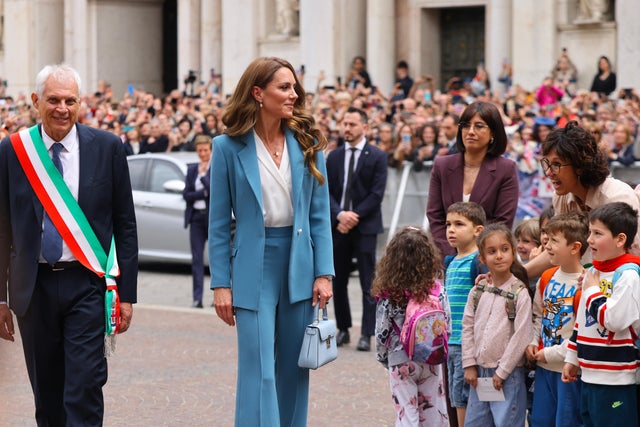
Catherine, Princess of Wales, arrived in Reggio Emilia in May 2026 wearing an Edeline Lee trouser suit in soft blue, with a white top and pearl accessories. The outfit attracted the familiar attention paid to royal dress, but the purpose of the visit was early-childhood education, specifically the Reggio Emilia approach. The distinction matters: what someone wears can offer a memorable image without being the event's central achievement. Her powder-blue tailoring balanced visibility with the practical formality of daytime public engagements. It was less a novelty than a carefully edited example of diplomatic dressing, in which color and silhouette create a recognizable presence without dominating the conversation.
A Tailored Arrival
The elongated jacket and high-waisted trousers created a continuous shape, while the white wrap-style top interrupted the blue without introducing a competing print. Pearl jewelry kept the palette restrained. It is an approach that photographs clearly from a distance, which matters when public engagements unfold in large squares before crowds and cameras.
Why Reggio Emilia Was the Destination
The northern Italian city is internationally associated with an influential approach to early-childhood learning. The visit was intended to engage with that educational work. Treating the clothes as the principal news would miss a significant element of the trip: an institutional interest in children's early years and the settings that support their development.
Blue Without a Single Meaning
Commentators offered different readings of the shade, including an association with Italian national color. Such symbolic explanations are best understood as interpretations unless confirmed by the wearer. The more directly observable choice is practical: a pale but distinctive color made the suit visible against the stone cityscape while remaining appropriate for meetings.
A Wardrobe Built on Return Visits
The blue suit later reappeared in public, adding continuity to the Princess's wardrobe rather than existing as a disposable one-day look. Rewearing gives an outfit a recognizable history. It also shifts attention away from perpetual novelty, toward how familiar pieces can acquire meaning through the occasions in which they are worn.