Ahead of the 11AM Fashion Show 2026, fitting sessions—during which garments are tried on and finalized on the models—are being intensified backstage. With 120 designs and a team of around 70 models, this represents a crucial technical stage in ensuring precision between creative concepts and their realization on the runway.
A decisive experiment
Fitting serves as a professional dress rehearsal for every detail of each garment. The process requires checking the fit against the models’ body measurements while also assessing how well the materials respond to every stride. Once a garment leaves the mannequin and is worn by a real model, any areas requiring adjustment become clearly apparent.
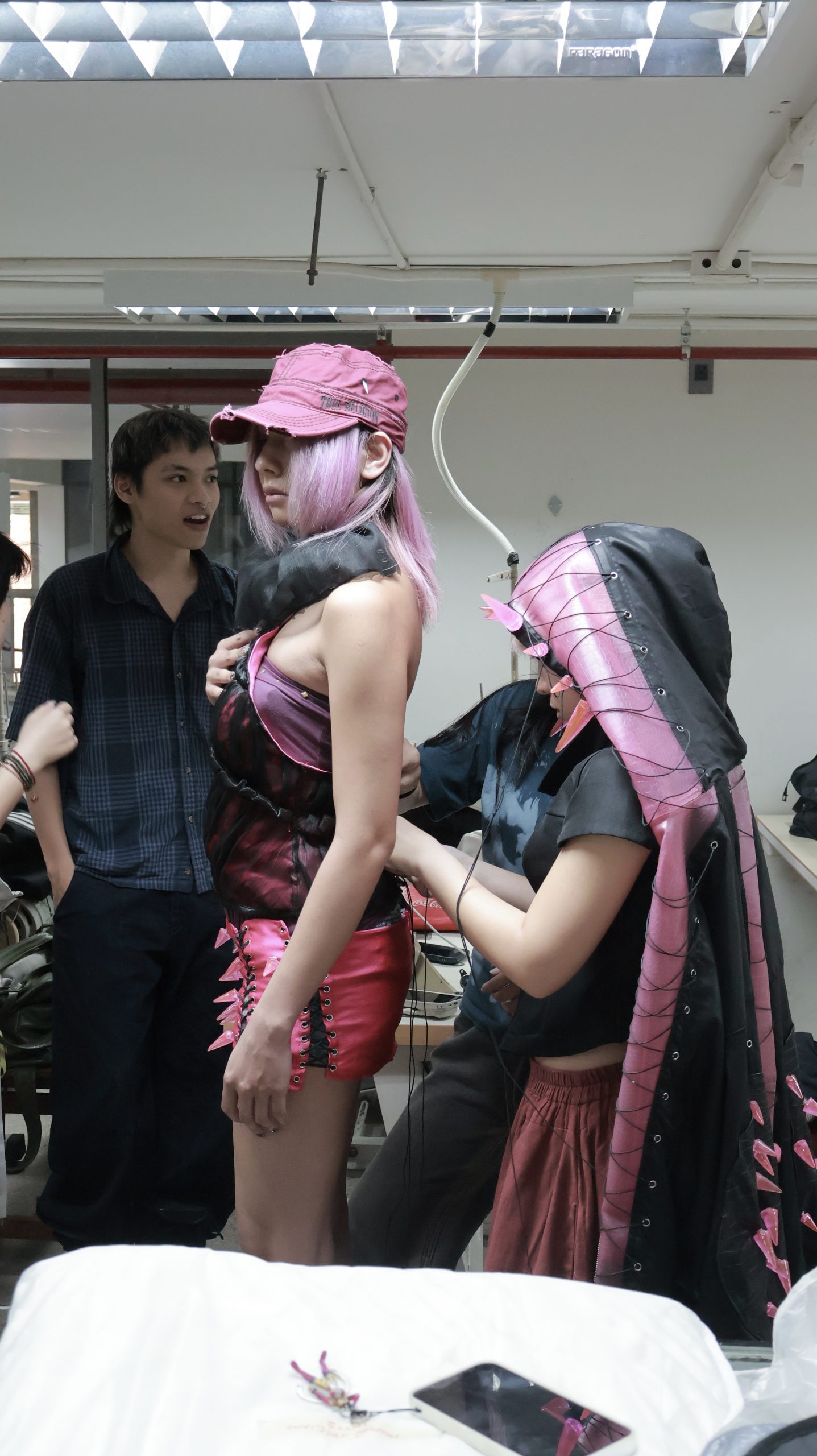
The organizing team and designers directly observe and record the physical feedback from the wearer. Skirt hem length, the fit of the bustier cups, the drape of the garment panels, and the wearer’s comfort while moving are all included in the detailed review. Any technical discrepancies are thoroughly addressed at the practice workshop before the full program rehearsal.
Beyond sizing, the interaction between the garments and the models’ bodies determines how effectively the designs convey the original vision of the sketches. Adjustments made at this stage play a crucial role in ensuring safety and preventing technical issues that may arise during the models’ catwalk under the stage lights.
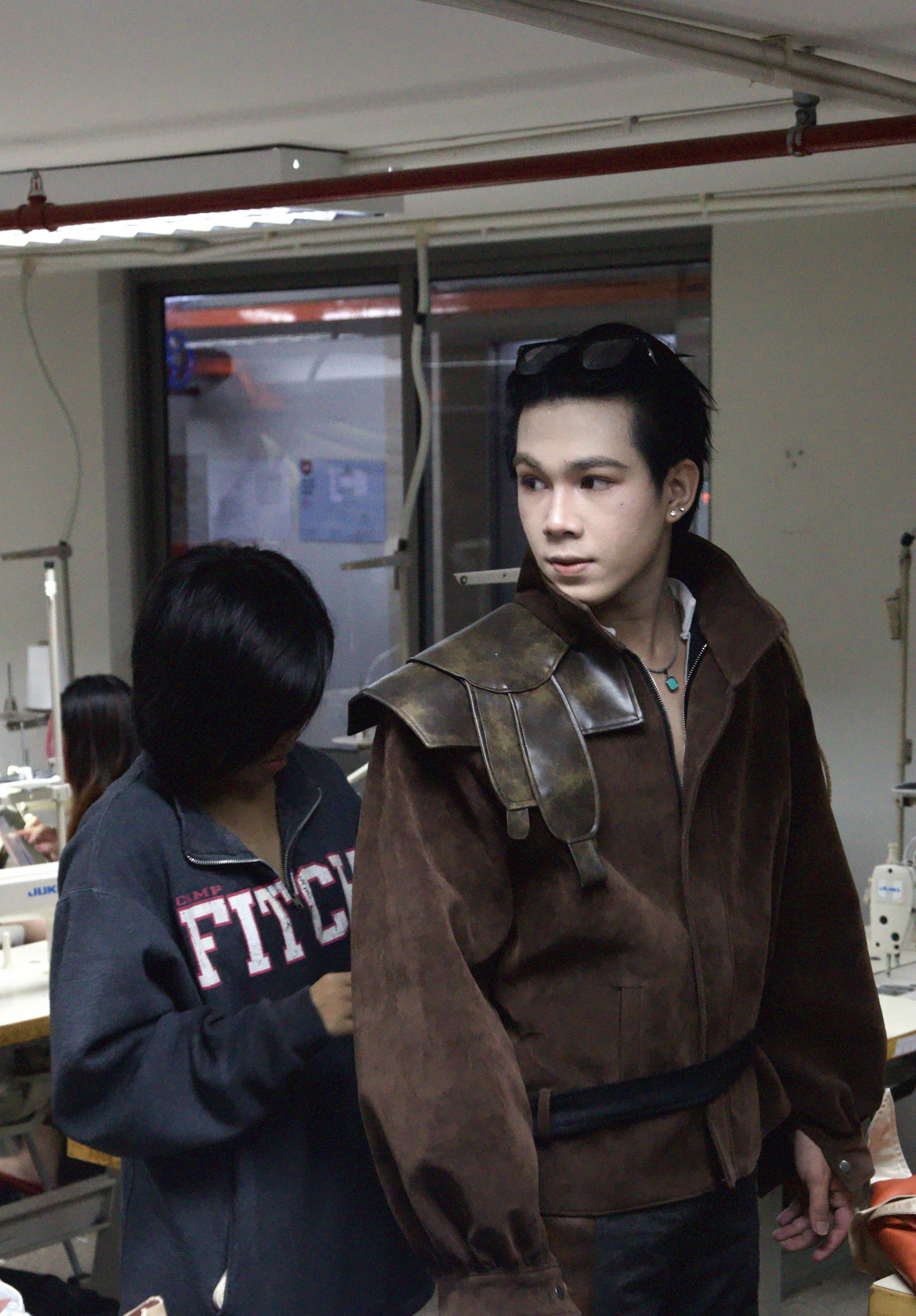
High-caliber faculty–model connections
This year’s event brings together 120 designs created by students from Fashion Design classes 1, 2, and 3 of Cohort 29, along with students from the Garment Materials class of Cohort 30. The diverse range of designs in terms of style, material treatment, and construction requires model allocation to follow a carefully structured classification process.
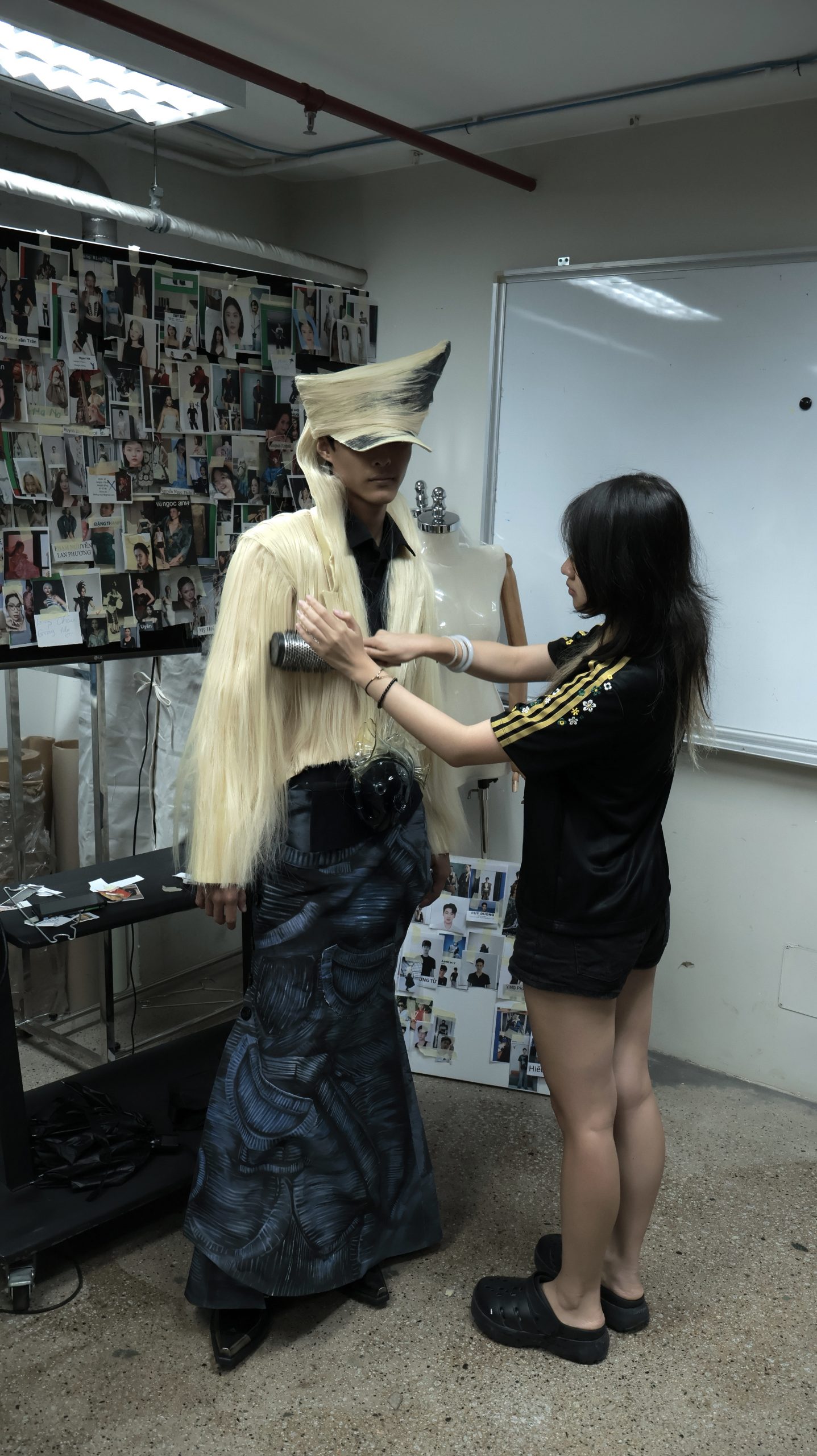
Around 70 models selected through the casting process enter the fitting room in sequence according to a predetermined schedule. Each model is matched based on body measurements compatible with the distinctive silhouettes of each collection. The collaboration between designer and model begins from the very first steps of pinning and taking measurements.
Coordination continues throughout the process to maintain the overall progress of the project. Representatives from the Cohort 29 and Cohort 30 student groups work seamlessly with the model coordination team, ensuring that every design has an appropriate model assigned and is ready for the subsequent lineup rehearsals.
From a static product to lively presentations
The distance between a completed garment on a rack and a fully realized runway presentation is a highly visual transitional journey. Once placed under real movement conditions, every movement of the model activates the material structure, revealing both the strengths and limitations of the garment in full.
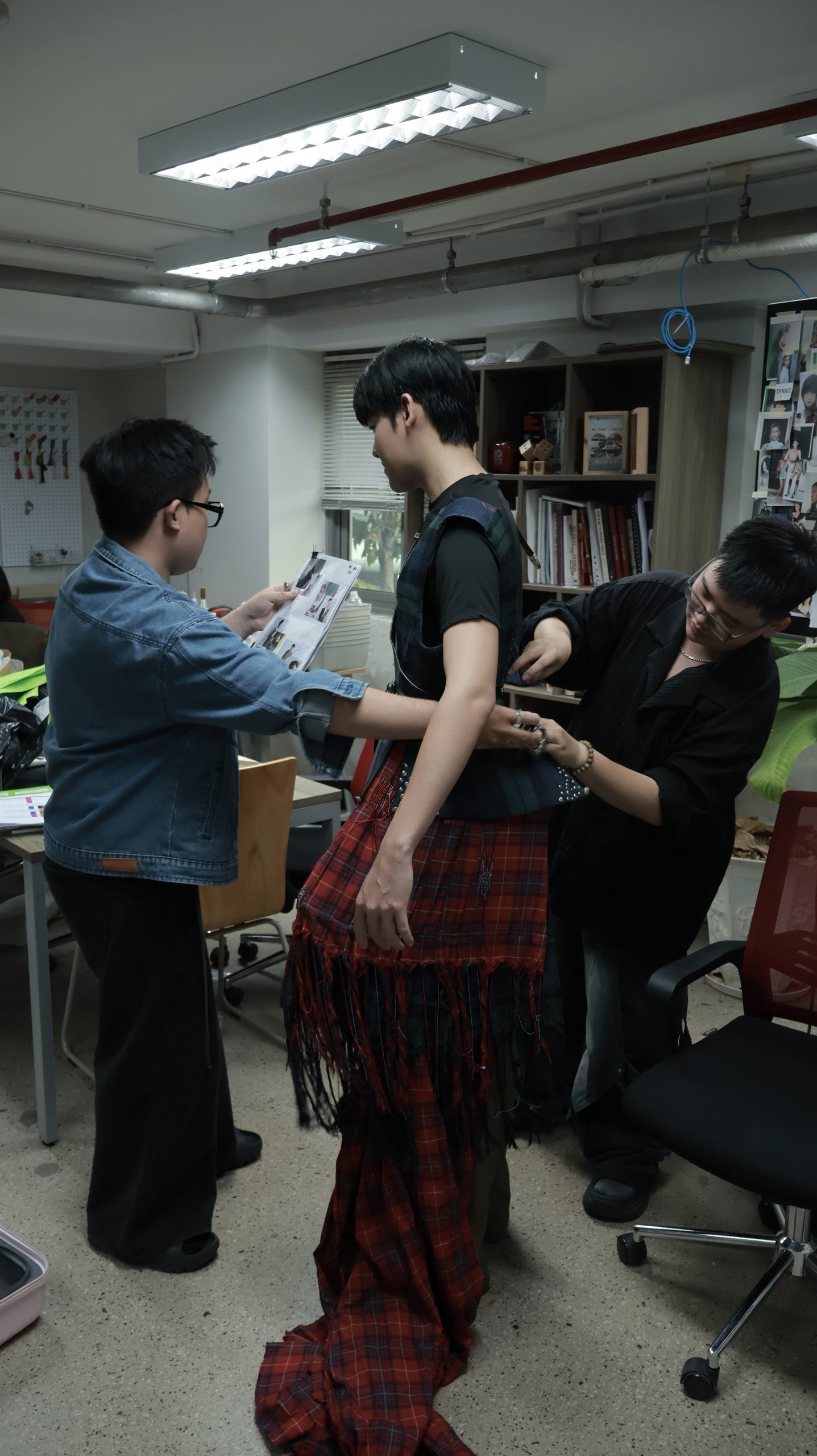
During the fitting sessions, the young designers closely observed every step to assess the movement and flow of the garment panels, the elasticity of the stitching, and the ability to retain the original silhouette. At the same time, the garments were considered in relation to the planned makeup looks, hairstyles, and specific order of appearance to create consistency throughout the overall presentation.
Visual observations in the fitting room helped students clearly recognize the distinction between a static display piece and a design intended for the runway. Viewing garments from a dynamic perspective allowed the designers to make well-founded decisions about trimming, reinforcement, or the addition of accompanying accessories.
Youth production team for a heavy behind-the-scene load
Behind the 120 garments set to be unveiled to the audience is the coordinated effort of a large student workforce. Statistics show that more than 80 students are directly involved in creating the designs, alongside more than 70 students responsible for the event’s production, coordination, and logistics.
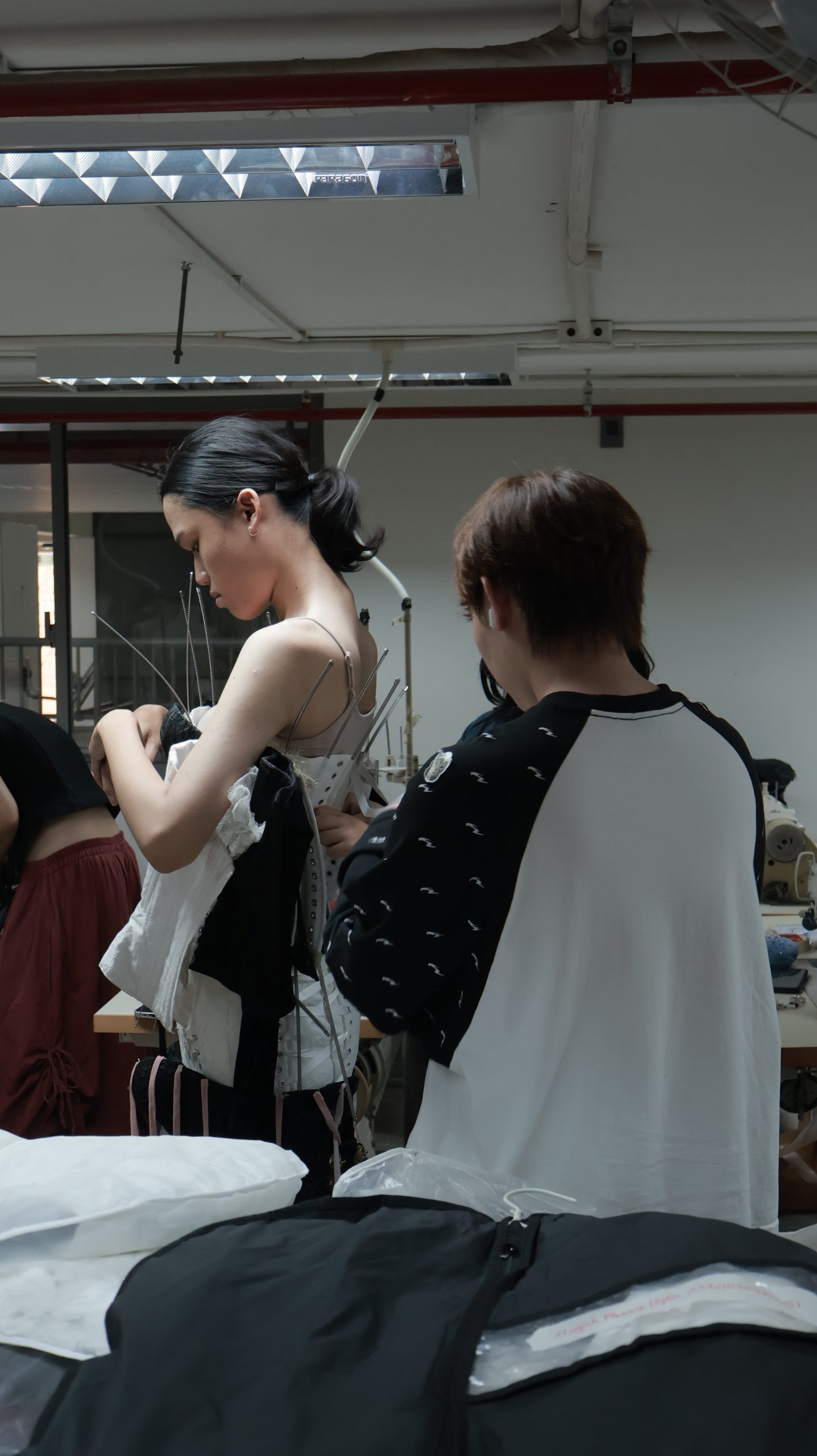
The workload in the fitting area requires a high level of discipline and maximum concentration from every department involved. From sorting garments, assigning numbers, and safeguarding accessories to assisting with quick changes, each team member has a clearly defined role to ensure that the entire workflow runs smoothly.
The quiet efforts taking place in the workshops and fitting rooms may remain beyond the audience’s view, but they form the essential foundation for the event’s polished execution. 11AM Fashion Show 2026 is now completing the final technical preparations, getting ready for the official unveiling of the collections to the fashion community.