Michigan is easiest to understand when you stop treating it as one destination. Detroit’s music, art and food culture belongs to a different travel rhythm from the vineyard-lined coasts of the Lower Peninsula, while the Upper Peninsula feels closer to a wilderness expedition than a conventional Midwest city break. Four Great Lakes shape the state’s weather, shoreline and identity, producing beaches, snow belts, fishing towns and long scenic drives. The result is a place where season matters as much as itinerary. Summer favors water, fall belongs to forests and harvests, winter transforms the north, and spring arrives with markets and flowers. A successful Michigan trip begins by choosing which version of the state you want to meet.
Detroit Is the Cultural Front Door
For many visitors, Michigan begins in Detroit, a city whose influence on American culture is difficult to overstate. Motown, automotive history, African American heritage and major art institutions coexist with professional sports and a food scene shaped by immigration. Dearborn adds one of the country’s most visible Arab American cultural centers, with Lebanese, Palestinian, Yemeni and Chaldean cooking woven into the regional identity. Detroit-style pizza, soul food and newer international restaurants make the city rewarding for travelers who build days around neighborhoods rather than attractions alone. The city also works as a contrast to the rest of the state: urban density, industrial history and creative reinvention give way rapidly to lake towns, orchards and forest. That transition is one of Michigan’s defining pleasures.
The Lower Peninsula Is Built Around Water
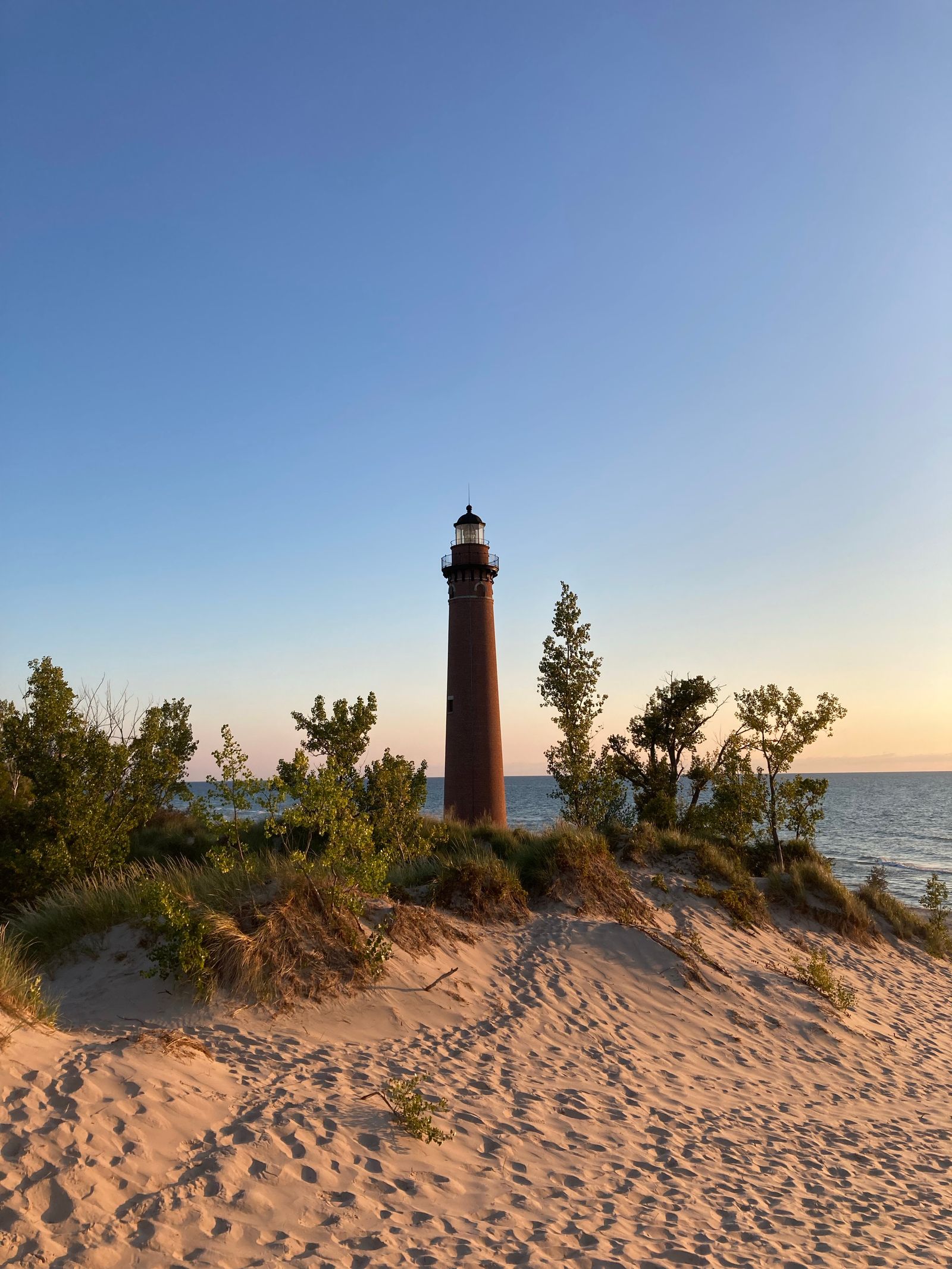
The western shore of the Lower Peninsula faces Lake Michigan and is dotted with beach towns such as South Haven, Saugatuck, Holland, Ludington and Grand Haven. Their identities vary—from art galleries and inclusive resort culture to Dutch heritage, lighthouses and maritime museums—but the organizing feature is always the lake. Farther north, Traverse City combines beaches with cherry orchards, wineries and trail networks, while nearby peninsulas host more than 40 wineries with tasting rooms overlooking the water. Petoskey is known for its distinctive fossilized coral stones, and the interior adds golf courses, farms and small towns. The scale can surprise first-time visitors. These are freshwater landscapes, yet long beaches, turquoise shallows and powerful weather can feel almost coastal in the oceanic sense.
The Upper Peninsula Changes the Pace
Crossing the Mackinac Bridge into the Upper Peninsula feels like entering a different state. Population density drops, distances lengthen and outdoor planning becomes more important. Pictured Rocks National Lakeshore, Isle Royale and the Porcupine Mountains offer hiking, paddling, camping and extraordinary fall color, while the Keweenaw Peninsula combines mountain biking and winter trails with the history of copper mining. In winter, the U.P. becomes one of the snowiest parts of the country, with frozen waterfalls, dogsled events and serious Nordic conditions. The reward is space. Travelers who want tightly scheduled attractions may find the distances frustrating; those who value long drives, quiet trails and weather-driven days often find the north to be Michigan’s most memorable region. It is a place to leave room in the itinerary.
Eat the State, Not Just the Cities
Michigan’s food makes sense when viewed through agriculture, migration and water. West Michigan produces peaches, blueberries, apples, pears and cherries, and farm stands or U-pick orchards make seasonal eating easy. Freshwater fish such as lake trout, smelt and whitefish appear across the state. In the Upper Peninsula, the pasty—a hearty meat-and-vegetable hand pie associated with the copper-mining era—remains a local staple. Detroit adds its square pan pizza, while the region’s diverse communities contribute a much broader range of flavors than outsiders sometimes expect from the Midwest. Craft breweries are especially prominent around Grand Rapids, and Traverse City’s wine country has turned the northern Lower Peninsula into a destination for food-focused weekends. Eating locally is one of the simplest ways to understand how Michigan’s regions differ.
.jpg)
Choose the Season Before the Route
Michigan changes dramatically across the year, so the best itinerary begins with timing. Spring brings flower festivals and farmers’ markets, including Holland’s Tulip Time and Mackinac Island’s lilac celebrations. Summer is the busiest season for beaches, state parks, golf and island travel. Fall is ideal for road trips through hardwood forests, with routes such as M-22 and the Tunnel of Trees becoming destinations in their own right. Winter rewards travelers prepared for snow, especially in the Upper Peninsula. Outside major cities, a car is often the practical choice because public transportation is limited. That mobility allows the state’s contrasts to become the trip: city to shoreline, vineyard to forest, and Lower Peninsula to U.P. Michigan is not a place to rush between highlights. Its appeal lies in the distances between them.
How to Build a First Michigan Trip
For a first visit, trying to cover both peninsulas in a few days usually produces more windshield than experience. A stronger plan is to choose one anchor region and add one contrasting second stop. Detroit pairs well with the Lake Michigan shore or Traverse City; a dedicated Upper Peninsula trip deserves enough time for long drives and weather changes. Seven to ten days allows a more ambitious route, especially in summer or fall. Travelers should also check ferry schedules, park conditions and seasonal business hours because smaller communities can operate differently outside peak months. The state’s size is easy to underestimate on a map. Michigan becomes more rewarding when distances are treated as part of the landscape rather than an inconvenience to conquer. The Great Lakes set the pace, and a good itinerary accepts that the best afternoon may be the one spent on a beach, trail or roadside overlook that was never on the original checklist.