As we navigate the closing days of 2025, the bedrock of American technological superiority—High-Performance Computing (HPC)—is facing a critical “bottleneck” era. For decades, the U.S. has leveraged supercomputing to dominate fields ranging from nuclear stewardship to vaccine discovery. However, a new landscape of systemic hurdles is emerging. From staggering energy demands to the erosion of long-term strategic vision, the barriers to exascale and post-exascale computing are no longer just technical; they are geopolitical and structural. As global competitors close the gap, the ability of the United States to maintain its “Innovation Powerhouse” status depends on whether it can solve the messy, real-world challenges of infrastructure, talent, and energy that currently threaten to stall the next great leap in human discovery.
The Infrastructure Chokepoint: Power and Cooling
The most immediate threat to HPC innovation in 2025 is the physical reality of power. Modern supercomputers and AI-training clusters require massive amounts of electricity—often equivalent to the energy consumption of a small city. As the U.S. races toward more powerful systems, data centers are hitting a “power wall,” where local energy grids simply cannot support the required load.
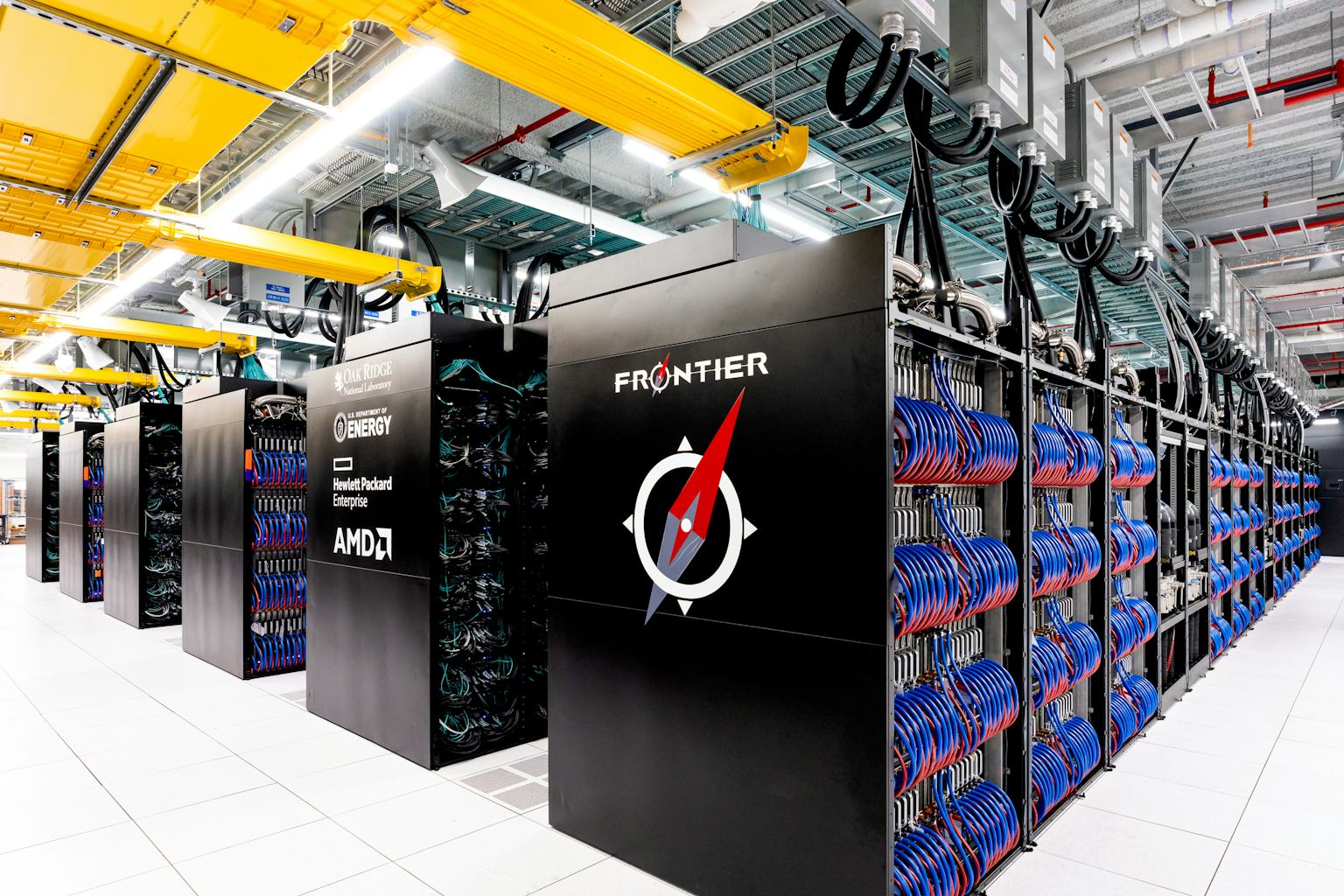
Moreover, the heat generated by these advanced processors has made traditional cooling methods obsolete. The industry is currently struggling with the high costs of transitioning to liquid cooling and advanced heat dissipation technologies. Without a radical overhaul of energy efficiency and grid access, the next generation of American supercomputers could be delayed by years, providing a strategic opening for adversaries with more centralized control over their national infrastructure.
The “Vision Gap”: Lack of Long-Term Strategic Planning
While global competitors—most notably China—have executed decade-long roadmaps for HPC dominance, experts warn that the United States lacks a unified, long-term national vision. In 2025, HPC development in the U.S. is often fragmented between federal labs, academia, and private tech giants. This lack of a “coherent North Star” has led to concerns that America is focusing on short-term wins rather than the foundational research needed for the next decade.
The absence of a centralized plan has also complicated funding. While the CHIPS and Science Act provided a significant boost, much of that investment is focused on manufacturing rather than the fundamental algorithmic and software innovation required for HPC. To remain competitive, policymakers are being urged to move beyond transactional funding and establish a resilient, 20-year technical architecture that ensures America remains the “spear” of computing technology.
Cybersecurity and the Zero Trust Imperative
As supercomputers become more integrated with the cloud and accessible to a wider range of researchers, they have also become high-value targets for state-sponsored cyberespionage. In late 2025, the federal government has made “Zero Trust” security a mandatory standard for all HPC centers. However, integrating a Zero Trust model—which requires verification for every single request—into a high-speed computing environment is a massive technical challenge.

The risk is twofold: a system that is too open is vulnerable to data theft, while a system that is too restrictive can slow down the very innovation it was built to foster. Defense firms and national labs are currently in a delicate balancing act, trying to protect mission-critical data—such as hypersonics research and nuclear simulations—without creating so much “security friction” that American scientists are outpaced by those working in less-encumbered environments.
The Talent War and Economic Friction
Finally, the HPC sector is facing a severe labor shortage. The specialized skills required to manage exascale systems—combining expertise in physics, mathematics, and advanced software engineering—are in high demand and short supply. As big tech companies offer staggering salaries to lure talent toward consumer AI, national laboratories and academic institutions are struggling to maintain the workforce needed for “science-for-good” projects.
This talent drain is exacerbated by recent economic shifts. In 2025, increased trade tensions and tariffs on high-end CPUs and GPUs have driven up project costs for U.S.-based institutions. These “real-world” frictions—supply chain delays and rising hardware prices—mean that even when funding is available, it doesn’t go as far as it used to. As we enter 2026, the challenge for U.S. innovation is clear: it must find a way to out-think, out-build, and out-recruit the world in an era where the cost of being “high maintenance” has never been higher.