Black Canyon of the Gunnison National Park in Colorado is a geological marvel defined by its extraordinary depth, sheer vertical walls, and challenging inaccessibility. Unlike the wide, sweeping vistas of the Grand Canyon, this canyon is so narrow and profound that sunlight struggles to reach the bottom, giving the chasm its distinctive ‘black’ appearance. Carved relentlessly over two million years by the powerful Gunnison River, the canyon exposes some of the oldest rock formations on the continent, including striking streaks of Precambrian gneiss and schist. This National Park is a haven for adventurers seeking dramatic, uninterrupted views from the rims and extreme solitude in the wilderness below, offering a profound appreciation for the raw, carving power of water and time on Earth’s crust.
Geological History: A Tale of Two Billion Years
The most compelling feature of the Black Canyon is the exposed, dark-colored rock that tells a story spanning nearly two billion years of Earth’s history.
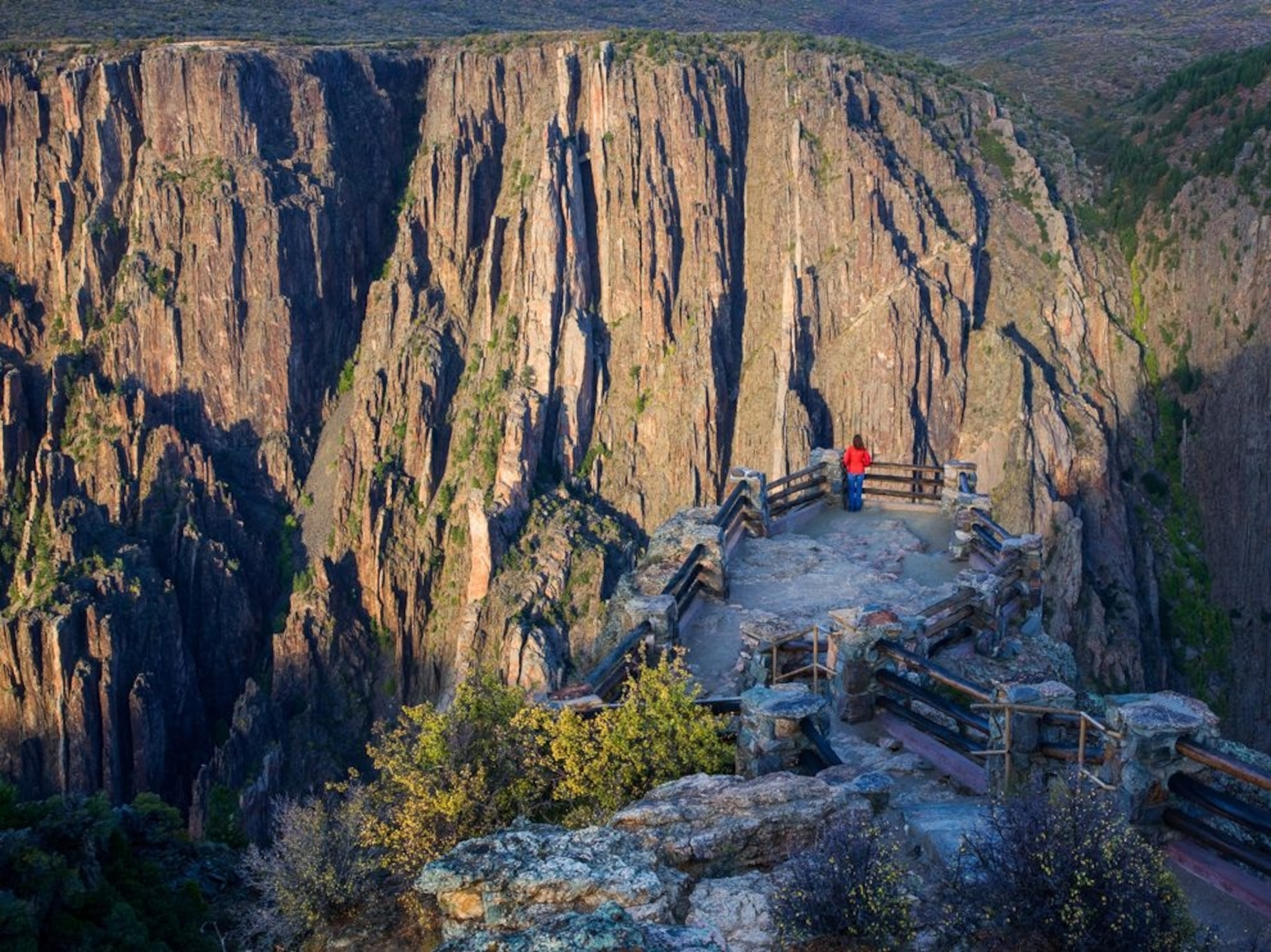
The canyon’s walls are primarily composed of ancient Precambrian igneous and metamorphic rock, specifically gneiss and schist. These rocks are flecked with lighter, pinkish-white bands of pegmatite—granitic intrusions that solidified within the darker rock under intense heat and pressure. The incredibly hard nature of this rock, combined with the extreme gradient of the Gunnison River, allowed the river to erode straight down at a phenomenal rate, averaging an inch every century. This vertical erosion, rather than lateral widening, is what created the canyon’s signature sheer walls and depths that plunge as steeply as 2,700 feet from rim to river.
Rim Experiences: South vs. North
Black Canyon offers two distinct viewing experiences from the South Rim and the North Rim, each providing unique perspectives on the gorge.

The South Rim is the more developed and accessible section, easily reached from the town of Montrose. It features a scenic, seven-mile drive with numerous pull-offs that provide iconic, jaw-dropping views like Gunnison Point and Painted Wall. The Painted Wall, standing at 2,250 feet, is one of the tallest cliffs in North America, named for its dramatic light-colored pegmatite streaks running through the dark rock. In contrast, the North Rim is remote, less developed, and offers a quieter, more isolated experience. It provides stunning, direct-across-the-canyon views that make the narrowness and depth of the gorge feel even more pronounced, but access requires a much longer, unpaved drive.
Extreme Adventures: The Inner Canyon
Descending into the Inner Canyon is not for the faint of heart; the park maintains its wilderness character by offering only unmaintained, non-designated routes into the gorge.

These steep, perilous descents—often referred to as “Gunnison Route” trails—require significant technical skill, including scrambling, boulder hopping, and navigating thick vegetation. There are no marked or developed trails leading all the way to the river. Permits are required for all overnight trips to the river and for inner canyon hiking, emphasizing the serious nature of the terrain. The reward for this challenging effort is unparalleled solitude, world-class trout fishing in the Gunnison River, and a profound, intimate perspective of the colossal walls that soar above.
The Curecanti Connection and Modern History
While the canyon itself speaks of ancient geology, the area immediately surrounding it has a rich history tied to engineering feats and the harnessing of the Gunnison River.

The park is adjacent to the Curecanti National Recreation Area, which manages the man-made reservoirs created by the Blue Mesa Dam. This dam was a massive undertaking in the mid-20th century to control the fierce power of the Gunnison River for irrigation and hydroelectric power. Historically, the canyon was also the location of an ambitious, early 20th-century irrigation project: the Gunnison Tunnel, which diverted river water to the arid Uncompahgre Valley. The tunnel was a monumental engineering feat of its time, demonstrating the persistent human effort to utilize the river that so powerfully shaped the deep gorge.