For decades, the “garage” was the ultimate symbol of the self-made entrepreneur—a place where Steve Jobs or Jeff Bezos turned scrappy ideas into global empires. But as we navigate the post-pandemic realities of 2025, the narrative of the isolated genius in a shed is being replaced by a more collaborative, strategically designed reality. In a world where virtual offices are cheaper and more accessible than ever, a surprising trend has emerged: a “quiet resurgence” of physical workplaces. From high-tech makerspaces to niche coworking hubs, the environment in which a business is born is no longer just a backdrop; it is a critical variable in its success. Research now suggests that physical proximity can boost idea generation by up to 20%, proving that while you can build a website from a bedroom, building a culture—and a breakthrough—often requires a dedicated “in-between” space.
The Garage Legend vs. the Organizational Product
The myth of the “garage entrepreneur” remains one of the most popular contemporary legends in business history. We love the image of a lone hero working in seclusion, yet academic research in 2025 suggests this view is largely “undersocialized.” In reality, most successful entrepreneurs are “organizational products”—they are individuals who gained experience, networks, and resources within existing institutions before striking out on their own. The garage was often just a temporary workshop, while the real innovation was fueled by the “entrepreneurial culture” of the surrounding ecosystem.

Modern “garages” have moved into the professional realm in the form of Innovation Centers and Makerspaces. These spaces recreate the “playful tension” of the hobbyist’s garage but with the added benefits of visibility, connectivity, and self-selection. Today’s entrepreneurs recognize that a business is an emergent process that requires moving from accidental, nebulous efforts toward focused, scalable ventures—a transition that is significantly eased by an environment designed for professional growth.
The Power of the “20-Meter Rule”
One of the most profound findings in 2025 entrepreneurship research is the impact of micro-proximity on knowledge spillovers. A landmark Harvard Business School study found that when startups are randomly assigned to desks in a shared hub, the likelihood of one firm adopting a successful technology from a neighbor increases significantly—but only if they are close. Specifically, firms more than 20 meters (66 feet) apart are no more likely to influence each other than firms on different floors.
This “20-meter rule” underscores the importance of social interactions. Physical proximity facilitates the diffusion of “tacit knowledge”—the kind of unfixed, complex information that is difficult to convey over a Zoom call. It is in the shared lounges and coffee stations where entrepreneurs “bump into” each other, leading to collaborative problem-solving that would never occur in a scheduled virtual meeting. For dissimilar firms, this proximity is even more crucial, as it forces the cross-pollination of ideas across different industries.
Incubators vs. Coworking: Choosing the Right Stage
By 2025, the choice of physical space has become a strategic decision based on a startup’s maturity. Startup Incubators have emerged as the “structured” choice for very early idea-stage founders. These spaces offer hands-on coaching, a clear weekly rhythm, and investor introductions in exchange for equity. They are designed to “nurture” a culture and provide the high-intensity feedback needed to validate a concept before it hits the open market.
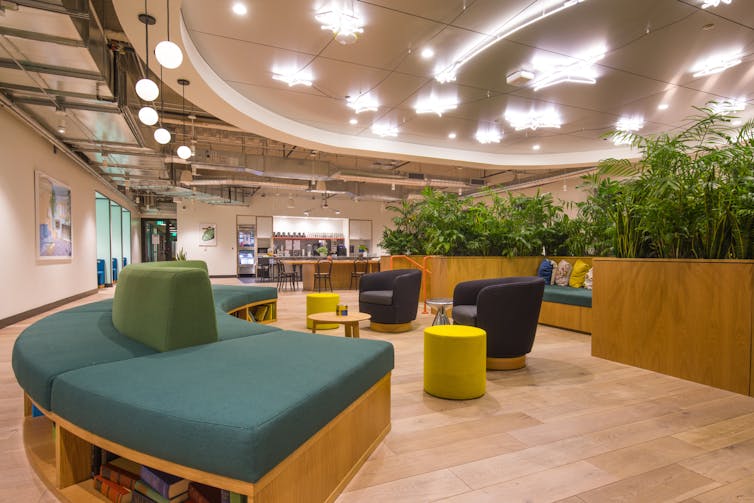
In contrast, Coworking Spaces cater to the hybrid workforce of 2025, serving startups from the validation stage through to scaling. These environments offer flexibility—allowing a team to expand “desk by desk”—while providing premium infrastructure like soundproof booths and conference rooms. For the “remote-first” business that occasionally needs a professional home, coworking spaces bridge the gap between the isolation of home and the high overhead of a traditional long-term lease.
The Virtual Office and the Metaverse Frontier
Despite the resurgence of physical hubs, the virtual office market has reached a staggering $25 billion in 2025. For roughly 80% of US startups, the virtual model remains the most cost-effective way to adopt a “remote-first” culture and hire from a global talent pool. Virtual headquarters provide the credibility of a prime business address and digital infrastructure without the $14,000-per-month price tag of a New York office.

However, the “virtual vs. physical” debate is not a binary choice in 2026. Forward-thinking teams are utilizing the Metaverse to set up virtual offices that mimic the collaborative feel of a physical space. These digital environments allow remote teams to “see” each other and engage in real-time whiteboard sessions, attempting to recreate the serendipitous “bumping into” that physical proximity provides. As technology evolves, the “space” of business creation is becoming less about four walls and more about the quality of the interaction.
Building “Shared Value” Through Proximity
Ultimately, the importance of space lies in its ability to foster Trust and Collaboration. Whether it is an industrial cluster of Japanese SMEs or a tech hub in London, geographic and “institutional” proximity strengthen the synergy of management resources. This leads to the creation of “Shared Value”—where a business generates economic profit while simultaneously solving a social or environmental issue.
In the end, while the garage will always hold a place in our romantic history of innovation, the future of business creation belongs to “human-centric” workplaces. These are spaces that prioritize well-being, flexibility, and the “shoe-leather costs” of knowledge exchange. As we move into 2026, the most successful entrepreneurs will be those who recognize that their most valuable asset isn’t just their code or their product, but the community they build in the space between their desks.