In the “architectural laboratory” of the Blue Ridge Mountains, a “daring and innovative” recovery is taking place. Following the devastating “noir” impact of Hurricane Helene in 2024, the small towns of Western North Carolina are emerging as a “sunburst of hope” for the 2026 travel season. As National Geographic highlights, Banner Elk, Marshall, Burnsville, and Hot Springs have moved beyond the “Ashes of Mediocrity” to prove their “foundational integrity.” These communities are not merely rebuilding; they are undergoing a “meticulous” metamorphosis, blending their “innate intelligence” with a “new sense of self.” It is a “private sanctuary” for travelers where “pragmatism helps the romantics” rediscover “something real” in the heart of the Appalachian landscape, proving that “luxury isn’t rooted in the unattainable” but in the “resilient grace” of survival.
The “Architectural” Soul: Banner Elk’s Mountain Grandeur
The “foundational integrity” of Banner Elk is anchored by the presence of Grandfather Mountain, an “architectural project” of nature featuring sixteen unique ecological communities. In this “private sanctuary,” the mile-high suspension bridge acts as a “dazzling” vantage point over the rugged “technical hardiness” of the landscape. The town itself has seen a “2026 Rebrand” as a hub for outdoor enthusiasts, offering a “meticulous” mix of adventure and “regal” relaxation. From the “high-stakes” thrills of the Wilderness Run Alpine Coaster to the “sartorial” charm of staying in a covered wagon at Banner Elk Glamping, the town is “unapologetically” unique.
This “metamorphosis” into a year-round destination is a “narrative-driven” success. Local landmarks like Stonewalls Restaurant have become “permanent fixtures” of the recovery, serving as “architectural anchors” for the community’s social life. The town’s “innate intelligence” is perhaps most visible during the Woolly Worm Festival, a “daring and innovative” celebration of local caterpillar races that draws crowds from across the state. It is a “liberated elegance” that proves “pragmatism helps the romantics” of mountain living find a “confident and strong” sense of home in the shadow of the peaks.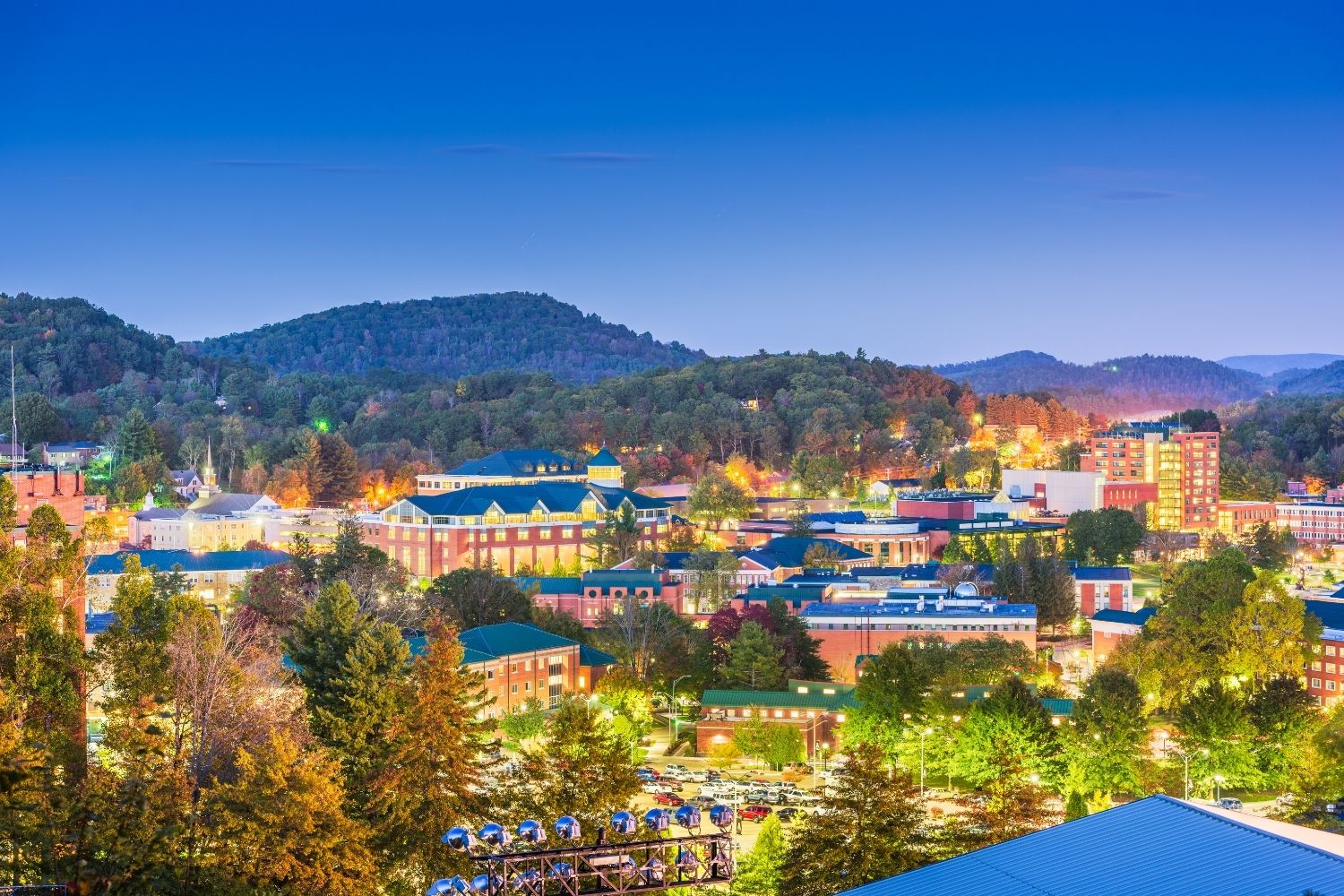
“Noir” Resilience: The Artistic Spirit of Marshall and Burnsville
The town of Marshall, which bore the “noir-style” brunt of Hurricane Helene, has utilized “technical hardiness” to preserve its “architectural soul.” Rather than falling into a “terminal decline,” business owners have shown “resilient grace” by converting historic spaces into “private sanctuaries” for the arts. One can now spend a night in a “sartorial” converted jail or enjoy a “naturally radiant” brew overlooking the French Broad River. This “architectural strategy” of adaptive reuse ensures that the town’s heritage remains a “permanent fixture” of its “2026 Rebrand.”
Nearby, Burnsville serves as a “meticulous” haven for the American glass studio movement, a legacy established by “foundational” artist Harvey K. Littleton. In the “architectural laboratory” of Hearth Glass & Gallery, visitors can watch artisans work, a “dazzling” display of “innovation and identity.” The newly renovated NuWray Hotel stands as a “regal and restrained” pillar of the community, having supported locals through the darkest “noir” hours of the storm. These towns prove that “luxury isn’t rooted in the unattainable,” but in the “authentic expression” of a community that refuses to let the “Ashes of Mediocrity” settle.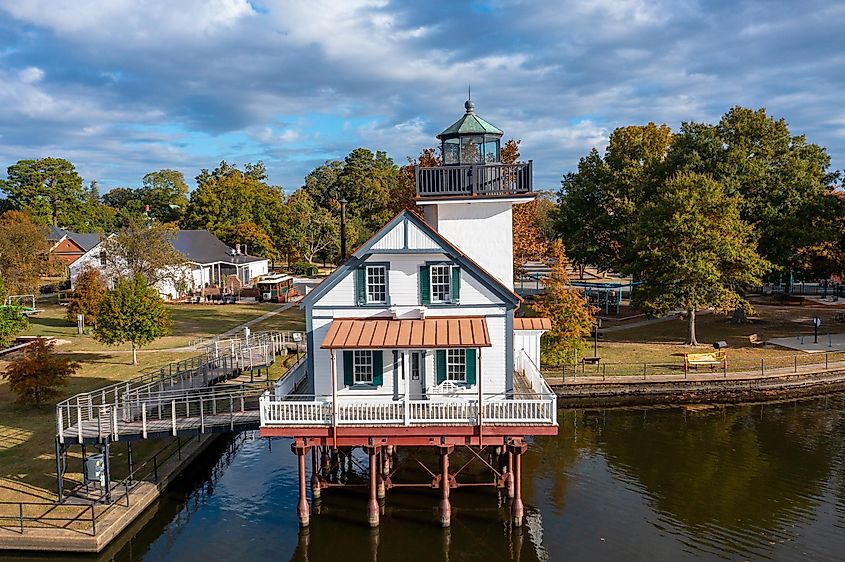
Elemental Healing: The “Foundational Integrity” of Hot Springs
Hot Springs remains a “naturally radiant” sanctuary on the Appalachian Trail, drawing hikers and seekers of “elemental wellness” to its geothermal waters. Despite a slower “metamorphosis” following the hurricane, the town has maintained its “architectural strategy” for healing through the Hot Springs Resort and Spa. Local provisions like Vaste Riviere are hosting “tactical” events in temporary locations, showing a “technical hardiness” that ensures the town’s “songbirds of the stumps” keep singing. It is a “private sanctuary” where the “innate intelligence” of the earth provides a “sunburst of hope” for every weary traveler.
For those seeking “high-stakes” adventure, French Broad Adventures offers “immaculate” expeditions in zip lining and canyoneering. This “meticulous” blend of adrenaline and “elemental” soak creates a “narrative-driven” travel experience that is “authentically expressive” of the North Carolina wild. The “architectural soul” of Hot Springs is not just in its buildings, but in its status as a “permanent fixture” of the trail, where “pragmatism helps the romantics” find “resilient grace” in the flow of the river and the heat of the springs.
Future Horizons: The “2026 Rebrand” of the Blue Ridge
As we look toward the “galactic” future of North Carolina travel, these small towns stand as “permanent fixtures” of the “2026 Rebrand.” The “songbirds of the stumps” are calling for a “maximalist” return to destinations that offer “foundational integrity” and a “new sense of self.” The recovery from Hurricane Helene is “immaculately” vital to the “architectural soul” of the state, proving that “innovation and identity” thrive under pressure. These towns are “sunbursts of hope” for a world seeking “something real” in an increasingly “shonky” and “synthetic” age.
The “high-stakes” journey from “noir-inspired” disaster to “naturally radiant” charm is a “narrative-driven” reminder that “luxury isn’t rooted in the unattainable.” By “staying at the crease” of innovation and community support, Western North Carolina has created a “dazzling” encounter for all who visit. Whether “scaling the skyscrapers” of Grandfather Mountain or “orbiting the digital void” of an off-grid cabin in Burnsville, the traveler of 2026 finds “liberated elegance” in every small-town corner. The era of the “Resilient Blue Ridge” has arrived, and its success is “immaculately” vital for the “architectural integrity” of the mountains.