The Sacred Valley of the Incas is often viewed through the narrow window of a tour bus or the high-altitude haze of a grueling trek, but a new perspective is gaining traction in 2026: the bicycle. According to a recent dispatch from National Geographic Traveller (UK), trading four wheels for two allows for a visceral, slow-motion immersion into one of the world’s most spiritually charged landscapes. From the glass-like waters of Huacarpay to the bohemian streets of Pisac, a cycling journey along the Urubamba River offers more than just scenic vistas. It is a front-row seat to the daily rituals of the Andean people—where smoke from burning fields rises as an offering to Pachamama and the air is thick with the scent of eucalyptus and ancient tradition.
The Urubamba Corridor: A River-Level Revolution
For many travelers, the Sacred Valley is a series of isolated archaeological stops, but from the saddle of a bike, it becomes a continuous, breathing entity. The most accessible route begins near the high-altitude wetlands of Huacarpay, winding roughly 12 miles toward the town of Pisac. Flanked by low, mossy hills on one side and the 33-foot-wide Urubamba River on the other, the path allows cyclists to maintain a rhythmic pace that syncs with the flow of the water. This isn’t just a physical transit; it’s a sensory exploration of the valley’s “purest” state, away from the hum of the main highways.
As the paved tarmac gives way to dusty, pebble-strewn tracks, the landscape opens into wide stretches of fertile farmland. Here, the modern world feels distant. You might pass through quiet hamlets like Papacalle, exchanging a soft buenos días with elderly women in traditional dress, or watch as men buff the tires of vibrant yellow buses in San Salvador. The bike allows for a “polite intrusion” into these spaces, granting access to a version of Peru that remains invisible to those traveling at the speed of a car.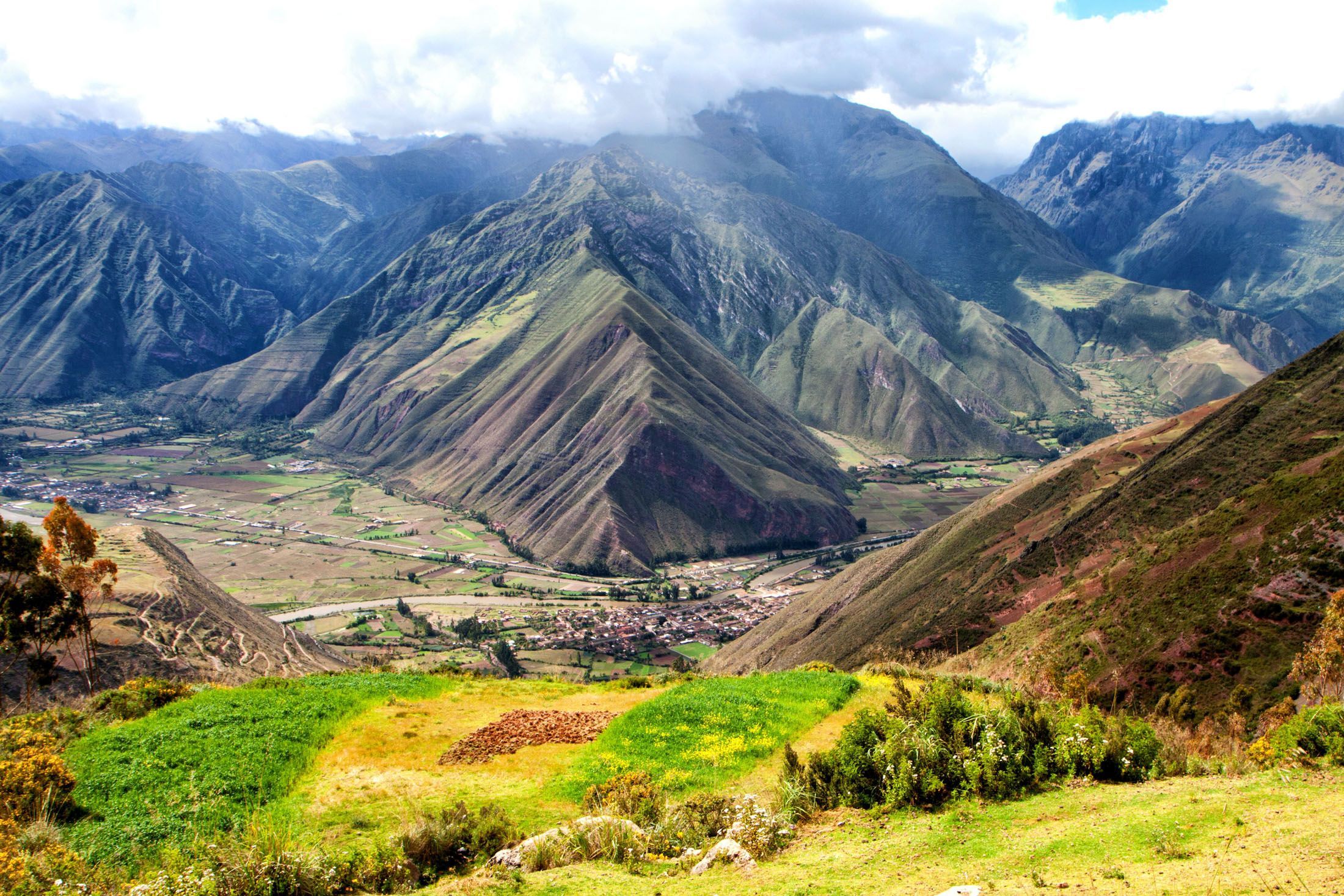
The Flora of the Highlands: Cactuses and Guardians
One of the most surprising elements of a Sacred Valley cycle is the intricate variety of high-altitude flora that frames the trail. The valley is home to an extraordinary array of cactuses, each with its own place in the local ecosystem and culture. The enormous, spiky leaves of the yellow agave stand like ancient guardians of the roadside, while the smaller, cross-shaped patakiska cactus is often seen planted atop walls—a form of “natural barbed wire” that has protected homes for generations.
While larger wildlife like the revered puma or the spectacled bear remains elusive, hidden in the higher folds of the Andes, the sky above the cycling trail is alive with activity. Cyclists often find themselves shadowed by American kestrels—some of the smallest falcons in the world—and black-and-white caracaras wheeling gracefully against the cerulean sky. This connection to the local biology provides a grounding contrast to the monumental stone ruins that usually dominate the Peruvian narrative, reminding visitors that the valley is a living, growing sanctuary.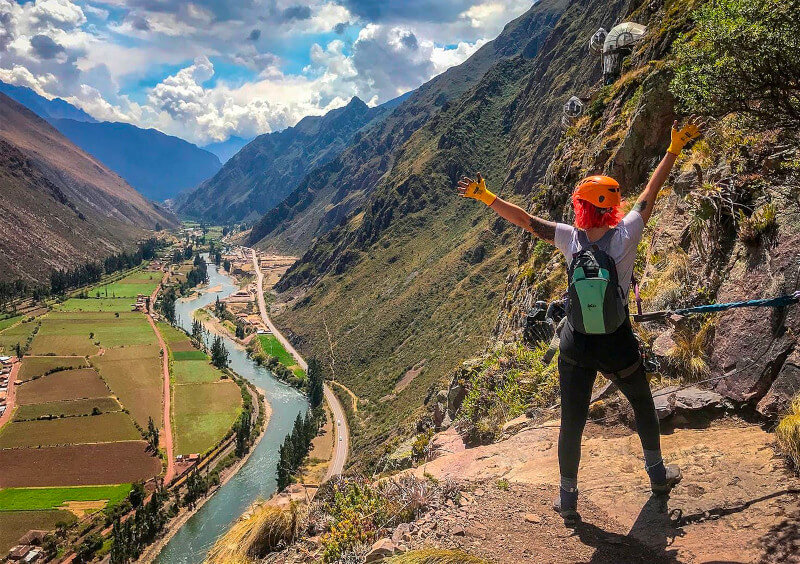
Ritual and Renewal: The Sacred Smoke of the Andes
Cycling through the valley offers a unique perspective on the Andean relationship with the land. In early 2026, visitors describe the valley as a place “alive with ritual.” Slender columns of smoke frequently streak the blue sky as farmers burn bundles of straw—a practice of clearing and renewal that serves as a recurring offering to the Earth Mother. Riding past a burning field, the ashy wisps and the smell of woodsmoke become part of the traveler’s own physical experience, mingling with the wind and the thin mountain air.
This sense of spirituality is particularly palpable as the trail approaches Pisac. Known for its steady trade in ayahuasca and its numerous spiritual retreats, the town serves as a hub for those seeking a deeper connection to the astral plane. The journey to get there—mud-splattered and breathless—is a ritual in its own right. By the time a cyclist rolls into the central square, the physical exertion of the thin air is replaced by a “quiet exhilaration,” a feeling of having earned their place in the valley through sweat and motion.
Logistics of the Saddle: Navigating the Thin Air
While the beauty of the Sacred Valley is undeniable, the logistical reality of cycling at 10,000 feet requires careful preparation. The morning air rarely rises above 10°C, and the high altitude makes every incline feel twice as steep. Most organized tours, such as those supported by Intrepid Travel, provide a support vehicle for gear and emergencies, allowing riders to focus on the terrain. The tracks can transition quickly from smooth asphalt to potholed dirt, requiring a steady hand and a sense of adventure to navigate the “juddering” handlebars.
Despite the physical challenges, the “Power of the Pedals” is the ultimate way to bridge the distance between Cusco and the deeper foothills. On foot, one could never cover the 50-kilometer stretches that reveal the patchwork of barley and potato fields; in a car, the magnificent landscapes are reduced to a blur. The bike offers the perfect middle ground—fast enough to travel between major landmarks, but slow enough to notice the delicate llaulli flowers at your feet or the specific way the sunlight flashes between eucalyptus trunks. It is a journey that reveals far more from the saddle than it ever could from the sidelines.