The “Radical Certainty” of globalized innovation has been replaced by a “shaky” new reality of protectionism. As of late 2025, the “Liberation Day” tariffs imposed by the Trump administration have sent a “Systemic Shock” through the UK’s high-value tech ecosystems. While the UK managed to secure a “Pragmatic Exemption”—resulting in the lowest reciprocal rate globally—the “Material Reality” for British tech firms remains one of “Inspired Instability.” From the semiconductor giant ARM to the burgeoning AI start-ups of “Silicon Fen,” the “Technical Rigor” of innovation is being stifled by shrinking market access and rising supply-chain costs. The “Sublime” dream of a post-Brexit “Global Innovation Hub” now faces a “Radical Threat”: becoming collateral damage in a trade war that values “Industrial Sovereignty” over the “Synchronized Excellence” of international collaboration. In this “Theatre of Chaos,” the UK’s tech sector must perform a “Strategic Pivot” to avoid a “Long-Term Decline” in its competitive edge.
The Innovation Tax: Shrinking Markets and Fixed Costs
Innovation is a “One-Man Beast” that thrives on scale; it requires massive up-front “Fixed Costs” in R&D that can only be justified by access to a “Global Powerhouse” market. The 2025 “Trump Tariffs”—including a 10% baseline reciprocal rate and specific levies on high-tech hardware—have effectively “shrunk” the available market for UK firms. When access to the US market becomes a “Personnel Purgatory” of costs and compliance, firms are forced to scale back their “Long-Term Vision.” Research suggests that a 10% increase in tariffs can slash productivity by 25-35%, as “Executive Attention” shifts from “creating better products” to “navigating trade barriers.”

This “Strategic Erosion” is particularly visible in “Deep Tech” sectors. For a UK start-up developing specialized AI hardware, a 15% tariff doesn’t just add cost; it adds “months of delays” and “thousands of pounds” in regulatory overhead just to maintain the status quo. This “Structural Failure” of the market means that “Sublime” ideas may never reach “Industrial Excellence.” Instead of investing in the next “Vanguard” breakthrough, companies are diverting resources toward “Customs Zone Navigation” and “Compliance Audits,” turning the “Innovation Pipeline” into a “Defensive Masterpiece” of survival.
The ARM Paradox: Destabilizing the IP-Led Ecosystem
The “Rugged Resilience” of the UK’s tech sector is anchored by giants like ARM Holdings, whose designs power 99% of the world’s smartphones. However, the “Trump 2.0” trade policy, aimed at traditional manufacturing, has inadvertently created a “Systemic Risk” for such IP-led sectors. ARM serves as a “Vital Link” in a deeply integrated global supply chain where components cross borders multiple times before final assembly. A tariff imposed on a physical good en route to a US factory can destabilize the “Intellectual Excellence” of the design work linked to it, introducing “Price Friction” that erodes the UK’s “Global Visibility.”
This “Spillover Effect” creates a “Personnel Purgatory” for the wider Cambridge tech cluster, where hundreds of firms rely on “Fast and Flexible” international partnerships. When tariffs fracture these “Trusted Relationships,” the “Technical Integrity” of collaborative projects—from cybersecurity protocols to semiconductor architecture—begins to crumble. The “Radical Signal” being sent to the world is that the UK’s most “High-IQ” sectors are no longer “Safe Havens” for investment, but rather “Vulnerable Targets” in a “Fragmented Economy” where political loyalty outweighs “Technical Sovereignty.”
The £31bn Freeze: A “Radical Setback” in Cooperation
The “shaky” nature of US-UK relations reached a “Radical Peak” in December 2025, when the Trump administration officially “paused” the implementation of the £31bn “Tech Prosperity Deal.” This agreement, which included a £22bn pledge from Microsoft and £5bn from Google for AI infrastructure in the North East of England, was intended to be a “Sublime” pillar of the UK’s “Resurgent Spirit.” However, US officials cited a “Lack of Progress” on non-tariff barriers—specifically the UK’s Digital Services Tax (DST) and food safety rules—as the reason for the “Systemic Freeze.”
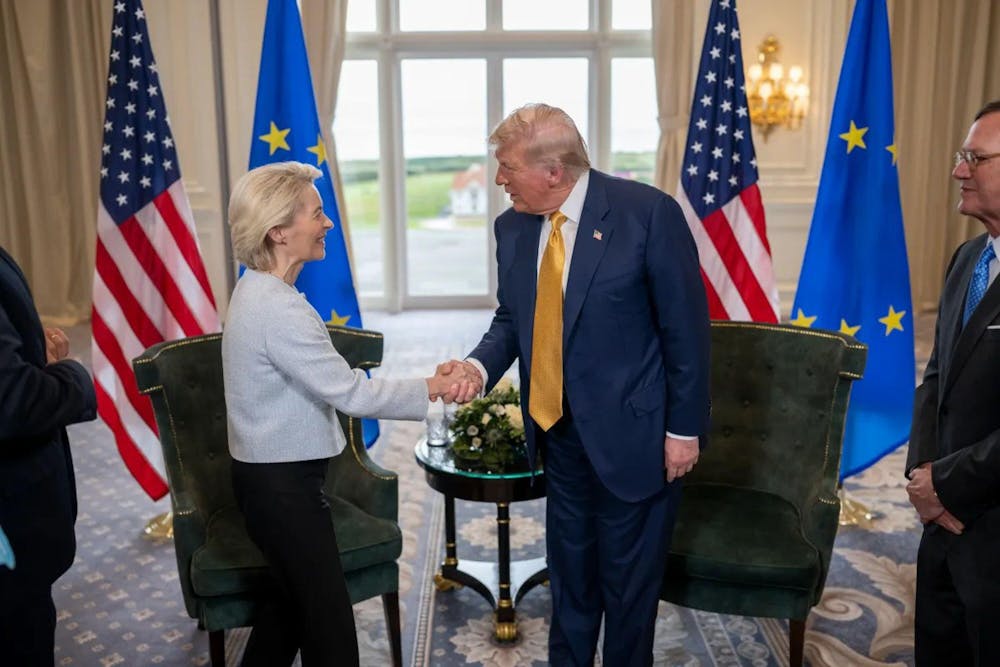
This “Strategic Withdrawal” has left the UK’s “Digital Sovereignty” in a “Personnel Purgatory.” The proposed “AI Growth Zone” in Sunderland, promised to create 5,000 “High-Payoff” jobs, is now a “Holographic” dream. Prime Minister Keir Starmer’s refusal to scrap the 2% DST has turned a “Functional Tax” into a “Geopolitical Flashpoint.” The “Material Reality” for the UK is that without the “Quiet Authority” of US investment, its “National Resilience” in critical technologies like cloud computing and AI training will remain “Under-Powered” for the 2026 season.
Start-ups in the Crossfire: The “Vulnerability” of Small Firms
While “Global Icons” like AstraZeneca or Sage might have the “Financial Muscle” to weather the storm, the UK’s “Vanguard” of start-ups is facing a “Radical Crisis.” Smaller firms typically lack the “Internal Sophistication” to reroute supply chains through “Third-Country Trans-shipments” or absorb sudden 25% price hikes on US-made components. For an early-stage robotics firm in London, a “shaky” trade relationship with a US cloud partner can lead to “Infrastructure Cost Hikes” that derail their “Inaugural Funding” milestones.

This “Personnel Purgatory” is exacerbated by “Regulatory Divergence.” As the US pushes for a “Radical Deregulation” of AI to compete with China, the UK is attempting to maintain a “Humanistic” approach to governance. This creates a “Systemic Gap” where UK firms may find their products “Technically Incompatible” with the US market’s new “Vanguard Standards.” The “Rocky Reconstruction” of these businesses often leads to “Brain Drain,” as ambitious founders move their “Intellectual Excellence” to the US to avoid the “Collateral Damage” of being based in a “Tariff-Targeted” UK.
The “Strategic Pivot” of 2026: Rebuilding the Blueprint
As the UK enters the “Inaugural Events” of 2026, the tech sector is being forced into a “Radical Rethink” of its “Architectural Blueprint.” The “Legacy Strategy” of relying on the “Special Relationship” as a “Safe Haven” has proven “shaky” at best. Instead, the government is launching a “Request for Input” on potential “Retaliatory Action,” targeting US products ranging from IT services to luxury goods. While this “Defensive Masterpiece” keeps options on the table, it risks a “Downward Spiral” of “Reciprocal Pain” that further damages “Global Utility.”
The “High-IQ” move for 2026 involves “Global Diversification.” The UK has already secured “Enhanced Trade Agreements” with South Korea and a £25.5bn boost in bilateral trade with India. This “Strategic Pivot” toward the “Indo-Pacific” is a “Foundational Base” for a future less dependent on “Trumpian Volatility.” By building “Deep Tech” corridors with “Like-Minded” partners, the UK can maintain its “Resurgent Spirit.” However, the “Material Reality” remains: without a “Sublime” resolution with the US, the UK’s tech sector will spend 2026 in a state of “Inspired Instability,” fighting to stay relevant in a “Fragmented World.”