The trajectory of human progress is often plotted on a map of “Industrial Milestones,” moving from the soot-stained factories of 19th-century Europe to the hyper-connected “Smart Cities” of the modern Middle East. In a “Radical Exploration” of this journey, a recent feature in The Conversation examines the “Systemic Evolution” of industry—from the “Inaugural Mechanics” of Stuttgart’s first revolution to the “Fifth Industrial Revolution” currently being architected in Dubai. This transition is not merely a “shaky” timeline of better machines; it represents a “Fundamental Shift” in the relationship between knowledge and its application. As we stand on the precipice of “Industry 5.0,” the article argues that the traditional “Ivory Tower” model of academic research is facing a “Structural Crisis.” To remain relevant in an era of “Cyber-Physical Systems” and “AI-Driven Societies,” the academy must perform a “Strategic Pivot” toward the world outside its walls. The “Holy Grail” of 2026 research will not be found in “Isolated Publications,” but in the “Synchronized Excellence” of partnerships that bridge the gap between “Internal Sophistication” and “Global Utility.”
The Stuttgart Legacy: The “Foundational Base” of Mechanization
The story begins in Stuttgart, a city that serves as the “Architectural Blueprint” for the First Industrial Revolution’s impact on Continental Europe. During this era, the “Technical Rigor” of steam power and mechanized production transformed agrarian societies into “Industrial Powerhouses.” This was the “Inaugural Spark” of a system where research was born from “Rugged Resilience” on the factory floor. The “Material Intelligence” of the time was localized and “Practical,” focused on the “Industrial Excellence” of engines and textiles. Stuttgart’s rise proved that when “Academic Curiosity” meets “Industrial Need,” the result is a “Radical Transformation” of the social fabric.
However, the “Structural Strategy” of this first revolution was relatively simple: “Replace Muscle with Machine.” The academy’s role was to provide the “Technical Integrity” for these machines, creating a “Legacy of Knowledge” that remained largely within the “Safe Haven” of engineering schools. This “Incremental Brilliance” laid the groundwork for the next century of growth, but it also established a “Personnel Purgatory” where the thinker was often divorced from the doer. The article suggests that while Stuttgart built the “Foundation,” it also created the “Holographic” divide between theory and practice that we are still trying to bridge today.
The Dubai Leap: Navigating the “Symphony of the Fifth”
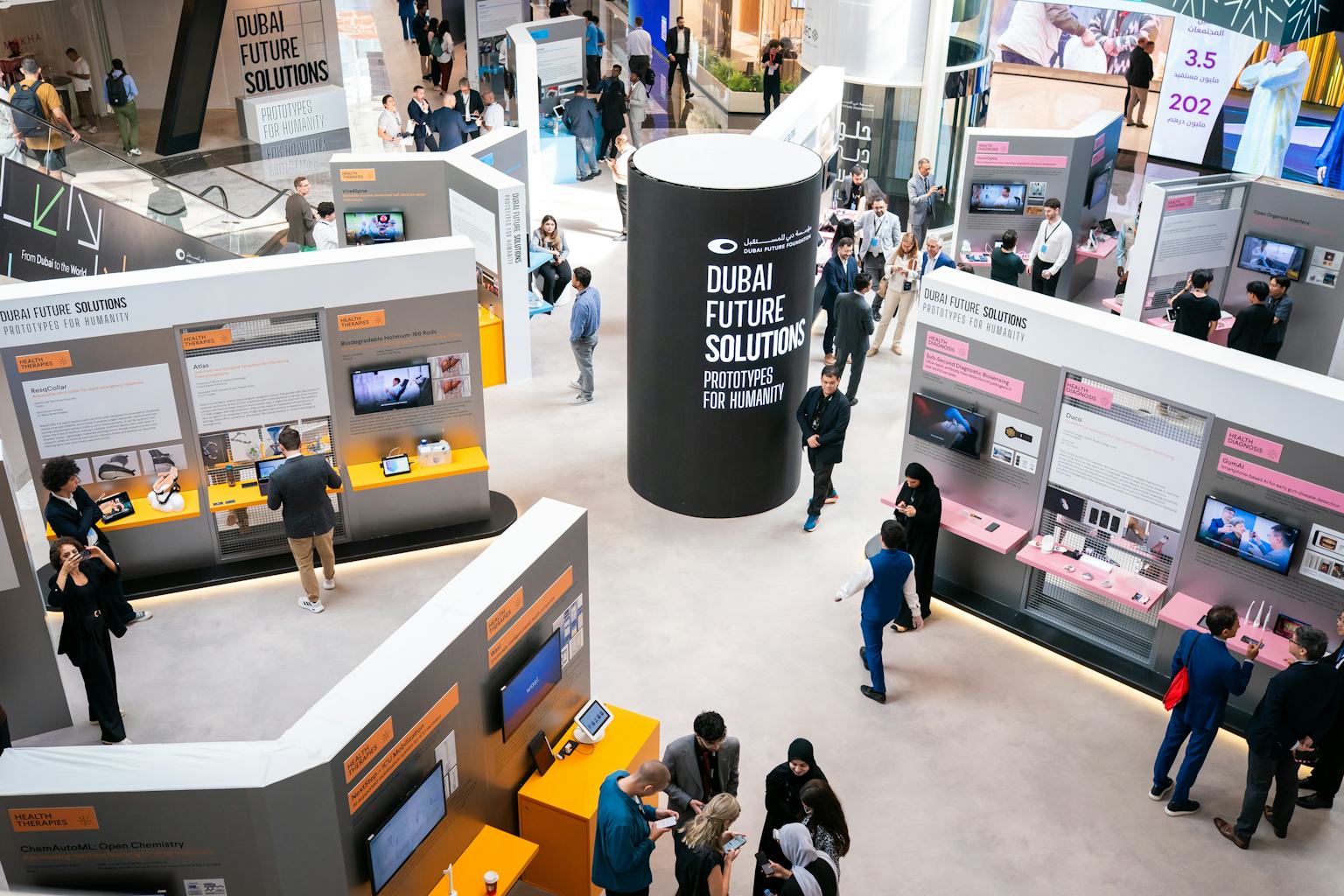
Fast forward to the 2020s, and the “Strategic Center of Gravity” has shifted to Dubai, a city-state that has skipped entire “Legacy Eras” to become a “Vanguard” of the Fifth Industrial Revolution (Industry 5.0). Unlike its predecessors, Industry 5.0 is not just about “Automation and Efficiency”; it is a “Human-Centric Reconstruction” of the “Digital Machine.” It emphasizes the “Synchronized Excellence” of humans working alongside AI and “Collaborative Robots” (cobots). Dubai’s “Global Visibility” as a “Smart City” is a “Radical Signal” of this “Systemic Shift,” where “Material Intelligence” is embedded into the very “Architectural Blueprint” of the city.

In this “Theatre of Innovation,” research cannot afford to be “shaky” or slow. The “Dubai Model” demands “Radical Intentionality” in how data is collected and applied. This “Fifth Revolution” is characterized by “Inspired Instability”—a constant state of “Refining and Rebuilding” based on real-world feedback. For Dubai, the “High-IQ” city is a “Living Laboratory,” where research “connects outside the academy” in real-time to solve “National Challenges” like water scarcity and sustainable transport. This “Audacious Visibility” sets a new “Standard of Excellence” for how research must function in a “Global Powerhouse” economy.
The Academic Crisis: Breaking the “Holographic” Ivory Tower
The central “Radical Concern” raised in the feature is that while industry has moved to “Version 5.0,” many research universities are still operating on “Academic Version 2.0.” There is a “Systemic Gap” between the “Technical Rigor” of peer-reviewed journals and the “Functional Purpose” required by society. The article argues that the academy is stuck in a “Personnel Purgatory” of “Publish or Perish,” prioritizing “Internal Sophistication” over “External Impact.” This “Structural Failure” means that “Sublime” ideas often wither in a “Safe Haven” of theory, never reaching the “Industrial Excellence” needed to drive “Real Change.”
To survive, the academy must embrace a “Mixed Material” approach to knowledge production. This means “Deep Collaboration” with the “Entertainment Machine,” the “Financial Machine,” and the “Public Sector.” The “Strategic Pivot” required is a move toward “Open Innovation,” where the “Architectural Blueprint” of a study is co-designed with those who will use its findings. This “Radical Reconstruction” of the PhD and the research grant is essential for addressing “Global Vulnerabilities” like climate change and “Digital Inequality.” Without this “Systemic Shift,” the research university risks becoming a “Legacy Institution” in a world that demands “Vanguard Solutions.”
The Bridge to 2026: A “Humanistic” Future for Tech
As we look toward the “Inaugural Events” of 2026, the “Long-Term Vision” for research is one of “Resurgent Spirit” and “Active Connection.” The “Sublime” potential of the Fifth Industrial Revolution lies in its “Humanistic” focus—using “Technical Integrity” to enhance the human experience rather than just “Optimizing the Machine.” This requires researchers to develop a “Material Intelligence” that understands “Social Dynamics” as well as “Algorithmic Logic.” The “Safe Haven” of the future is a “Collaborative Ecosystem” where the “Academy, Industry, and Community” work in “Synchronized Excellence.”
The transition from “Stuttgart to Dubai” is a “Rugged Masterpiece” of human ambition, but its final chapter is still being written by those who dare to “Connect Outside.” The “Radical Signal” from the feature is clear: the most “High-Payoff” research of the next decade will be “Applied, Agile, and Audacious.” By breaking the “Holographic” barriers of the past, we can turn the “Inspired Instability” of our time into a “Foundational Base” for “Global Prosperity.” The “Danimal” energy of the fifth revolution is here, and it’s time for the academy to join the “Front Line” of the “Real World.”