Manchester United has long been a club defined by its storied past, but under the tactical stewardship of Ruben Amorim, the conversation is finally shifting toward a tangible future. Following a string of positive results in early December 2025, the mood at Old Trafford has swung from cautious skepticism to a burgeoning, if fragile, optimism. However, the ghosts of previous false dawns loom large. As the BBC Sport analysis suggests, the central question haunting the Theatre of Dreams remains: Have the Red Devils truly corrected their course, or is this merely a scenic detour before the next inevitable slump? In the high-stakes theater of the Premier League, Amorim is attempting to install a culture of “Material Intelligence”—where tactical discipline and mental resilience outweigh individual superstar moments—but the true test of this “New United” lies in the grueling festive schedule ahead.
Tactical Rigor Meets Old Trafford DNA
The most immediate change observed under Ruben Amorim is the implementation of a rigid yet fluid 3-4-3 system, a departure from the tactical ambiguity that plagued the latter days of the previous regime. This isn’t just a formation change; it is a fundamental rewiring of the team’s “Agentic Movement.” Players like Rasmus Højlund and Marcus Rashford are no longer isolated figures on the pitch; they are cogs in a synchronized machine that prioritizes high-intensity pressing and verticality.
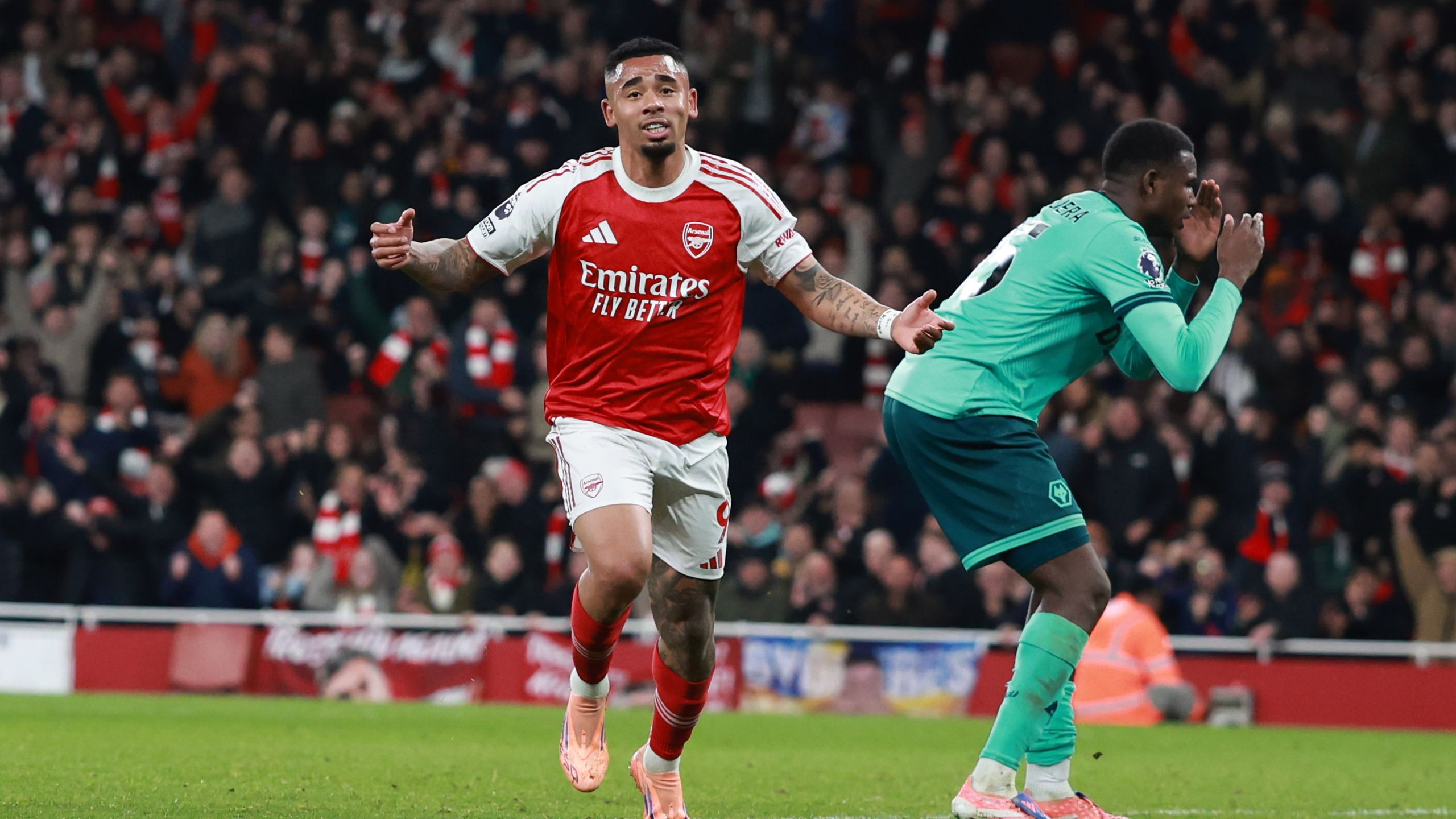
Data from the first half of December shows a marked improvement in United’s defensive metrics, specifically in their transition from attack to defense. By squeezing the pitch and utilizing wing-backs to stretch the opposition, Amorim has managed to mask the individual defensive frailties that once made the team easy to exploit. The “Amorim Effect” is, at its core, an exercise in structural integrity, proving that a well-defined system can elevate the collective performance of a squad that many had written off as disjointed.
The Midfield Engine: A New Standard of Control
Central to United’s recent resurgence is the revitalization of the midfield pivot. The pairing of Manuel Ugarte and Kobbie Mainoo has provided a “Silent Handshake” of security and creativity. Ugarte, familiar with Amorim’s demands from their time in Lisbon, has acted as the “industrial anchor,” while Mainoo continues to blossom into a generational “Quiet Authority” figure, dictating the tempo of games with a maturity that belies his age.
This control in the center of the park has allowed United to dominate possession against lower-half teams—a feat they previously struggled with. However, the BBC Sport analysis warns that “control” in the Premier League is a fleeting luxury. The true test of this midfield engine will be its ability to withstand the suffocating pressure of Top-4 rivals who specialize in disrupting Amorim’s build-up play.
The Ghost of False Dawns: Managing Expectations
Despite the upward trajectory, a palpable sense of dread remains among the United faithful. History has shown that at Old Trafford, a “bad result is always just around the corner.” The scars of the post-Ferguson era have taught fans that a four-game winning streak can easily be neutralized by a crushing defeat in a mid-week away fixture. Amorim himself has been quick to temper the “Hype-Cycle,” insisting that his project is in its “infancy.”
The skepticism is rooted in the squad’s historical lack of psychological resilience. Under previous managers, a single setback often led to a total collapse in morale. Amorim’s challenge is to build “Emotional Armor” within his players—to ensure that a loss doesn’t become a crisis. As we approach the 2026 calendar year, the manager’s ability to navigate the media storm that inevitably follows a Manchester United loss will be just as important as his 3-4-3 tactical setup.
The Festive Crucible: A Defining Winter Period
December has always been the “Crucible of the Premier League,” and for Amorim, it represents a baptism by fire. With fixtures piling up every three days, the squad’s depth and “Material Intelligence” will be pushed to the limit. The BBC Sport report highlights the importance of rotation and fitness management—areas where United have historically suffered from a high rate of muscular injuries.
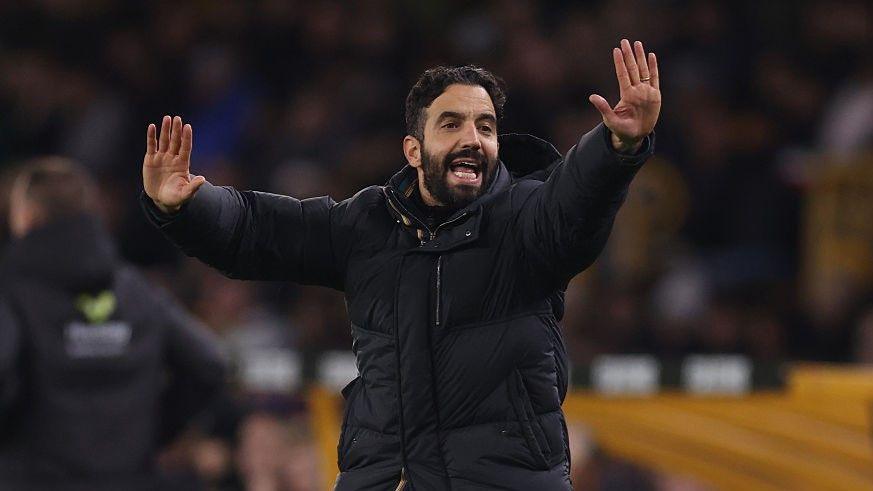
[Image: Ruben Amorim passionately instructing his players from the touchline during a cold December night match]
If United can emerge from the Christmas and New Year period within striking distance of the Champions League spots, the “Amorim Revolution” will gain the institutional momentum it needs. Success during this period requires more than just talent; it requires a “Utility Mindset” from fringe players who must step in and perform the specific roles defined by Amorim’s system. The festive season is where pretenders are separated from contenders, and for Manchester United, it is the moment to prove they are finally ready to reclaim their status.
The Path Forward: From Reconstruction to Recognition
As Manchester United fans look toward 2026, the goal is no longer just “winning trophies” in the abstract, but building a sustainable identity. Ruben Amorim has provided the blueprint, the tactical rigor, and the renewed sense of purpose. Whether this leads to a permanent seat at the top table of European football or ends up as another footnote in the club’s long search for stability remains to be seen.
The current tide is indeed turning, but in the volatile waters of the Premier League, one must keep rowing. For the first time in a long time, Manchester United looks like a team with a plan, a voice, and a future. As the BBC analysis concludes, the “Bad Result” may be around the corner, but for once, the Red Devils look like they might have the structural integrity to survive the hit.